
Chronic kidney disease stage IV: what to expect
Short answer
Stage IV chronic kidney disease means kidney function is severely reduced and specialist planning should begin or continue.
This answers one question. It is not a diagnosis and does not replace an assessment by a licensed doctor.
At a glance
- Stage IV focus
- Close monitoring and advance care planning
- Options to discuss
- Dialysis, transplant assessment, or supportive care
- Report promptly
- Reduced urine, worsening swelling, vomiting, or breathlessness
What this stage tells you
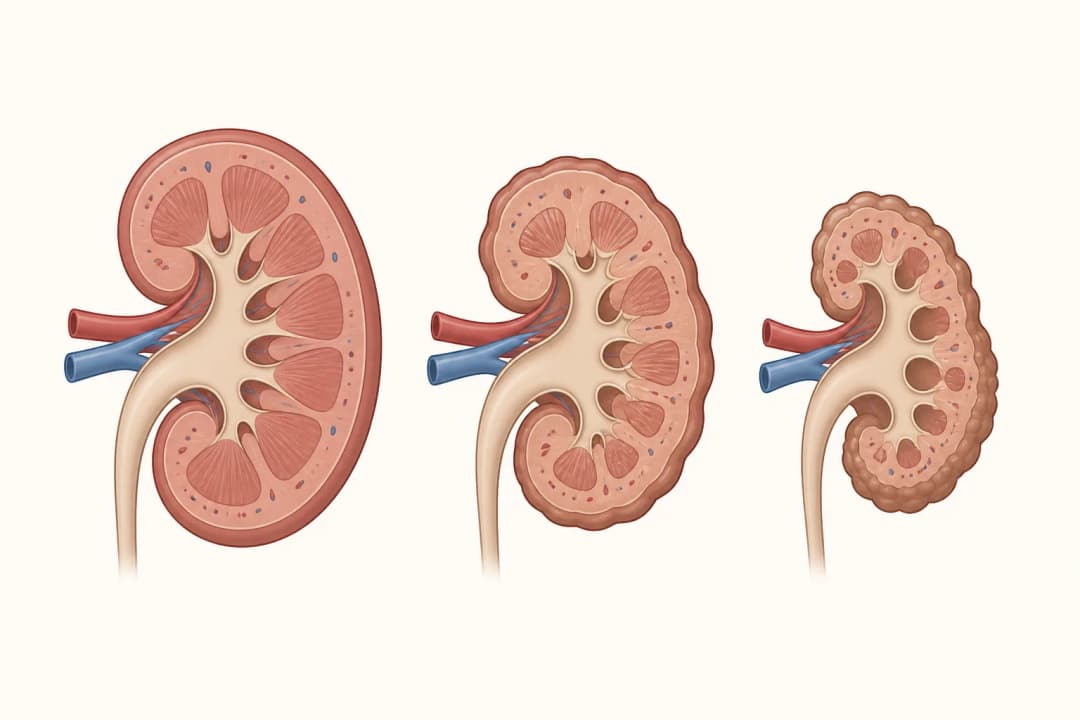
Stage IV indicates a substantial loss of kidney function, although the exact outlook differs between people. Waste and fluid can build up, and the kidneys may have more difficulty supporting blood production and mineral balance. Possible effects include tiredness, ankle swelling, itching, nausea, appetite changes, altered urination, or breathlessness. Symptoms are not a reliable measure of kidney function by themselves, so blood tests, urine tests, blood pressure, and the rate of change all guide decisions.
Preparing for the next phase
Stay connected with your kidney team and ask when preparation for future treatment should start. Discuss dialysis choices, access planning, transplant assessment when suitable, and non-dialysis supportive care. Take medicines exactly as directed and have all prescriptions, over-the-counter products, and supplements checked. Follow your personalised advice about salt, fluids, food, activity, and sick days. Make a plan for who to contact outside clinic hours.
Symptoms that should not wait
Call your clinical team promptly if urine output falls, swelling increases quickly, vomiting continues, or you develop new severe weakness, drowsiness, or breathlessness. Seek emergency help for chest pain, severe difficulty breathing, collapse, seizure, or sudden confusion. A new symptom does not identify its cause, but a rapid change matters and should be assessed without delay.
Plan the conversation
How quickly is my kidney function changing? When should I choose or prepare for dialysis access? Am I suitable for transplant assessment? What would supportive care include? Which blood or urine changes matter most? What should my family know about urgent symptoms and contacting the team?
Find care
General Clinics & Polyclinics in Abu Dhabi
That answer is general. If you want it applied to your own case, these are licensed general clinics & polyclinics listed in Abu Dhabi.
27 Ar Ruwwad St - Shakhbout City - MSH4 - Abu Dhabi - United Arab Emirates
Accepts: Daman, Thiqa, Cigna, MetLife +20 more
Al Ruwais, Al Dhafrah
Accepts: Daman, Thiqa, AXA, Cigna +16 more
Al Bahyah - Al Bahyah Old - Abu Dhabi - United Arab Emirates
Accepts: Daman, Thiqa, Cigna, Allianz Care +18 more
Abu Dhabi
Accepts: Daman, Thiqa, AXA, Cigna +27 more
Ordered by verification status and how complete each clinic's public record is, then alphabetically. This is a directory listing, not a ranking — Zavis does not rate or recommend providers.
A factual listing drawn from the DHA, DOH and MOHAP licence registers. It is not a referral, an endorsement, or advice that any of these providers is right for you.
Questions people ask
Why plan dialysis before it is needed?
Planning allows time to compare options, prepare safely, and choose an approach that fits your health and daily life.
Can symptoms show exactly how severe stage IV is?
No. Symptoms vary and may have other causes, so clinicians combine your experience with blood tests, urine tests, and trends.
Related
Related reading
Keep reading
Medical disclaimer. This page is general health information, not medical advice, and it cannot diagnose you. Always consult a licensed healthcare provider about your own symptoms and treatment. In an emergency in the UAE, call 998 for an ambulance.