
Chronic kidney disease stage 5: what to know
Short answer
Stage 5 chronic kidney disease means kidney function is severely reduced and requires specialist care planning.
This answers one question. It is not a diagnosis and does not replace an assessment by a licensed doctor.
At a glance
- Care level
- Regular kidney-specialist involvement
- Planning
- Discuss dialysis, transplant assessment, or supportive care
- Urgency
- Rapid symptom changes need prompt advice
What stage 5 can involve
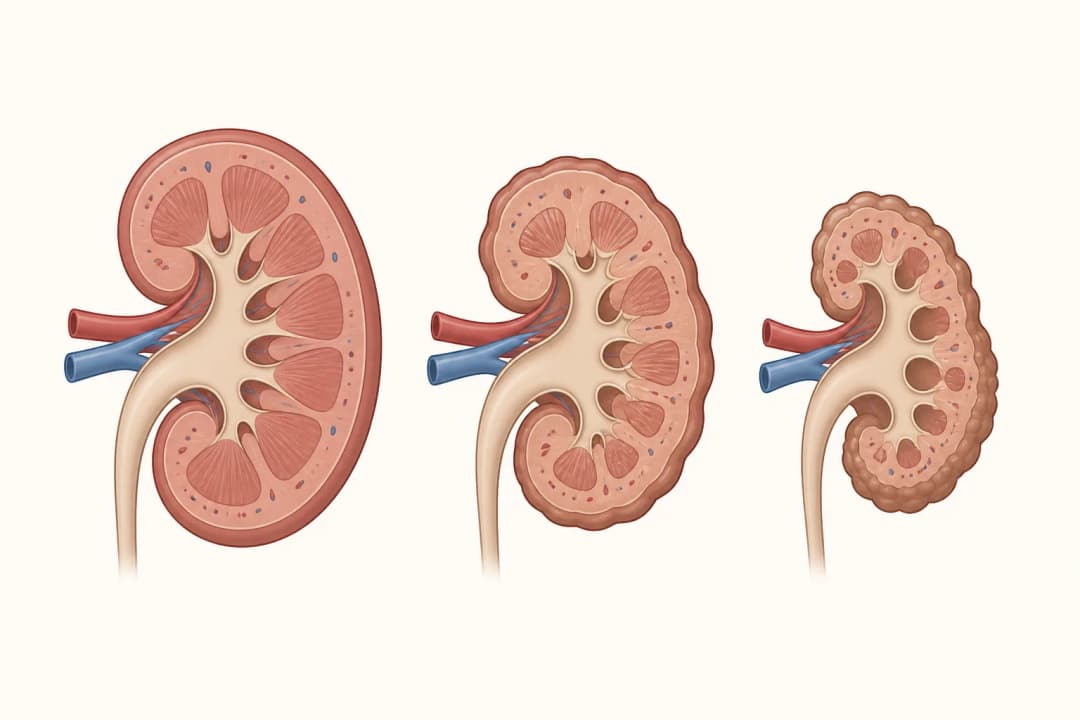
At this stage, the kidneys may struggle to remove waste, balance fluids and minerals, and support healthy blood production. Symptoms can include nausea, itching, swelling, breathlessness, poor appetite, sleep changes, confusion, or pronounced fatigue, though experiences differ. A kidney team uses symptoms, blood and urine results, fluid status, and your preferences to discuss options. These may include dialysis, a kidney transplant assessment when appropriate, or a carefully supported non-dialysis approach.
Planning with the kidney team
Keep specialist appointments and ask for a written plan covering medicines, food, fluids, symptom relief, and who to call. Review every medicine and supplement, including products bought without a prescription. If dialysis may be suitable, ask early about the types, access planning, training, and how treatment fits daily life. Discuss transplant assessment, supportive care, and your personal priorities with the people involved in your care.
Urgent warning signs
Get urgent medical help for severe breathlessness, chest pain, confusion, collapse, a seizure, or inability to keep fluids or prescribed medicines down. Contact the kidney team promptly for a sudden drop in urine, rapidly increasing swelling, repeated vomiting, severe weakness, or new drowsiness. Do not wait for a routine appointment when symptoms change quickly.
Questions for the next visit
What treatment options fit my health and priorities? When should preparation for dialysis or transplant assessment begin? What fluid and food limits apply to me? Which symptoms mean I should call the kidney team immediately? How will anaemia, gout, itching, pain, or restless legs symptoms be treated?
Find care
General Clinics & Polyclinics in Abu Dhabi
That answer is general. If you want it applied to your own case, these are licensed general clinics & polyclinics listed in Abu Dhabi.
27 Ar Ruwwad St - Shakhbout City - MSH4 - Abu Dhabi - United Arab Emirates
Accepts: Daman, Thiqa, Cigna, MetLife +20 more
Al Ruwais, Al Dhafrah
Accepts: Daman, Thiqa, AXA, Cigna +16 more
Al Bahyah - Al Bahyah Old - Abu Dhabi - United Arab Emirates
Accepts: Daman, Thiqa, Cigna, Allianz Care +18 more
Abu Dhabi
Accepts: Daman, Thiqa, AXA, Cigna +27 more
Ordered by verification status and how complete each clinic's public record is, then alphabetically. This is a directory listing, not a ranking — Zavis does not rate or recommend providers.
A factual listing drawn from the DHA, DOH and MOHAP licence registers. It is not a referral, an endorsement, or advice that any of these providers is right for you.
Questions people ask
Does stage 5 automatically mean dialysis today?
Not necessarily. The decision considers symptoms, test results, overall health, and your informed preferences, with planning led by the kidney team.
What should I bring to a kidney appointment?
Bring your medicine and supplement list, recent symptoms, home readings if requested, and questions about treatment choices and daily routines.
Related
Related reading
Keep reading
Medical disclaimer. This page is general health information, not medical advice, and it cannot diagnose you. Always consult a licensed healthcare provider about your own symptoms and treatment. In an emergency in the UAE, call 998 for an ambulance.