
Chronic kidney disease secondary to chronic glomerulonephritis
Short answer
Chronic kidney disease secondary to chronic glomerulonephritis means long-term inflammation or injury in the kidney filters has reduced filtration and needs cause-focused follow-up.
This answers one question. It is not a diagnosis and does not replace an assessment by a licensed doctor.
At a glance
- Affected structure
- The kidney filters, called glomeruli
- Useful tests
- Urine, blood, blood pressure, and sometimes imaging or biopsy
- Follow-up aim
- Monitor filtration, urine findings, and disease activity
How glomerulonephritis can affect the kidneys
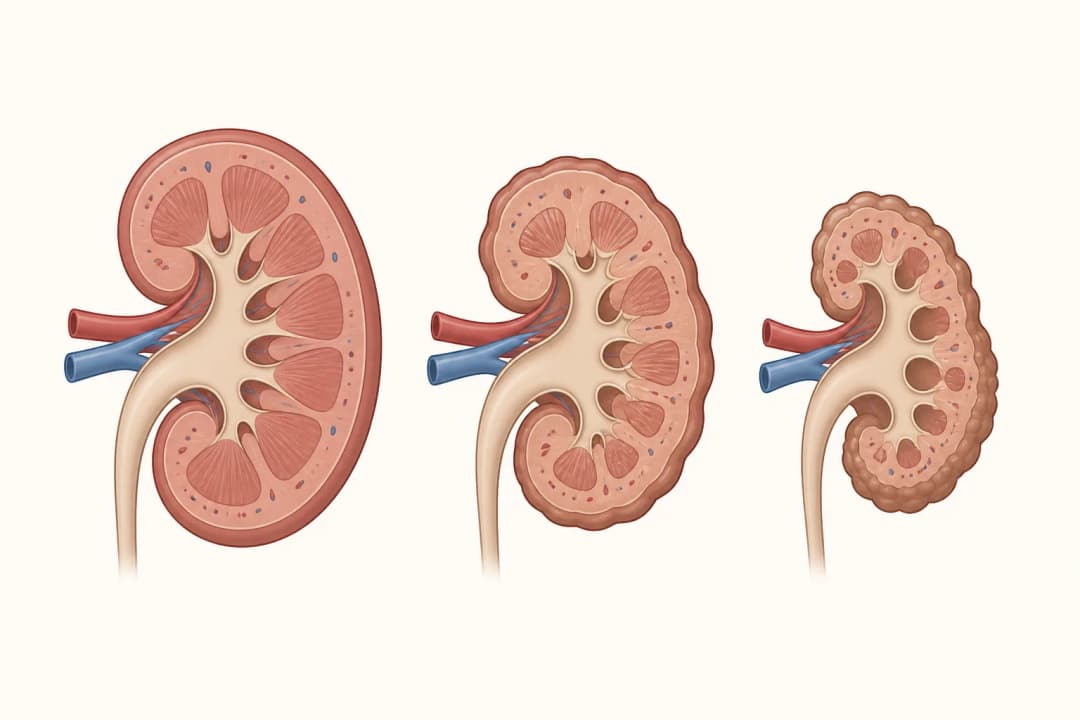
Glomerulonephritis affects the glomeruli, the tiny filtering structures inside the kidneys. Inflammation can allow blood or protein to enter the urine and may impair filtration. When the injury persists, scarring can develop and kidney function may remain reduced. The original trigger can differ, including immune-related disease or a previous kidney problem.
Assessment commonly combines urine testing, blood tests, blood pressure measurement, medical history, and sometimes imaging or a biopsy. The label describes a relationship between the kidney disease and glomerulonephritis; it does not by itself show how active the inflammation is or how quickly function will change.
Living with this form of kidney disease
Keep nephrology or primary-care appointments and bring every medicine, supplement, and recent illness to review. Follow instructions for blood pressure treatment, urine monitoring, and any immune-directed medicine. Never stop prescribed treatment suddenly unless the prescriber tells you to.
Report visible blood in urine, new foamy urine, swelling, or a noticeable drop in urine output. Practical care may also include reviewing salt intake, hydration advice, vaccinations, and conditions such as Hypertension or Anaemia.
Warning signs that should not wait
Seek prompt medical advice for rapidly worsening swelling, much less urine, dark or bloody urine with feeling unwell, repeated vomiting, or a sudden rise in blood pressure with headache or visual change. Emergency care is needed for severe breathlessness, chest pain, confusion, fainting, or collapse.
Questions worth asking
Ask what evidence links your chronic kidney disease to glomerulonephritis, whether inflammation appears active, and what urine and blood results are being followed. Ask whether a biopsy or specialist review is needed, which medicines protect filtration, and which changes should lead to same-day advice.
Find care
General Clinics & Polyclinics in Abu Dhabi
That answer is general. If you want it applied to your own case, these are licensed general clinics & polyclinics listed in Abu Dhabi.
27 Ar Ruwwad St - Shakhbout City - MSH4 - Abu Dhabi - United Arab Emirates
Accepts: Daman, Thiqa, Cigna, MetLife +20 more
Al Ruwais, Al Dhafrah
Accepts: Daman, Thiqa, AXA, Cigna +16 more
Al Bahyah - Al Bahyah Old - Abu Dhabi - United Arab Emirates
Accepts: Daman, Thiqa, Cigna, Allianz Care +18 more
Abu Dhabi
Accepts: Daman, Thiqa, AXA, Cigna +27 more
Ordered by verification status and how complete each clinic's public record is, then alphabetically. This is a directory listing, not a ranking — Zavis does not rate or recommend providers.
A factual listing drawn from the DHA, DOH and MOHAP licence registers. It is not a referral, an endorsement, or advice that any of these providers is right for you.
Questions people ask
Does glomerulonephritis always cause symptoms?
No. Urine and blood changes may be found during monitoring even when you feel well.
Can the cause of glomerulonephritis be treated?
Some causes have specific treatment, but the choice depends on the underlying process and your test results.
Related
Related reading
Keep reading
Medical disclaimer. This page is general health information, not medical advice, and it cannot diagnose you. Always consult a licensed healthcare provider about your own symptoms and treatment. In an emergency in the UAE, call 998 for an ambulance.