
Chronic kidney disease mineral and bone disorder
Short answer
Chronic kidney disease mineral and bone disorder is a linked change in mineral balance, hormones, and bones caused by reduced kidney function and requires blood-test monitoring.
This answers one question. It is not a diagnosis and does not replace an assessment by a licensed doctor.
At a glance
- Main systems
- Mineral balance, hormones, and bones
- Typical monitoring
- Calcium, phosphate, hormone, and kidney tests
- Supplements
- Use only when selected for your results
Why kidney function affects bones
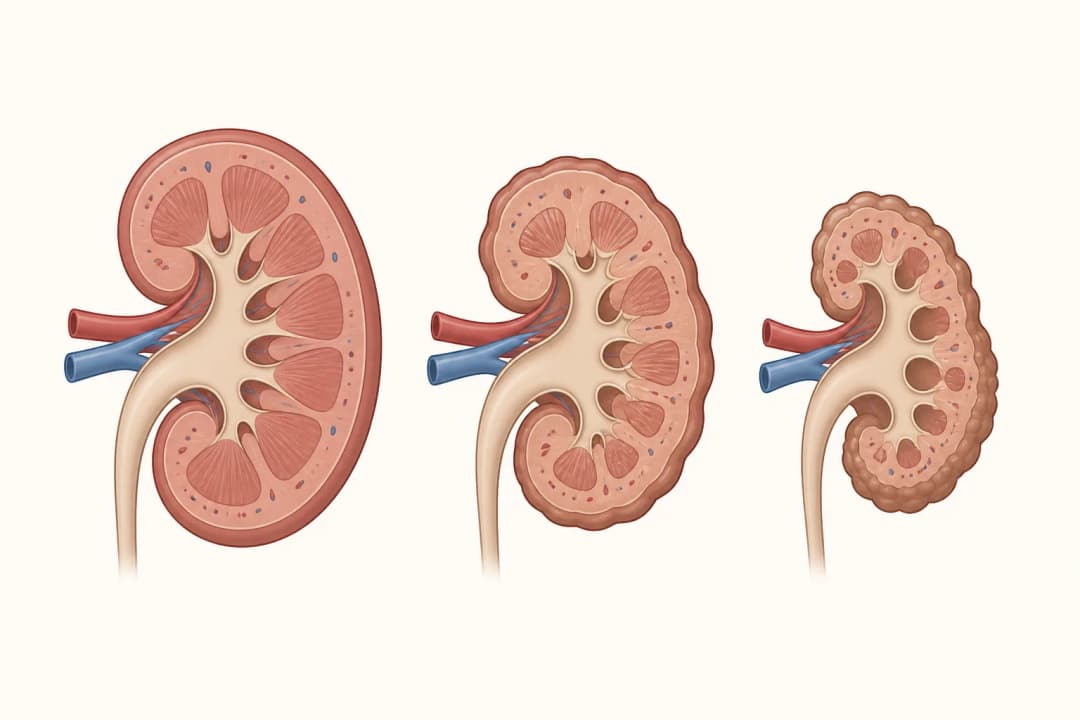
Healthy kidneys help regulate phosphate, calcium, and vitamin D activity. With chronic kidney disease, these controls can shift, and the parathyroid glands may release more hormone to compensate. Over time, this can affect bone turnover and strength. Early changes may cause no obvious symptom.
Some people develop bone or joint discomfort, muscle weakness, itching, or fractures, but these features are not specific. The disorder is assessed through a pattern of blood results and the clinical picture, not through pain alone. Results may include calcium, phosphate, parathyroid hormone, alkaline phosphatase, and kidney filtration measures.
Supporting mineral and bone health
Attend the blood tests and reviews recommended by your kidney team. Do not start calcium, vitamin D, phosphate binders, or herbal products without advice; the right choice depends on your results and other conditions. A dietitian may explain how to manage phosphate in a way that still provides adequate nourishment.
Take prescribed treatment consistently and tell the team about muscle cramps, bone pain, itching, or changes in movement. Managing Chronic Kidney Disease and Hypertension also helps clinicians address the wider factors affecting your health.
When a quicker review is needed
Contact your care team sooner for new severe bone pain, a suspected fracture, marked muscle weakness, repeated vomiting, worsening confusion, or a sudden change in your general condition. Seek emergency help after a serious injury or with severe breathlessness, chest pain, or collapse.
Questions for the next review
Ask which mineral results are outside your desired range, whether parathyroid hormone is being followed, and what food or medicine changes are appropriate. Ask how often testing is needed, whether bone imaging is relevant, and which symptoms should prompt an earlier assessment.
Find care
General Clinics & Polyclinics in Abu Dhabi
That answer is general. If you want it applied to your own case, these are licensed general clinics & polyclinics listed in Abu Dhabi.
27 Ar Ruwwad St - Shakhbout City - MSH4 - Abu Dhabi - United Arab Emirates
Accepts: Daman, Thiqa, Cigna, MetLife +20 more
Al Ruwais, Al Dhafrah
Accepts: Daman, Thiqa, AXA, Cigna +16 more
Al Bahyah - Al Bahyah Old - Abu Dhabi - United Arab Emirates
Accepts: Daman, Thiqa, Cigna, Allianz Care +18 more
Abu Dhabi
Accepts: Daman, Thiqa, AXA, Cigna +27 more
Ordered by verification status and how complete each clinic's public record is, then alphabetically. This is a directory listing, not a ranking — Zavis does not rate or recommend providers.
A factual listing drawn from the DHA, DOH and MOHAP licence registers. It is not a referral, an endorsement, or advice that any of these providers is right for you.
Questions people ask
Does this disorder always cause bone pain?
No. It may be detected through blood tests before noticeable symptoms develop.
Can I take a calcium or vitamin D supplement myself?
Ask your clinician first, because supplements can change mineral levels and may not suit every person with kidney disease.
Related
Related reading
Keep reading
Medical disclaimer. This page is general health information, not medical advice, and it cannot diagnose you. Always consult a licensed healthcare provider about your own symptoms and treatment. In an emergency in the UAE, call 998 for an ambulance.