
What should you know about chronic kidney disease and hypertension?
Short answer
Chronic kidney disease and hypertension can drive each other, making regular blood pressure checks, kidney testing and medicine review important.
This answers one question. It is not a diagnosis and does not replace an assessment by a licensed doctor.
At a glance
- Why it matters
- Each condition can make the other harder to control
- Follow-up
- Blood pressure, blood tests and urine checks
- Medication safety
- Review pain medicines and supplements first
The kidney and blood pressure link
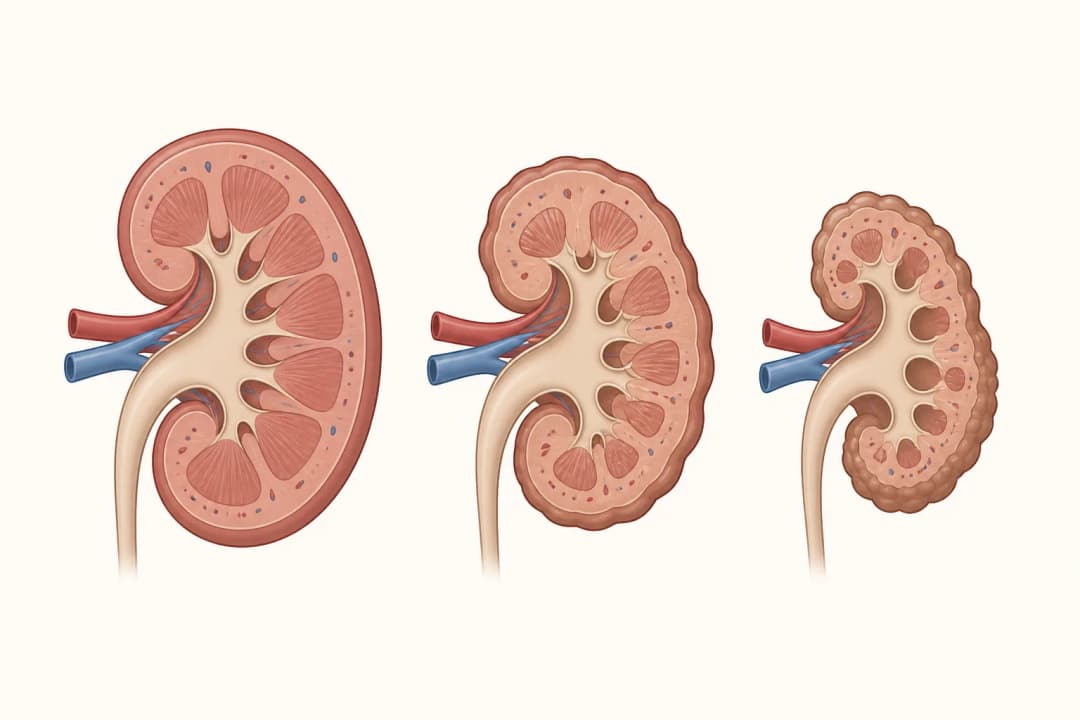
The kidneys help control salt, water and signals that influence blood pressure. Persistent high pressure can damage kidney blood vessels and filtering units. Reduced kidney function can then cause fluid retention and alter pressure regulation. Hypertension often has no symptoms, and fatigue or swelling can have many causes, so feeling well does not show whether blood pressure or kidney disease is controlled. Clinicians use repeated blood pressure readings, blood tests and urine checks to follow the pattern.
Steps that support control
Take prescribed blood pressure medicine consistently and measure at home only if your clinician has shown you how and explained when to record results. Keep appointments for kidney blood and urine tests. Limit salt as advised, stay active within your health limits, avoid smoking and check before using anti-inflammatory pain medicines or supplements. Do not double a missed dose or stop treatment because a single reading looks better; ask how to handle missed doses and home readings.
When to seek care
Arrange prompt review for repeated high readings, new swelling, reduced urination, persistent headache, vision change or increasing breathlessness. Seek emergency help for chest pain, severe breathlessness, fainting, sudden weakness, trouble speaking or a severe headache with neurological symptoms. These warning signs need urgent assessment regardless of the presumed cause.
Questions for your doctor
Ask what blood pressure range is appropriate for you, how often kidney tests are needed, whether your medicines protect kidney function, and which pain relievers are suitable.
Find care
General Clinics & Polyclinics in Abu Dhabi
That answer is general. If you want it applied to your own case, these are licensed general clinics & polyclinics listed in Abu Dhabi.
27 Ar Ruwwad St - Shakhbout City - MSH4 - Abu Dhabi - United Arab Emirates
Accepts: Daman, Thiqa, Cigna, MetLife +20 more
Al Ruwais, Al Dhafrah
Accepts: Daman, Thiqa, AXA, Cigna +16 more
Al Bahyah - Al Bahyah Old - Abu Dhabi - United Arab Emirates
Accepts: Daman, Thiqa, Cigna, Allianz Care +18 more
Abu Dhabi
Accepts: Daman, Thiqa, AXA, Cigna +27 more
Ordered by verification status and how complete each clinic's public record is, then alphabetically. This is a directory listing, not a ranking — Zavis does not rate or recommend providers.
A factual listing drawn from the DHA, DOH and MOHAP licence registers. It is not a referral, an endorsement, or advice that any of these providers is right for you.
Questions people ask
Can hypertension cause kidney disease?
Persistent high blood pressure can damage kidney blood vessels and filtering units over time.
Can kidney disease cause high blood pressure?
Reduced kidney function can promote fluid retention and changes in pressure regulation.
Related
Related reading
Keep reading
Medical disclaimer. This page is general health information, not medical advice, and it cannot diagnose you. Always consult a licensed healthcare provider about your own symptoms and treatment. In an emergency in the UAE, call 998 for an ambulance.