
What should you know about chronic complications of sickle cell disease?
Short answer
Chronic complications of sickle cell disease can affect blood flow and organs, making planned monitoring and prompt care for new symptoms essential.
This answers one question. It is not a diagnosis and does not replace an assessment by a licensed doctor.
At a glance
- Long-term focus
- Monitoring can identify anaemia and organ effects early.
- Urgent symptom
- Fever with sickle cell disease needs prompt medical advice.
What chronic complications involve
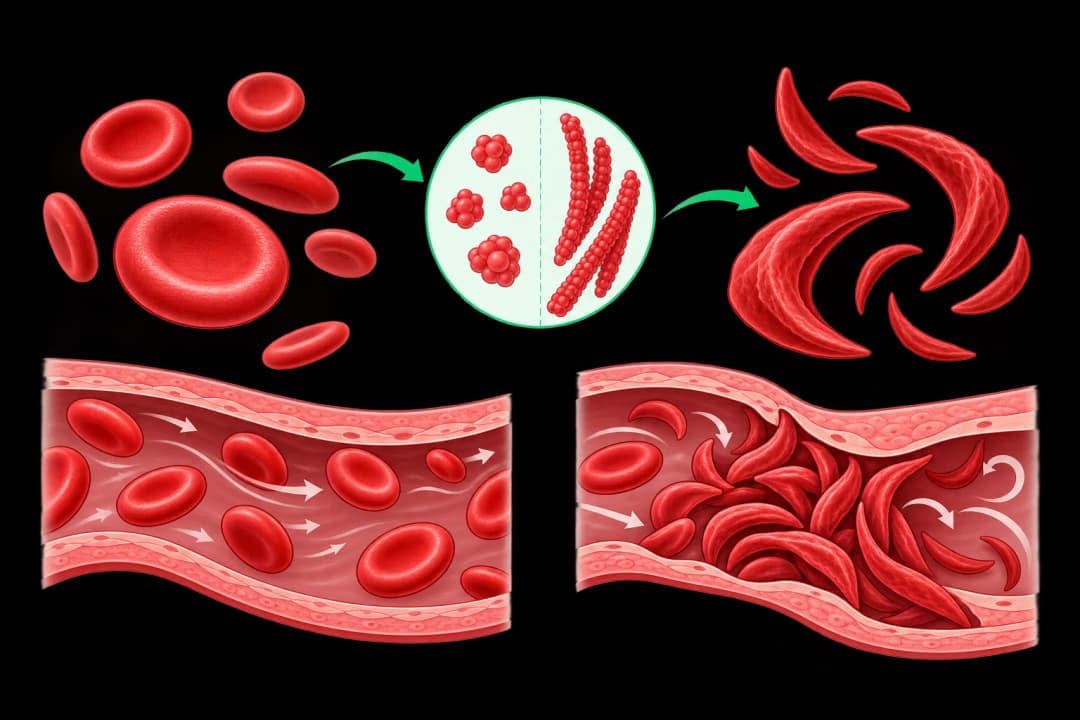
Sickle-shaped red blood cells can obstruct small blood vessels and break down more quickly than usual. Over time, this may contribute to anaemia, fatigue, pain episodes, reduced kidney function, eye problems, lung complications, bone or joint damage, and strokes. The complications and their severity vary between people. Pale skin or worsening tiredness can accompany anaemia, while joint pain may reflect bone or blood-flow problems; neither symptom alone identifies a specific complication. A care team uses symptoms, examination and monitoring to track changes.
Living with the condition
Keep scheduled reviews and take prescribed treatment consistently. Drink enough fluid for your needs, dress appropriately for cold conditions, and discuss travel, exercise, infections and high-altitude exposure with your clinician. Keep vaccinations and preventive medicines up to date when advised. Ask which symptoms should be recorded, such as pain location, fatigue, fever or changes in vision. Blood tests may help monitor anaemia and organ effects. If family planning is relevant, premarital screening can provide information about haemoglobin traits and inherited risk.
When urgent help is needed
Seek urgent help for fever, chest pain, difficulty breathing, sudden weakness or numbness, trouble speaking, a severe headache, confusion, or a painful erection that does not settle. Severe pain, unusual drowsiness, marked pallor or sudden vision changes also need prompt assessment. Do not wait for a routine appointment if symptoms are new or rapidly worsening, because reduced blood flow or infection can become serious quickly.
Questions for your doctor
Which organs should we monitor in my case? What is my personal plan for fever or a pain crisis? Which blood tests and preventive treatments are due? How should I prepare for pregnancy, surgery or travel?
Find care
General Clinics & Polyclinics in Abu Dhabi
That answer is general. If you want it applied to your own case, these are licensed general clinics & polyclinics listed in Abu Dhabi.
27 Ar Ruwwad St - Shakhbout City - MSH4 - Abu Dhabi - United Arab Emirates
Accepts: Daman, Thiqa, Cigna, MetLife +20 more
Al Ruwais, Al Dhafrah
Accepts: Daman, Thiqa, AXA, Cigna +16 more
Al Bahyah - Al Bahyah Old - Abu Dhabi - United Arab Emirates
Accepts: Daman, Thiqa, Cigna, Allianz Care +18 more
Abu Dhabi
Accepts: Daman, Thiqa, AXA, Cigna +27 more
Ordered by verification status and how complete each clinic's public record is, then alphabetically. This is a directory listing, not a ranking — Zavis does not rate or recommend providers.
A factual listing drawn from the DHA, DOH and MOHAP licence registers. It is not a referral, an endorsement, or advice that any of these providers is right for you.
Questions people ask
Can sickle cell disease cause ongoing fatigue?
Anaemia and other complications can contribute to fatigue, so persistent or worsening tiredness deserves review.
Why are regular reviews needed?
Reviews help detect changes in blood counts, organ function and symptoms before they become harder to manage.
Related
Related reading
Keep reading
Medical disclaimer. This page is general health information, not medical advice, and it cannot diagnose you. Always consult a licensed healthcare provider about your own symptoms and treatment. In an emergency in the UAE, call 998 for an ambulance.