
Choroidal melanoma prognosis: what affects outlook
Short answer
Choroidal melanoma prognosis depends on the tumour's size and location, cell features, whether it has spread, treatment response, and ongoing follow-up.
This answers one question. It is not a diagnosis and does not replace an assessment by a licensed doctor.
At a glance
- Prognosis
- An estimate based on several clinical and tumour features.
- Key assessments
- Eye examination, imaging, staging, and selected tumour tests.
- Follow-up
- Monitoring may include the treated eye and checks for disease elsewhere.
What prognosis means
Prognosis is an individual medical estimate, not a fixed prediction. The eye team's assessment includes tumour size, position, important eye structures, selected tumour tests, scans, general health, and response to treatment.
Why outlooks differ
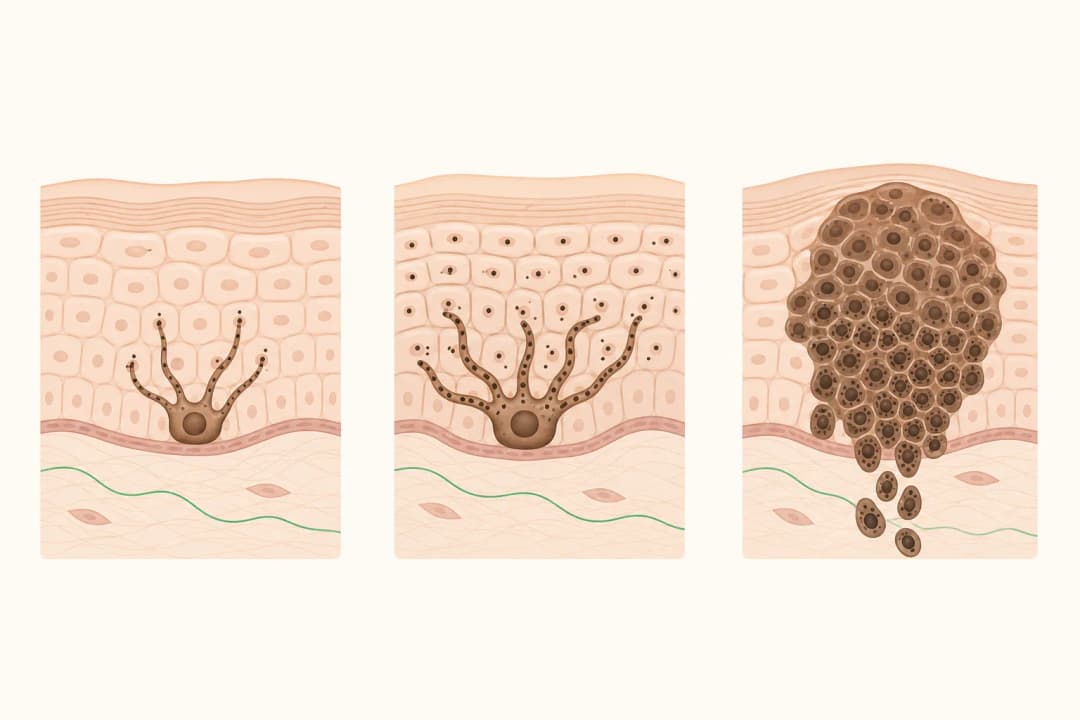
A small lesion confined to the eye presents a different clinical situation from a larger lesion affecting the optic disc or central retina. Choroidal melanoma can spread through the bloodstream, so follow-up may include liver assessment and other imaging chosen by your team. The absence of detectable spread is reassuring but does not remove the need for surveillance. Prognosis can be discussed more clearly after staging, pathology, and imaging results are available.
How to prepare for a prognosis discussion
Bring your scan and pathology questions to an ocular oncology appointment. Ask which findings are known, which remain uncertain, and when results will be reviewed. Keep a written record of treatments, medicines, vision changes, and planned appointments. Follow the surveillance schedule even when you feel well; monitoring can identify changes that are not yet causing symptoms. If a second opinion is offered, take the original imaging and reports so the next specialist can assess the same information.
When to contact your care team
Contact your ophthalmology team promptly for new blurred or distorted vision, flashes, a curtain-like shadow, a new blind spot, or increasing eye discomfort after treatment. Seek urgent care for sudden vision loss, severe pain, pronounced redness, or neurological changes such as weakness, confusion, or difficulty speaking. After diagnosis, report persistent abdominal swelling, yellowing of the skin, unusual fatigue, or unexplained weight change, because your team may need to review possible spread or another cause.
Questions worth taking to the appointment
Ask what stage the tumour is at, which features influence your outlook, and whether additional tissue or imaging tests are useful. Clarify the aim of treatment: preserving the eye, controlling the tumour, protecting vision, or addressing disease elsewhere. Ask how often eye and general-health checks are planned, which symptoms should prompt a call, and who will coordinate your care.
Find care
General Clinics & Polyclinics in Abu Dhabi
That answer is general. If you want it applied to your own case, these are licensed general clinics & polyclinics listed in Abu Dhabi.
27 Ar Ruwwad St - Shakhbout City - MSH4 - Abu Dhabi - United Arab Emirates
Accepts: Daman, Thiqa, Cigna, MetLife +20 more
Al Ruwais, Al Dhafrah
Accepts: Daman, Thiqa, AXA, Cigna +16 more
Al Bahyah - Al Bahyah Old - Abu Dhabi - United Arab Emirates
Accepts: Daman, Thiqa, Cigna, Allianz Care +18 more
Abu Dhabi
Accepts: Daman, Thiqa, AXA, Cigna +27 more
Ordered by verification status and how complete each clinic's public record is, then alphabetically. This is a directory listing, not a ranking — Zavis does not rate or recommend providers.
A factual listing drawn from the DHA, DOH and MOHAP licence registers. It is not a referral, an endorsement, or advice that any of these providers is right for you.
Questions people ask
Can a doctor predict my exact outcome?
No. A doctor can explain the factors that shape your outlook, but individual outcomes cannot be predicted precisely.
Does treatment end the need for monitoring?
No. Follow-up helps assess the treated eye, vision, general health, and any signs that need further evaluation.
Related
Related reading
Keep reading
Medical disclaimer. This page is general health information, not medical advice, and it cannot diagnose you. Always consult a licensed healthcare provider about your own symptoms and treatment. In an emergency in the UAE, call 998 for an ambulance.