
Choroidal melanoma pictures: what they can show
Short answer
Choroidal melanoma pictures can show a suspicious pigmented or raised area inside the eye, but only a specialist examination and imaging can establish what it represents.
This answers one question. It is not a diagnosis and does not replace an assessment by a licensed doctor.
At a glance
- Image types
- Eye photographs, ultrasound, and retinal scans may be used.
- Diagnosis
- An image must be interpreted with a specialist eye examination.
- Possible look
- A lesion may appear pigmented, raised, or associated with retinal changes.
What pictures can and cannot show
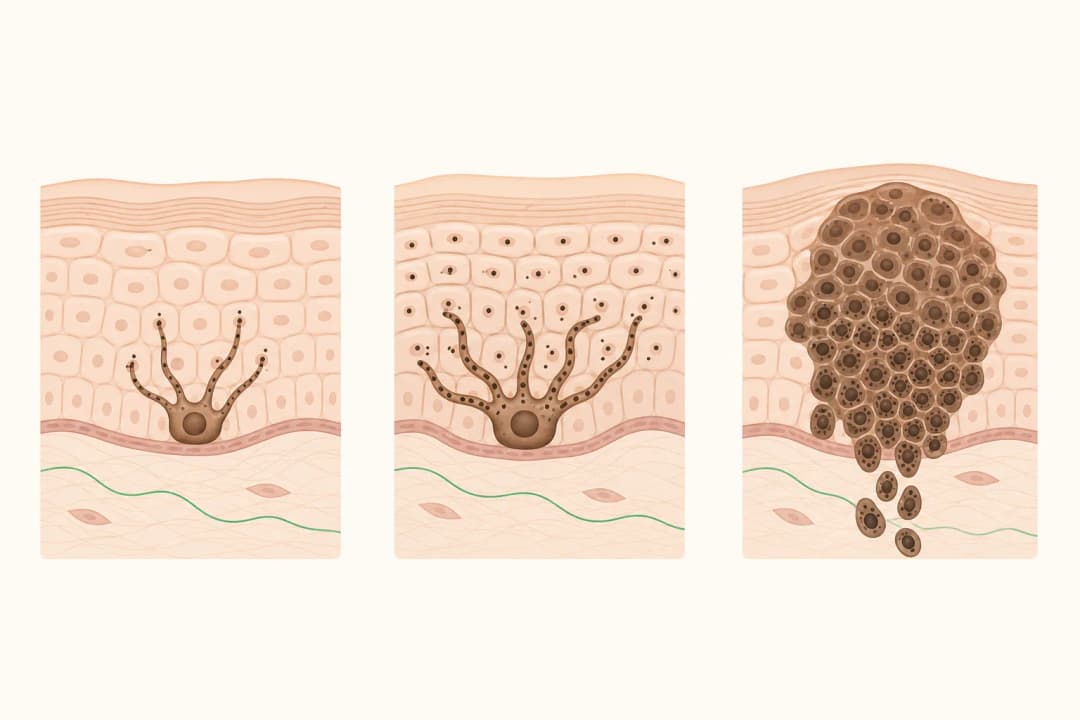
Pictures may show a dark patch, a raised lesion, changes in the retina, or fluid beneath the retina. A specialist compares images over time with a dilated examination and measurements.
How specialists interpret an image
The specialist considers the lesion's position, thickness, shape, pigment, effect on nearby retinal tissue, and any growth documented on follow-up. Choroidal melanoma begins in pigment-producing cells within the choroid, a vascular layer behind the retina. It is different from skin melanoma, although both involve melanocytes. A new or changing spot inside the eye deserves assessment even when vision is normal, because some eye tumours cause few early symptoms.
Practical next steps
If you have been shown an image, ask which test produced it and what feature prompted concern. Keep copies of reports and attend the recommended eye follow-up, since comparison is often more useful than a single image. Do not rely on online image matching. Further assessment may include dilated fundoscopy, ultrasound, retinal imaging, and tests to understand whether disease has spread. Treatment planning depends on the eye findings, overall health, and specialist team's assessment.
When to seek care
Arrange prompt ophthalmic review for a new shadow, flashing lights, a growing blind spot, blurred or distorted vision, or a visible change in the iris or pupil. Sudden loss of vision, severe eye pain, marked redness, or new neurological symptoms needs urgent medical attention. These symptoms have several possible causes and do not by themselves establish melanoma. If melanoma has been diagnosed, new persistent symptoms elsewhere should be reported because follow-up may include checks for spread, including to the liver and, less commonly, the brain.
Questions for your doctor
Ask: What type of image am I looking at? Is the lesion inside the eye or on the surface? Has its size or appearance changed? What other diagnoses are being considered? Which examination is next, and how soon? What symptoms should trigger urgent contact? If treatment is needed, ask how it may affect vision and how follow-up will monitor the eye and the rest of your health.
Find care
General Clinics & Polyclinics in Abu Dhabi
That answer is general. If you want it applied to your own case, these are licensed general clinics & polyclinics listed in Abu Dhabi.
27 Ar Ruwwad St - Shakhbout City - MSH4 - Abu Dhabi - United Arab Emirates
Accepts: Daman, Thiqa, Cigna, MetLife +20 more
Al Ruwais, Al Dhafrah
Accepts: Daman, Thiqa, AXA, Cigna +16 more
Al Bahyah - Al Bahyah Old - Abu Dhabi - United Arab Emirates
Accepts: Daman, Thiqa, Cigna, Allianz Care +18 more
Abu Dhabi
Accepts: Daman, Thiqa, AXA, Cigna +27 more
Ordered by verification status and how complete each clinic's public record is, then alphabetically. This is a directory listing, not a ranking — Zavis does not rate or recommend providers.
A factual listing drawn from the DHA, DOH and MOHAP licence registers. It is not a referral, an endorsement, or advice that any of these providers is right for you.
Questions people ask
Can a picture confirm choroidal melanoma?
No. Pictures support assessment, but diagnosis requires specialist examination, imaging, and clinical judgement.
Can choroidal melanoma be present without symptoms?
Yes. Some lesions are found during a routine dilated eye examination before vision changes are noticed.
Related
Related reading
Keep reading
Medical disclaimer. This page is general health information, not medical advice, and it cannot diagnose you. Always consult a licensed healthcare provider about your own symptoms and treatment. In an emergency in the UAE, call 998 for an ambulance.