
What causes chondrosarcoma?
Short answer
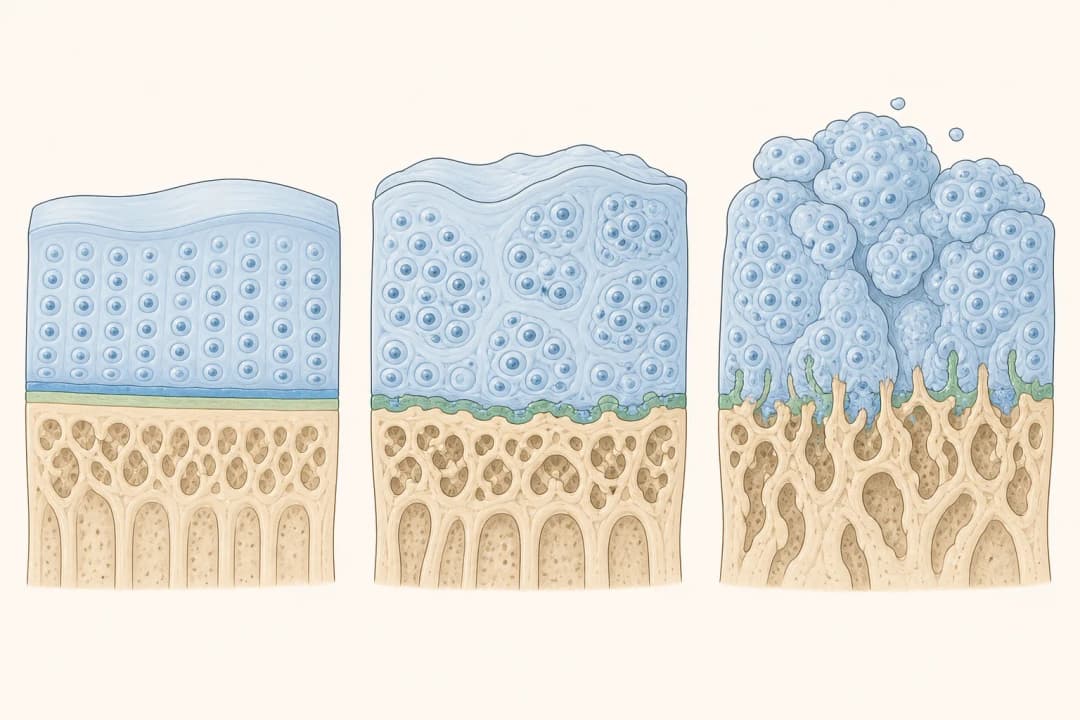
Chondrosarcoma develops when cartilage-producing cells acquire changes that disrupt normal growth control, although the initiating cause is often not identifiable in one person.
This answers one question. It is not a diagnosis and does not replace an assessment by a licensed doctor.
At a glance
- Underlying mechanism
- Loss of normal growth control in cartilage-producing cells
- Personal cause
- Often cannot be identified
- Injury
- May reveal symptoms but is not considered a cause
The short answer
Some tumours arise without a known earlier lesion. Others develop in association with a pre-existing cartilage growth or an inherited disorder that produces multiple cartilage or bone growths. Having such a condition does not mean that every growth will become cancerous.
Different ways the tumour can develop
Doctors may describe a chondrosarcoma as primary when it arises in bone without a recognised precursor, or secondary when it develops from an existing cartilage lesion. This terminology describes the route of development, not whether the tumour has spread elsewhere.
Changes within tumour cells can help specialists classify certain subtypes, but they usually do not reveal a preventable exposure or something a patient did. Chondrosarcoma is not contagious, and an everyday knock or strain does not transform normal cartilage into cancer. An injury may instead draw attention to pain or swelling that was already present.
What to do with this information
Tell the clinician about longstanding bone or cartilage lumps, earlier operations on skeletal lesions and relatives with multiple similar growths. If an inherited bone-tumour syndrome is suspected, genetic counselling can explain whether testing is useful and what a result could mean for relatives.
People already followed for multiple cartilage lesions should use the surveillance plan provided by their specialist and report a meaningful change rather than repeatedly pressing or measuring a lump. New persistent pain, growth after skeletal maturity or altered function deserves clinical review, but none of these features confirms cancer by itself.
Changes that should be assessed
Arrange a timely appointment for a bone or cartilage lump that is enlarging, persistent deep pain, increasing night pain, or loss of movement near the affected area. Seek urgent help for sudden severe pain with inability to use the limb, new weakness or numbness, or breathing difficulty. Urgency reflects the possibility of a fracture, nerve pressure or another acute complication rather than an assumption about the cause.
Questions about cause and family risk
Consider asking whether the tumour arose from a previous cartilage lesion, whether your personal or family history suggests an inherited condition, and if genetic counselling would add useful information. You can also ask which changes in other known lumps should trigger reassessment and whether relatives need any action based on the confirmed diagnosis.
Questions people ask
Did I cause chondrosarcoma through activity or diet?
There is usually no specific behaviour that explains why one person develops chondrosarcoma. Routine activity, a particular food or an ordinary injury is not considered the initiating cause.
Is chondrosarcoma inherited?
Most diagnoses do not automatically indicate an inherited disorder. Certain syndromes involving multiple cartilage or bone growths can raise risk, so a suggestive personal and family history may prompt genetic counselling.
Related
Related reading
Keep reading
Cancer care in the UAE
Hospitals & Medical Centers in Abu Dhabi
Most UAE cancer care is delivered inside hospital services rather than by standalone oncology clinics, so these are licensed hospitals & medical centers listed in Abu Dhabi. Confirm the specific cancer service exists before you travel, and know that asking for a second opinion is routine.
Ahalia Hospital Musaffah Building - Musaffah - Musaffah Industrial - Abu Dhabi - United Arab Emirates
Accepts: Daman, Thiqa, AXA, Cigna +26 more
Al Ruwais Industrial City - Abu Dhabi - United Arab Emirates
Accepts: Daman, Thiqa, AXA, Cigna +30 more
Abu Dhabi, Abu Dhabi
Accepts: Daman, Thiqa, AXA, Cigna +30 more
Second opinions are routine in cancer care and asking for one does not affect your treatment. How to arrange a second opinion in the UAE.
Ordered by verification status and how complete each clinic's public record is, then alphabetically. This is a directory listing, not a ranking — Zavis does not rate or recommend providers.
A factual listing drawn from the DHA, DOH and MOHAP licence registers. It is not a referral, an endorsement, or advice that any of these providers is right for you.
Medical disclaimer. This page is general health information, not medical advice, and it cannot diagnose you. Always consult a licensed healthcare provider about your own symptoms and treatment. In an emergency in the UAE, call 998 for an ambulance.