
Which suture is used for cervical cerclage?
Short answer
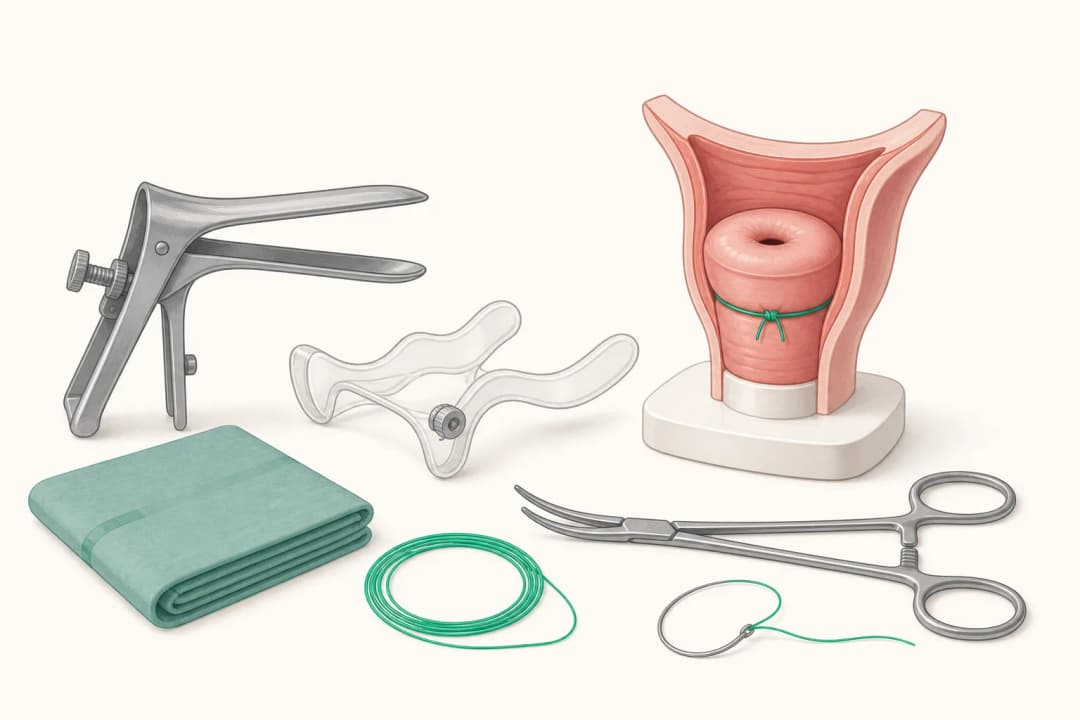
Cervical cerclage uses strong, non-absorbable suture material, selected with the technique and the patient's clinical circumstances in mind.
This answers one question. It is not a diagnosis and does not replace an assessment by a licensed doctor.
At a glance
- Material
- Strong and non-absorbable
- Selection
- Matched to surgical approach, anatomy and clinical history
- Useful record
- The operation note identifies the technique and suture used
The short answer
The material is intended to keep its strength while supporting the cervix. The choice may be a thick woven tape or another durable surgical suture. There is no single material that is automatically right for every cerclage.
How material and technique fit together
The obstetrician considers whether the stitch will be placed through the vagina or abdomen, the shape and length of the cervix, previous cervical procedures and any earlier cerclage. The suture's width, handling and the way it sits in the tissue are part of that decision.
Technique can matter as much as the product name. The stitch must be positioned to support the cervix without damaging nearby tissue, and its knot must remain accessible when vaginal removal is planned. Your operation note can identify the approach and material used.
What to do before and after placement
Tell your surgeon about allergies, previous reactions to implants or sutures, earlier cervical surgery and any current bleeding, discharge, cramps or fluid leakage. Ask whether the proposed stitch is removable through the vagina and how that affects the birth plan.
After placement, follow the maternity team's instructions for activity, medicines and review. Do not pull or try to feel the stitch. Record the hospital contact details and keep the procedure information available if you attend a different maternity service later in pregnancy.
Symptoms that need prompt assessment
Seek urgent maternity advice for heavy or increasing vaginal bleeding, regular contractions or tightening, a gush or persistent trickle of fluid, fever, escalating pelvic pain, or discharge with an unpleasant smell. Once fetal movement has become familiar, a clear reduction also warrants prompt contact. Assessment is based on the symptom, not on which suture material was used.
Questions about your stitch
You can ask for the name and form of the suture, why it suits the planned approach, where the knot will sit and whether removal is expected. It is also useful to clarify how the stitch changes labour or birth planning, what follow-up is proposed and whom to call if symptoms start outside clinic hours.
Find care
General Clinics & Polyclinics in Abu Dhabi
That answer is general. If you want it applied to your own case, these are licensed general clinics & polyclinics listed in Abu Dhabi.
27 Ar Ruwwad St - Shakhbout City - MSH4 - Abu Dhabi - United Arab Emirates
Accepts: Daman, Thiqa, Cigna, MetLife +20 more
Al Ruwais, Al Dhafrah
Accepts: Daman, Thiqa, AXA, Cigna +16 more
Al Bahyah - Al Bahyah Old - Abu Dhabi - United Arab Emirates
Accepts: Daman, Thiqa, Cigna, Allianz Care +18 more
Abu Dhabi
Accepts: Daman, Thiqa, AXA, Cigna +27 more
Ordered by verification status and how complete each clinic's public record is, then alphabetically. This is a directory listing, not a ranking — Zavis does not rate or recommend providers.
A factual listing drawn from the DHA, DOH and MOHAP licence registers. It is not a referral, an endorsement, or advice that any of these providers is right for you.
Questions people ask
Can the cervical cerclage suture dissolve on its own?
Cerclage is normally made with non-absorbable material so it retains support. A vaginal stitch is usually removed as part of the pregnancy plan, while management of an abdominal stitch differs.
Can I choose the suture brand myself?
You can discuss the options and your preferences, but the surgeon must match the material to the technique, your anatomy, prior procedures and available clinical experience. Ask for the reason behind the proposed choice.
Related
Related reading
Keep reading
Medical disclaimer. This page is general health information, not medical advice, and it cannot diagnose you. Always consult a licensed healthcare provider about your own symptoms and treatment. In an emergency in the UAE, call 998 for an ambulance.