
Cervical cerclage operation: before, during and after
Short answer
A cervical cerclage operation uses a strong stitch to support the cervix during pregnancy, with the approach, timing and removal plan tailored to the clinical reason.
This answers one question. It is not a diagnosis and does not replace an assessment by a licensed doctor.
At a glance
- Main purpose
- Mechanical support for a cervix at risk of opening early
- Routes
- Vaginal in most cases, abdominal in selected circumstances
- Planning point
- The stitch type determines removal and birth considerations
Ways a cervical stitch can be placed
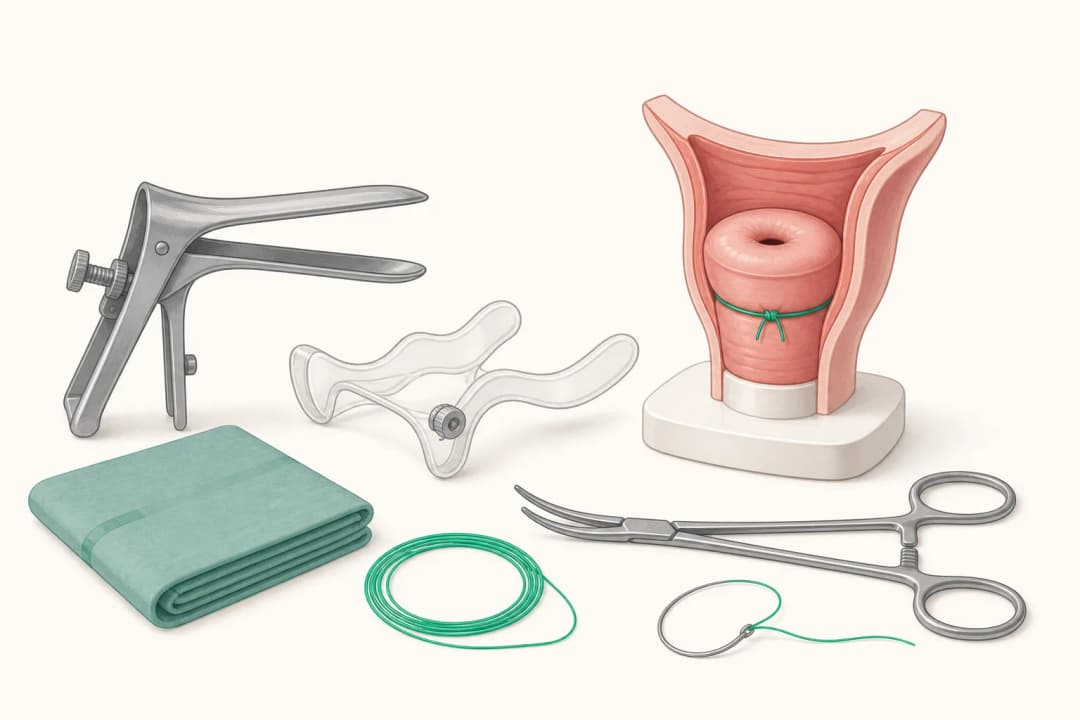
Most cervical stitches are placed through the vagina under anaesthesia. A clinician passes a suture around the cervix and tightens it to help keep the cervical opening closed. In selected situations, a stitch may instead be placed through the abdomen, particularly when a vaginal approach is not suitable or has not provided adequate support before.
Cerclage provides mechanical support; it does not treat contractions, ruptured membranes or infection. Checks before surgery may include assessment of the cervix, fetal wellbeing, membranes and possible infection so the team can decide whether proceeding remains appropriate.
Practical preparation and aftercare
Tell the surgical team about medicines, allergies, previous anaesthetic problems and any new bleeding, cramps, discharge, fever or fluid loss. Follow instructions about fasting and which medicines to take on the day. Before leaving, obtain a contact number, a follow-up date and specific guidance on activity, sex, bathing, work and pain relief.
Light spotting or cramping may occur after a vaginal procedure, but symptoms should follow the limits explained by your unit. Removal depends on the type of stitch and the birth plan: a vaginal stitch is often removed before labour, whereas an abdominal stitch may remain and usually requires birth by caesarean.
Reasons to contact maternity triage urgently
Get prompt assessment for regular tightening or contractions, severe or persistent abdominal pain, heavy or increasing vaginal bleeding, fluid leakage, fever, chills, foul-smelling discharge or concern about fetal movement. If your waters break or labour begins with a vaginal stitch still present, contact the maternity unit immediately because the cervix and stitch need review.
Decisions to understand before surgery
Ask which cerclage approach is planned and why, what anaesthesia and observation it involves, and what findings could lead the team to postpone the operation. Discuss how the stitch affects pregnancy follow-up, when or whether it will be removed, and how it fits with your intended route of birth.
Find care
General Clinics & Polyclinics in Abu Dhabi
That answer is general. If you want it applied to your own case, these are licensed general clinics & polyclinics listed in Abu Dhabi.
27 Ar Ruwwad St - Shakhbout City - MSH4 - Abu Dhabi - United Arab Emirates
Accepts: Daman, Thiqa, Cigna, MetLife +20 more
Al Ruwais, Al Dhafrah
Accepts: Daman, Thiqa, AXA, Cigna +16 more
Al Bahyah - Al Bahyah Old - Abu Dhabi - United Arab Emirates
Accepts: Daman, Thiqa, Cigna, Allianz Care +18 more
Abu Dhabi
Accepts: Daman, Thiqa, AXA, Cigna +27 more
Ordered by verification status and how complete each clinic's public record is, then alphabetically. This is a directory listing, not a ranking — Zavis does not rate or recommend providers.
A factual listing drawn from the DHA, DOH and MOHAP licence registers. It is not a referral, an endorsement, or advice that any of these providers is right for you.
Questions people ask
Will I be awake during cervical cerclage surgery?
That depends on the anaesthetic selected for the approach and your circumstances. The anaesthesia team should explain whether you will be awake but numb or asleep and how discomfort and nausea will be managed.
Can every cervical stitch be removed through the vagina?
Not every stitch is removed through the vagina. Vaginal stitches are commonly removed that way, while an abdominal cerclage may be left in place. Your surgeon should record the stitch type and its implications for birth.
Related
Related reading
Keep reading
Medical disclaimer. This page is general health information, not medical advice, and it cannot diagnose you. Always consult a licensed healthcare provider about your own symptoms and treatment. In an emergency in the UAE, call 998 for an ambulance.