
CCCA Scalp Changes: What to Know
Short answer
CCCA can cause scalp tenderness, itching, burning, and a widening area of hair loss around the crown.
This answers one question. It is not a diagnosis and does not replace an assessment by a licensed doctor.
At a glance
- Typical area
- Crown or central scalp
- Possible sensations
- Itching, burning, or tenderness
- Assessment
- Scalp examination, sometimes biopsy
How CCCA affects the scalp
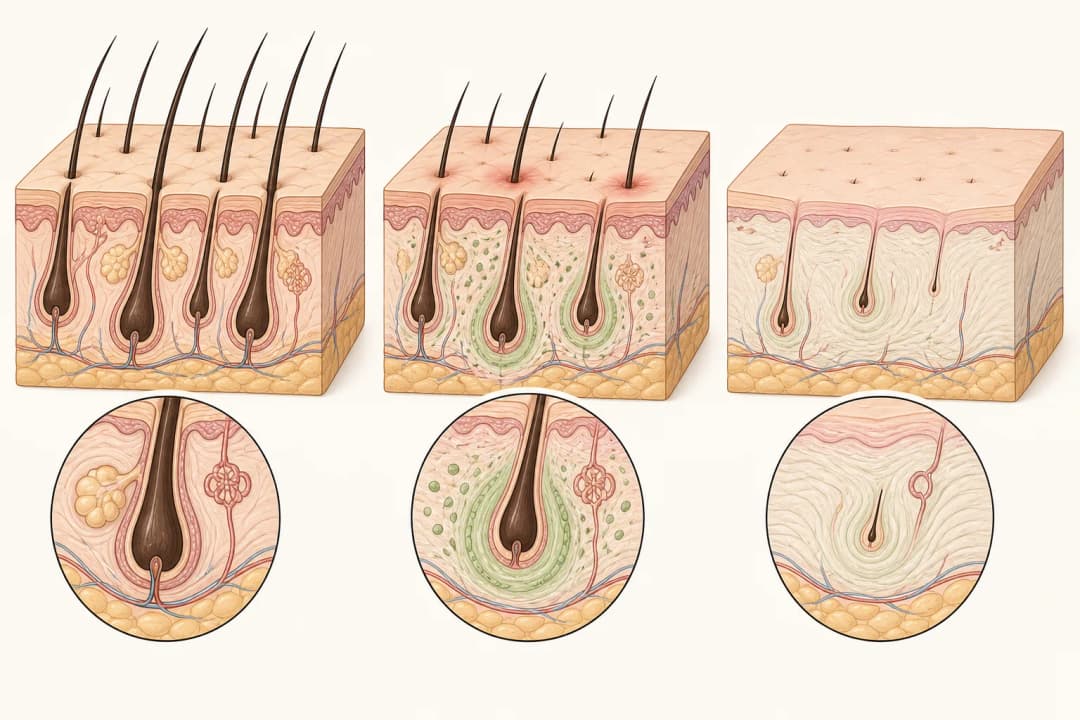
Central centrifugal cicatricial alopecia is an inflammatory condition affecting hair follicles. It often starts at the centre of the crown, where the scalp may look smoother or shinier as follicles are replaced by scar tissue. Some people notice symptoms before the thinning is obvious; others mainly see a slowly enlarging area.
Flaking, small bumps, or changes in scalp colour can occur, but these signs are not specific to CCCA. A dermatologist may use magnification and, when the diagnosis is uncertain, a scalp biopsy. This helps separate CCCA from infection, traction, or other inflammatory disorders.
Caring for your scalp
Book an examination for persistent crown thinning or scalp discomfort. Until then, wash gently, avoid scratching, and pause products or styling methods that cause stinging or tightness. Keep a simple record of symptoms and take clear photographs in consistent lighting.
Treatment is selected after checking whether inflammation is active. It can involve prescription scalp medicines or injections into affected areas, and sometimes an oral anti-inflammatory medicine. Do not use leftover antibiotics or steroid products, because the wrong medicine can obscure the examination or irritate the scalp.
When to seek care
Seek prompt review if pain, redness, pustules, crusting, drainage, or fast-spreading loss develops. Fever or feeling unwell alongside scalp inflammation needs urgent medical advice. These features may point to infection or a flare requiring timely treatment.
Questions for your doctor
Ask what findings support CCCA, whether a biopsy is appropriate, how active inflammation will be tracked, and which hair practices are safest for your scalp. Also ask what improvement should look like during follow-up.
Find care
General Clinics & Polyclinics in Abu Dhabi
That answer is general. If you want it applied to your own case, these are licensed general clinics & polyclinics listed in Abu Dhabi.
27 Ar Ruwwad St - Shakhbout City - MSH4 - Abu Dhabi - United Arab Emirates
Accepts: Daman, Thiqa, Cigna, MetLife +20 more
Al Ruwais, Al Dhafrah
Accepts: Daman, Thiqa, AXA, Cigna +16 more
Al Bahyah - Al Bahyah Old - Abu Dhabi - United Arab Emirates
Accepts: Daman, Thiqa, Cigna, Allianz Care +18 more
Abu Dhabi
Accepts: Daman, Thiqa, AXA, Cigna +27 more
Ordered by verification status and how complete each clinic's public record is, then alphabetically. This is a directory listing, not a ranking — Zavis does not rate or recommend providers.
A factual listing drawn from the DHA, DOH and MOHAP licence registers. It is not a referral, an endorsement, or advice that any of these providers is right for you.
Questions people ask
Is an itchy scalp always CCCA?
No. Itching has many causes, including irritation and infection. CCCA is diagnosed from the overall pattern, scalp findings, and sometimes a biopsy.
Why can the scalp look shiny?
Long-standing follicle damage can leave smoother scarred skin with fewer visible follicle openings.
Related
Related reading
Keep reading
Medical disclaimer. This page is general health information, not medical advice, and it cannot diagnose you. Always consult a licensed healthcare provider about your own symptoms and treatment. In an emergency in the UAE, call 998 for an ambulance.