
What causes osteopenia?
Short answer
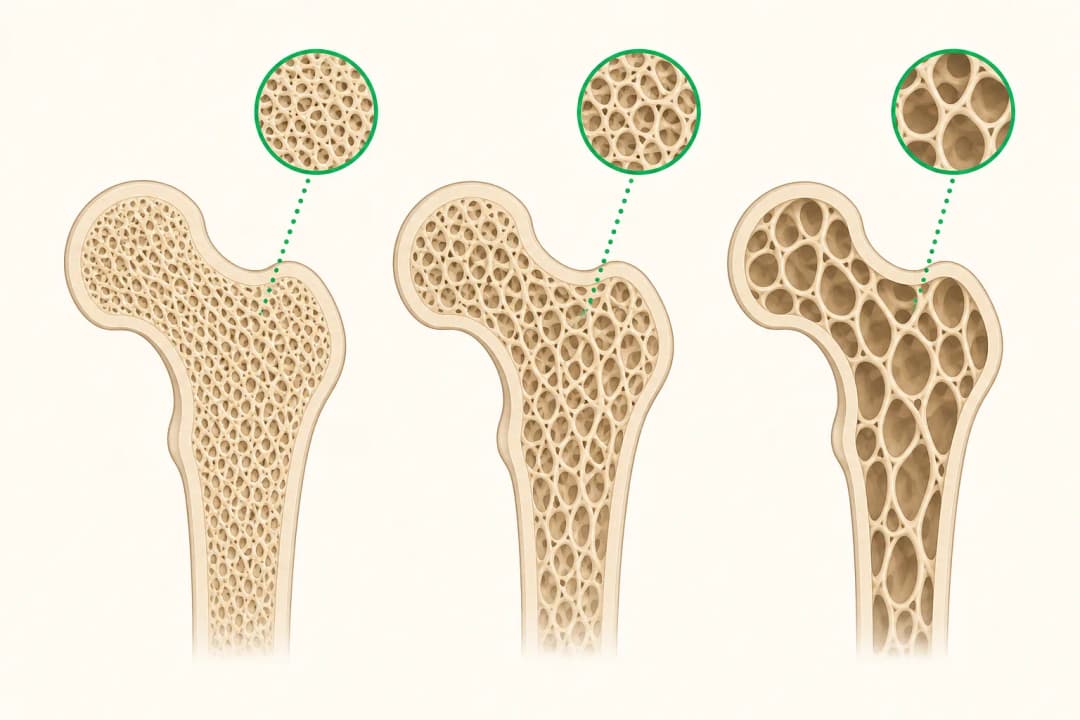
Osteopenia develops when bone is lost faster than it is rebuilt, leaving bone density below the expected range.
This answers one question. It is not a diagnosis and does not replace an assessment by a licensed doctor.
At a glance
- Meaning
- Bone density below the expected range
- Symptoms
- Often none until an injury draws attention to bone health
- Assessment
- Scan findings considered alongside personal risk factors
How osteopenia develops
Age-related change, lower sex-hormone levels, limited weight-bearing activity, low calcium or vitamin D availability, low body weight, smoking, heavy alcohol use, certain medicines and some medical conditions can contribute. More than one factor may be present.
What lower bone density means
Bone is living tissue that is continuously removed and replaced. Osteopenia describes reduced mineral density that is not as low as osteoporosis. It often causes no noticeable symptoms, so it may be found during a bone-density scan or an assessment prompted by fracture risk.
The scan result is only part of the picture. Age, previous fractures, family history, falls, medicines and underlying health problems help a clinician judge overall bone health and decide whether further investigation is useful.
Practical ways to support bone
Regular weight-bearing movement, progressive resistance exercise, adequate dietary protein and calcium, and safe vitamin D exposure or supplementation when appropriate can support bone and muscle. Balance practice may also reduce falls.
Do not start high-dose supplements or stop prescribed medicine without clinical advice. A review can identify nutritional deficiency, hormone changes or medicines that affect bone. Exercise should be adapted when there is a previous fracture, significant pain or poor balance.
When to arrange an evaluation
Discuss bone health with a clinician after a fracture from a minor fall or everyday force, unexplained height loss, new persistent back pain, prolonged immobility, or extended use of medicine known to weaken bone. Sudden severe back pain after minimal strain needs prompt assessment for a possible vertebral fracture.
Seek urgent care after a fall if you cannot stand, bear weight or use the injured limb, or if there is visible deformity. Urgency comes from the injury signs rather than the osteopenia label.
Planning a bone-health review
Ask what may be contributing to your result, whether blood tests could reveal a correctable cause, and how your fracture risk is assessed. Bring a current medicine list and ask what type of strength, impact and balance exercise suits your health and experience.
Find care
General Clinics & Polyclinics in Abu Dhabi
That answer is general. If you want it applied to your own case, these are licensed general clinics & polyclinics listed in Abu Dhabi.
27 Ar Ruwwad St - Shakhbout City - MSH4 - Abu Dhabi - United Arab Emirates
Accepts: Daman, Thiqa, Cigna, MetLife +20 more
Al Ruwais, Al Dhafrah
Accepts: Daman, Thiqa, AXA, Cigna +16 more
Al Bahyah - Al Bahyah Old - Abu Dhabi - United Arab Emirates
Accepts: Daman, Thiqa, Cigna, Allianz Care +18 more
Abu Dhabi
Accepts: Daman, Thiqa, AXA, Cigna +27 more
Ordered by verification status and how complete each clinic's public record is, then alphabetically. This is a directory listing, not a ranking — Zavis does not rate or recommend providers.
A factual listing drawn from the DHA, DOH and MOHAP licence registers. It is not a referral, an endorsement, or advice that any of these providers is right for you.
Questions people ask
Is osteopenia the same as osteoporosis?
No. Both describe reduced bone density, but osteoporosis represents a greater reduction and generally greater bone fragility.
Can vitamin D deficiency contribute to osteopenia?
Yes. Vitamin D helps the body absorb calcium, so deficiency can impair the mineral supply needed for healthy bone maintenance.
Can exercise help when bone density is low?
Appropriately chosen weight-bearing, resistance and balance exercise can support bone, muscle and safer movement. The programme should match your fracture risk and abilities.
Related
Related reading
Keep reading
Medical disclaimer. This page is general health information, not medical advice, and it cannot diagnose you. Always consult a licensed healthcare provider about your own symptoms and treatment. In an emergency in the UAE, call 998 for an ambulance.