
What causes a groin strain?
Short answer
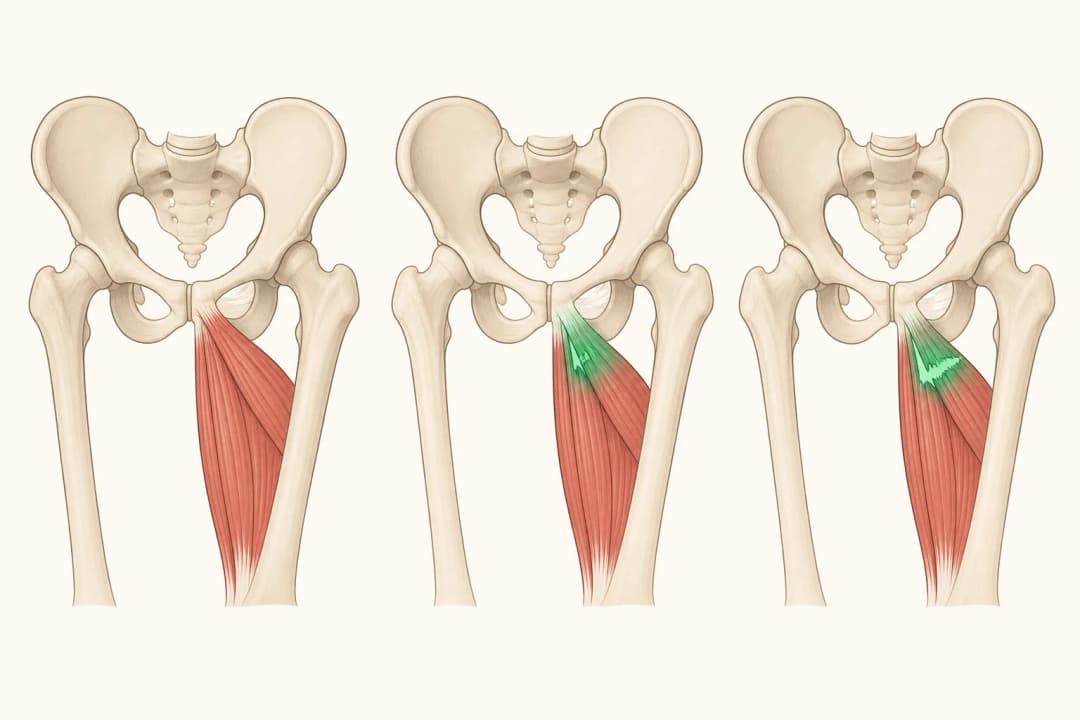
A groin strain occurs when inner-thigh muscles or their tendons are stretched or loaded beyond their current capacity.
This answers one question. It is not a diagnosis and does not replace an assessment by a licensed doctor.
At a glance
- Common trigger
- Sudden acceleration, kicking, cutting, slipping, or an unusually wide stretch
- Often involved
- The adductor muscles and tendons of the inner thigh
- Recovery focus
- Progressive loading, strength, movement control, and sport preparation
The direct answer
It can happen during a sudden sprint, forceful kick, rapid change of direction, slip, or wide stretch. Fatigue, an abrupt increase in training, limited preparation for the activity, or an earlier incompletely rehabilitated strain can reduce the tissue's ability to handle that load.
How the injury develops
The adductor muscles run along the inner thigh and help pull the leg inward while controlling the pelvis during running and cutting. A strain means some muscle or tendon fibres have been overloaded; it does not describe every possible source of groin pain.
Pain linked to a strain is often felt after a clear movement and may worsen when squeezing the knees together, accelerating, kicking, or changing direction. Hip, abdominal, joint, or hernia-related problems can feel similar, so the history and physical examination matter when the cause is uncertain.
What to do next
Pause movements that reproduce sharp pain, but keep comfortably mobile if walking is steady. Early care may include a wrapped cold pack for comfort and gentle, pain-limited movement. Avoid forceful stretching or testing a sprint immediately after the injury.
As symptoms settle, progressive strengthening should prepare the groin for running, lateral movement, and sport-specific loads. A physiotherapist can compare strength and movement on both sides and guide exercise progression before unrestricted return to sport.
When to seek medical care
Arrange prompt assessment if you cannot bear weight, pain is severe or worsening, there is marked swelling or bruising, you felt a snap, or the hip seems deformed. Seek urgent care for groin pain with a painful lump, testicular pain or swelling, fever, numbness, or new bladder or bowel symptoms.
Book a routine assessment when pain keeps returning, has no clear injury, interferes with sleep, or does not improve with sensible activity modification. These patterns may need evaluation for another cause rather than repeated self-treatment as a strain.
Questions for your clinician
Ask which structure appears injured, whether another source of groin pain needs consideration, what movements are safe now, and which strength or function markers should be met before returning to training.
Find care
General Clinics & Polyclinics in Abu Dhabi
That answer is general. If you want it applied to your own case, these are licensed general clinics & polyclinics listed in Abu Dhabi.
27 Ar Ruwwad St - Shakhbout City - MSH4 - Abu Dhabi - United Arab Emirates
Accepts: Daman, Thiqa, Cigna, MetLife +20 more
Al Ruwais, Al Dhafrah
Accepts: Daman, Thiqa, AXA, Cigna +16 more
Al Bahyah - Al Bahyah Old - Abu Dhabi - United Arab Emirates
Accepts: Daman, Thiqa, Cigna, Allianz Care +18 more
Abu Dhabi
Accepts: Daman, Thiqa, AXA, Cigna +27 more
Ordered by verification status and how complete each clinic's public record is, then alphabetically. This is a directory listing, not a ranking — Zavis does not rate or recommend providers.
A factual listing drawn from the DHA, DOH and MOHAP licence registers. It is not a referral, an endorsement, or advice that any of these providers is right for you.
Questions people ask
Can a groin strain happen without a collision?
Yes. A rapid contraction or stretch during sprinting, kicking, or changing direction can overload the groin without direct contact.
Should I stretch a newly strained groin?
Gentle pain-limited movement may be comfortable, but forceful stretching can irritate recently injured tissue. Loading should progress according to symptoms and function.
Why can groin strains return?
Returning before strength, movement control, and sport-specific capacity are restored can leave the area unprepared for sudden loads.
Related
Related reading
Keep reading
Medical disclaimer. This page is general health information, not medical advice, and it cannot diagnose you. Always consult a licensed healthcare provider about your own symptoms and treatment. In an emergency in the UAE, call 998 for an ambulance.