
Calf and foot pain on one side: what to consider
Short answer
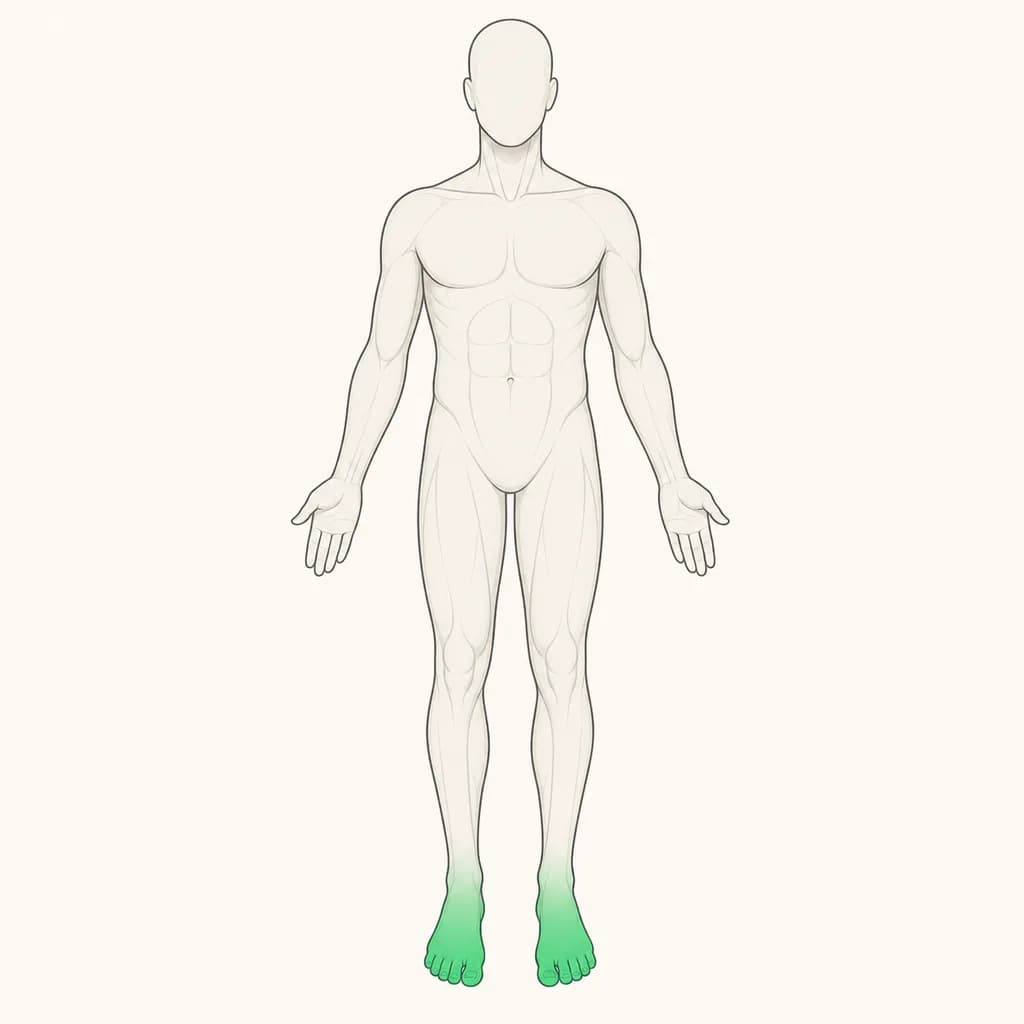
Calf and foot pain may share a mechanical source, but injury, nerve irritation, joint conditions, and circulation problems also need consideration.
This answers one question. It is not a diagnosis and does not replace an assessment by a licensed doctor.
At a glance
- Mechanical link
- Foot movement and calf loading influence each other during walking
- Useful observation
- Pinpoint the pain and note whether it starts with rest, walking, or impact
- Shoe check
- Toe space, heel hold, wear pattern, and cushioning can affect symptoms
The short answer
Because the calf helps lift the heel and control the ankle, a painful or stiff foot can change how it works. The reverse is also true: calf weakness or tightness may alter pressure through the heel and forefoot. A focused examination is useful when symptoms persist or walking changes.
Clues from the location
Plantar fasciitis commonly presents with pain beneath the heel, often during the first steps after rest. A stress fracture commonly presents with increasingly focal pain during weight-bearing and local tenderness. Bunions, hallux rigidus, and hammer toe present around the toes or forefoot, whereas flat feet can change load across a broader part of the foot.
Pain shooting down the leg with tingling or numbness may reflect nerve irritation. Calf discomfort that appears predictably with walking can also have a circulation-related cause, particularly when the foot becomes cool or changes colour. Examination is needed to distinguish these possibilities.
Reduce aggravation without losing movement
Switch temporarily from painful impact activity to movement that does not provoke symptoms. Check shoes for a cramped toe box, uneven wear, poor heel hold, or a sudden change in cushioning. Avoid walking barefoot if it clearly worsens pain, and do not push through a new focal pain over a bone.
For a gradual problem without red flags, gentle ankle movement and paced walking may be reasonable. A clinician or physiotherapist can assess foot posture, toe and ankle mobility, calf capacity, balance, and gait. Orthotics may redistribute pressure for selected problems, but they should match the diagnosis and footwear.
When not to wait
Get urgent help for a suddenly swollen, warm, red, and tender calf, especially if breathlessness or chest pain develops. A cold, pale, blue, or newly numb foot; an open wound with spreading redness; fever with marked swelling; inability to bear weight after injury; or rapidly increasing pain also needs prompt assessment.
Questions that clarify the plan
Ask whether the suspected source is in the foot, calf, nerve, or blood vessels and whether imaging is needed. Find out which shoes and activities are appropriate now, whether an orthotic or rehabilitation programme fits the findings, and what symptoms should trigger an earlier follow-up.
Find care
General Clinics & Polyclinics in Abu Dhabi
That answer is general. If you want it applied to your own case, these are licensed general clinics & polyclinics listed in Abu Dhabi.
27 Ar Ruwwad St - Shakhbout City - MSH4 - Abu Dhabi - United Arab Emirates
Accepts: Daman, Thiqa, Cigna, MetLife +20 more
Al Ruwais, Al Dhafrah
Accepts: Daman, Thiqa, AXA, Cigna +16 more
Al Bahyah - Al Bahyah Old - Abu Dhabi - United Arab Emirates
Accepts: Daman, Thiqa, Cigna, Allianz Care +18 more
Abu Dhabi
Accepts: Daman, Thiqa, AXA, Cigna +27 more
Ordered by verification status and how complete each clinic's public record is, then alphabetically. This is a directory listing, not a ranking — Zavis does not rate or recommend providers.
A factual listing drawn from the DHA, DOH and MOHAP licence registers. It is not a referral, an endorsement, or advice that any of these providers is right for you.
Questions people ask
Could insoles help calf and foot pain?
They may help selected mechanical problems by changing pressure or support, but an assessment should identify the target and ensure the device fits your shoes.
Should I stretch my calf when my foot hurts?
Gentle stretching may suit some gradual conditions, but stop if it increases focal foot pain, tingling, numbness, or acute injury symptoms.
When does foot pain need imaging?
A clinician may consider imaging after significant injury, with focal bone tenderness, when weight-bearing is difficult, or when symptoms do not follow the expected course.
Related
Related reading
Keep reading
Medical disclaimer. This page is general health information, not medical advice, and it cannot diagnose you. Always consult a licensed healthcare provider about your own symptoms and treatment. In an emergency in the UAE, call 998 for an ambulance.