
Calcium and vitamin D for osteopenia
Short answer
Calcium and vitamin D support bone maintenance in osteopenia, but the right approach depends on diet, test results, medicines and individual health risks.
This answers one question. It is not a diagnosis and does not replace an assessment by a licensed doctor.
At a glance
- Main role
- Calcium supports bone mineral; vitamin D supports calcium absorption.
- Starting point
- Review food intake and existing supplements before adding a product.
- Wider care
- Nutrition works alongside strengthening, balance work and risk-factor review.
The short answer
Food is often the starting point for calcium. A supplement may fill a dietary gap, while vitamin D helps the body absorb calcium. Neither replaces weight-bearing movement, muscle strengthening, fall prevention or treatment of an underlying cause of bone loss.
How these nutrients fit osteopenia care
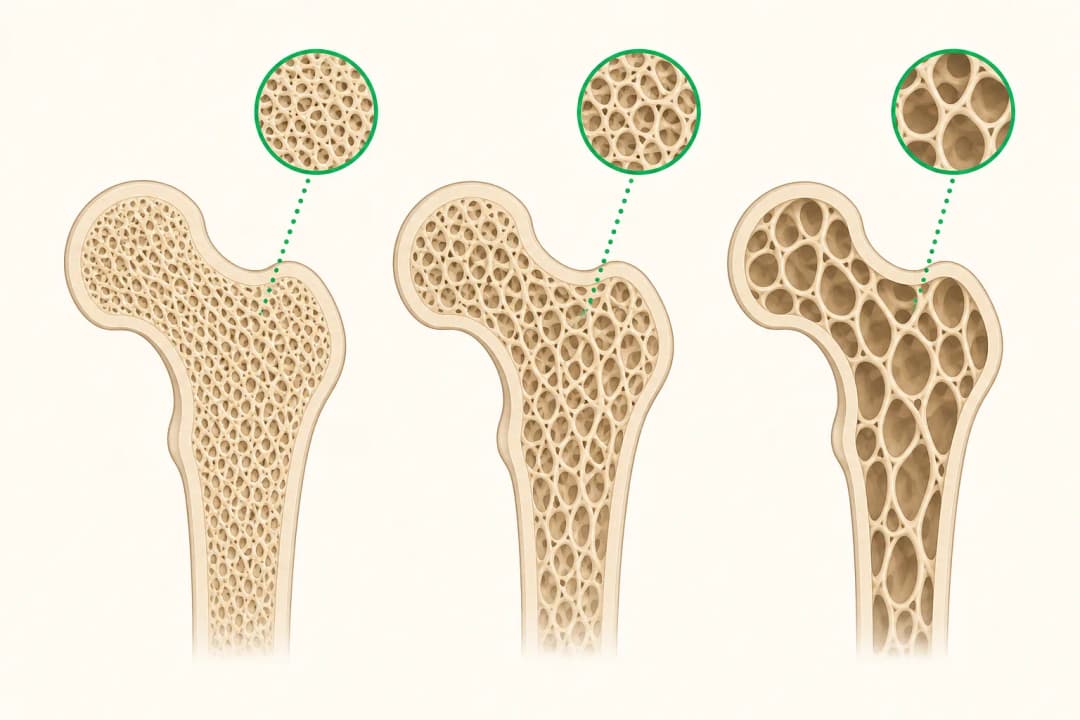
Osteopenia means bone density is lower than expected but does not by itself describe whether a fracture will occur. A clinician interprets the scan alongside age, previous fractures, family history, falls, smoking, alcohol use, menopause status, medical conditions and medicines that affect bone.
Calcium supplies mineral used in bone structure. Vitamin D supports calcium absorption and normal muscle function. Taking more than the body needs does not automatically build stronger bone, so supplements should address a genuine shortfall rather than replace an assessment.
Build a practical plan
List calcium-containing foods and drinks you consume on an ordinary day, then review the list with a clinician or dietitian. Check every supplement label for elemental calcium and vitamin D so that combined products are not counted twice. Mention kidney stones, kidney disease, high blood calcium, digestive problems and all prescription medicines before starting a product.
Pair nutrition with regular weight-bearing activity and progressive resistance exercise suited to your balance and joint health. A physiotherapist can modify movements if pain, weakness or fear of falling limits exercise. Keep follow-up appointments so changes in bone density and risk factors can guide the wider plan.
When to seek medical care
Arrange prompt assessment after a fall if you develop new focal bone pain, swelling, difficulty bearing weight or reduced movement. Sudden severe back pain, new weakness or numbness, loss of bladder or bowel control, or a visibly deformed limb needs urgent medical evaluation.
Contact your clinician if a supplement causes persistent constipation, vomiting, marked thirst, confusion or worsening abdominal pain. These symptoms require assessment rather than simply changing brands or increasing fluids on your own.
Questions for your clinician
Ask how much calcium your usual diet provides, whether a vitamin D blood test is appropriate, which formulation fits your digestive and kidney health, and whether any medicine should be separated from a supplement. Also ask what type of resistance and balance training is safe for you.
Find care
General Clinics & Polyclinics in Abu Dhabi
That answer is general. If you want it applied to your own case, these are licensed general clinics & polyclinics listed in Abu Dhabi.
27 Ar Ruwwad St - Shakhbout City - MSH4 - Abu Dhabi - United Arab Emirates
Accepts: Daman, Thiqa, Cigna, MetLife +20 more
Al Ruwais, Al Dhafrah
Accepts: Daman, Thiqa, AXA, Cigna +16 more
Al Bahyah - Al Bahyah Old - Abu Dhabi - United Arab Emirates
Accepts: Daman, Thiqa, Cigna, Allianz Care +18 more
Abu Dhabi
Accepts: Daman, Thiqa, AXA, Cigna +27 more
Ordered by verification status and how complete each clinic's public record is, then alphabetically. This is a directory listing, not a ranking — Zavis does not rate or recommend providers.
A factual listing drawn from the DHA, DOH and MOHAP licence registers. It is not a referral, an endorsement, or advice that any of these providers is right for you.
Questions people ask
What should you know about calcium and vitamin d for osteopenia?
They may correct nutritional gaps and support bone maintenance, but the appropriate plan depends on dietary intake, vitamin D status, health conditions, medicines and overall fracture risk.
Can supplements replace strengthening exercise?
No. Muscles and bones respond to suitable loading, while balance training can help reduce falls. Nutrition and exercise serve different, complementary purposes.
Why should I check the label for elemental calcium?
The compound name and tablet weight do not tell you directly how much calcium the product contributes. The elemental calcium entry is the useful figure for comparing intake across products.
Related
Related reading
Keep reading
Medical disclaimer. This page is general health information, not medical advice, and it cannot diagnose you. Always consult a licensed healthcare provider about your own symptoms and treatment. In an emergency in the UAE, call 998 for an ambulance.