
Burning pain in the instep of the foot
Short answer
Burning in the instep can develop from pressure on a nerve, overloaded soft tissues, footwear irritation, or a bone stress injury, depending on where and when it hurts.
This answers one question. It is not a diagnosis and does not replace an assessment by a licensed doctor.
At a glance
- Footwear check
- Pressure from tight laces can irritate the top of the instep.
- Training clue
- A sudden activity increase matters when pain is sharply localised.
- Early review
- Skin changes need early attention when sensation is reduced.
The short answer
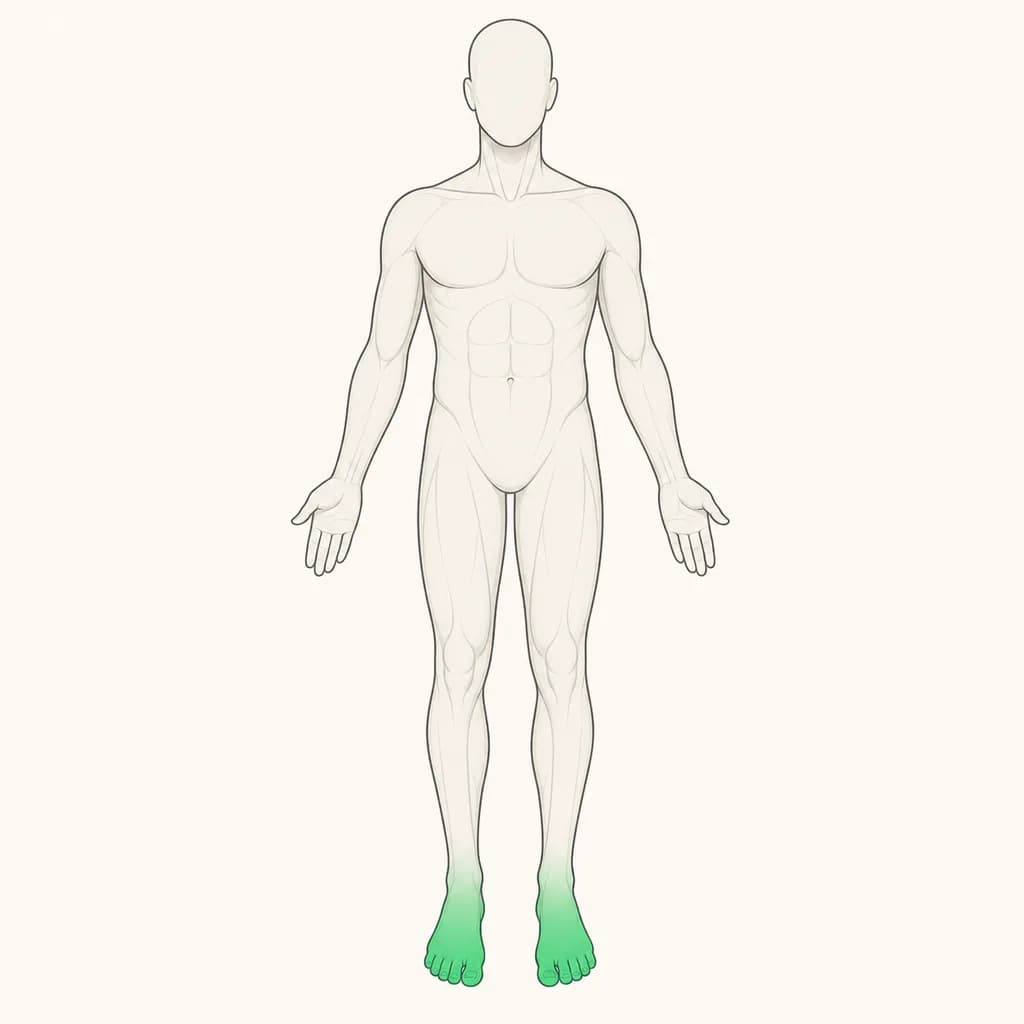
Check whether the sensation is on top of the arch or underneath it, whether shoes press on the area, and whether there is a precise tender point. Tingling, numbness, swelling, bruising, pain at rest, or a recent increase in running or walking are useful clues.
What the location may reveal
Burning beneath the arch may come from strain in the tissues supporting the foot or irritation along a nerve. Plantar fasciitis generally presents with pain nearer the heel and sole, often noticeable during the first steps after rest. Flat feet can alter loading through the arch, but foot shape alone does not prove the source of pain.
Discomfort on top of the instep may follow tight laces, a shoe tongue pressing on a nerve, or irritation around the midfoot. A stress fracture can present with increasingly localised pain, tenderness, and swelling that worsen with weight-bearing. Changes around the big toe or other toes can shift pressure through the foot and contribute to a broader mechanical pattern.
Protect the foot while it settles
Loosen laces over the sore area, choose a supportive shoe with enough width, and pause running, jumping, or long walks that reproduce the burning. Do not keep testing a sharply tender spot by repeatedly loading it. Gentle ankle and toe motion is reasonable if it does not increase symptoms.
Arrange an evaluation if pain is focal, recurrent, worsening, or changing how you walk. A clinician may inspect footwear and foot posture, feel for bone tenderness, assess nerves and circulation, and watch you walk. Custom orthotics may redistribute load for selected mechanical problems, but they should follow an assessment rather than substitute for one.
Warning signs
Seek prompt care if you cannot bear weight, swelling or bruising develops after injury, or there is pinpoint bone pain after a rapid training increase. A foot that becomes cold, pale, blue, or suddenly numb needs urgent assessment, as does rapidly spreading redness, heat, swelling, fever, or drainage from a wound.
People with diabetes, reduced sensation, or known circulation problems should have new burning, skin breakdown, blisters, or colour change checked early. Sudden weakness that makes the foot slap or causes repeated tripping also warrants timely neurological assessment.
Make the visit useful
Bring the shoes used when symptoms started and explain recent changes in distance, terrain, work, or exercise. Ask whether the findings suggest nerve pressure, soft-tissue overload, or bone injury, and whether activity modification, imaging, or footwear support is appropriate.
Find care
General Clinics & Polyclinics in Abu Dhabi
That answer is general. If you want it applied to your own case, these are licensed general clinics & polyclinics listed in Abu Dhabi.
27 Ar Ruwwad St - Shakhbout City - MSH4 - Abu Dhabi - United Arab Emirates
Accepts: Daman, Thiqa, Cigna, MetLife +20 more
Al Ruwais, Al Dhafrah
Accepts: Daman, Thiqa, AXA, Cigna +16 more
Al Bahyah - Al Bahyah Old - Abu Dhabi - United Arab Emirates
Accepts: Daman, Thiqa, Cigna, Allianz Care +18 more
Abu Dhabi
Accepts: Daman, Thiqa, AXA, Cigna +27 more
Ordered by verification status and how complete each clinic's public record is, then alphabetically. This is a directory listing, not a ranking — Zavis does not rate or recommend providers.
A factual listing drawn from the DHA, DOH and MOHAP licence registers. It is not a referral, an endorsement, or advice that any of these providers is right for you.
Questions people ask
Can tight shoes cause burning on the instep?
Yes. Tight laces or a firm shoe tongue can compress superficial tissues or irritate a nerve on top of the foot. Adjusting the lacing pattern may help, but persistent numbness or pain needs assessment.
Could instep pain be a stress fracture?
A stress fracture can present with a small, very tender area that becomes more painful during weight-bearing and may swell. Stop impact activity and arrange an examination if this pattern develops.
Related
Related reading
Keep reading
Medical disclaimer. This page is general health information, not medical advice, and it cannot diagnose you. Always consult a licensed healthcare provider about your own symptoms and treatment. In an emergency in the UAE, call 998 for an ambulance.