
How a broken hip is repaired
Short answer
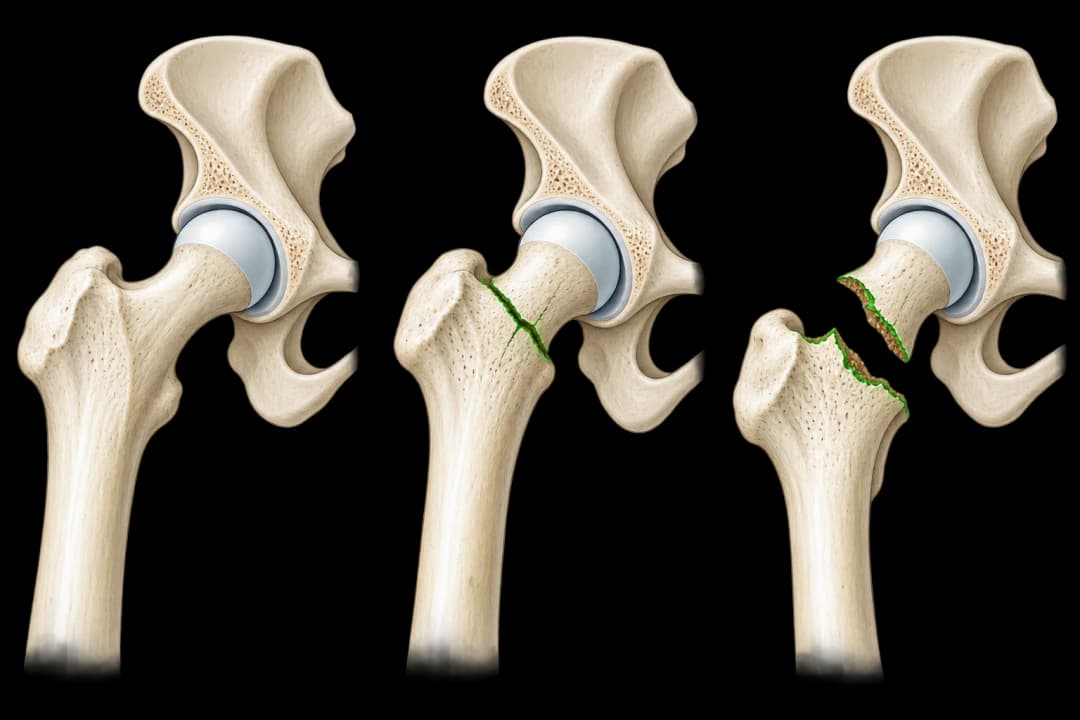
Broken hip repair uses screws, a plate, or an internal rod to align and stabilise the fractured bone.
This answers one question. It is not a diagnosis and does not replace an assessment by a licensed doctor.
At a glance
- Repair method
- Internal fixation preserves the natural joint
- Implant choices
- Screws, plate systems, or an internal rod
- Key instruction
- Follow the stated weight-bearing limit
The short answer
This form of internal fixation keeps the person's own hip joint. The device is selected to match the location and shape of the break, and it supports the bone while healing takes place.
How fixation supports healing
The surgeon first restores the position of the bone fragments as closely as practical. Screws can secure a fracture near the femoral neck; a larger screw attached to a plate can control some breaks around the upper shaft; and a rod inside the thigh bone can bridge other patterns. Imaging in the operating room guides alignment and implant placement.
Metalwork provides stability but does not replace biological healing. Blood supply, bone quality, smoking, nutrition, infection, and repeated loading beyond the advised limit can influence how the fracture progresses.
Supporting the repair
Check whether the instruction is full, partial, or no weight through the injured leg, and use the recommended frame or crutches accordingly. A physiotherapist can teach a step pattern that protects the fixation while keeping the rest of the body active.
Use prescribed pain relief, follow wound-care directions, and attend imaging appointments that assess alignment and healing. Eat regular protein-containing meals, avoid smoking, and discuss bone-strength assessment if the break followed a low-impact fall. Do not stop a prescribed blood thinner or start supplements without checking for medicine interactions.
Problems that should not wait
Get urgent help for difficulty breathing, chest pain, collapse, or a cold pale foot. Contact the surgical team rapidly for increasing wound discharge, spreading redness, fever, pain that is intensifying rather than settling, or a new painful swelling in the calf.
A snap or sudden change in hip pain, new leg deformity, loss of the ability to bear the allowed weight, or another fall may signal movement at the fracture or a problem with the metalwork. Stop loading the leg and arrange assessment.
Questions about the repair plan
Ask what type of fixation is being used, what the images show about alignment, and how much weight the leg may take. Request clear milestones for wound review, repeat imaging, exercises, work or driving, and find out what would make the team reconsider the treatment plan.
Find care
General Clinics & Polyclinics in Abu Dhabi
That answer is general. If you want it applied to your own case, these are licensed general clinics & polyclinics listed in Abu Dhabi.
27 Ar Ruwwad St - Shakhbout City - MSH4 - Abu Dhabi - United Arab Emirates
Accepts: Daman, Thiqa, Cigna, MetLife +20 more
Al Ruwais, Al Dhafrah
Accepts: Daman, Thiqa, AXA, Cigna +16 more
Al Bahyah - Al Bahyah Old - Abu Dhabi - United Arab Emirates
Accepts: Daman, Thiqa, Cigna, Allianz Care +18 more
Abu Dhabi
Accepts: Daman, Thiqa, AXA, Cigna +27 more
Ordered by verification status and how complete each clinic's public record is, then alphabetically. This is a directory listing, not a ranking — Zavis does not rate or recommend providers.
A factual listing drawn from the DHA, DOH and MOHAP licence registers. It is not a referral, an endorsement, or advice that any of these providers is right for you.
Questions people ask
Does metalwork need to be removed after healing?
It is often left in place unless it causes a specific problem. Removal is a separate clinical decision based on symptoms, healing, and surgical risk.
Why are follow-up X-rays needed?
They allow the team to check fracture position, progress of bone healing, and whether the fixation remains in its intended position.
Related
Related reading
Keep reading
Medical disclaimer. This page is general health information, not medical advice, and it cannot diagnose you. Always consult a licensed healthcare provider about your own symptoms and treatment. In an emergency in the UAE, call 998 for an ambulance.