
What happens during a broken hip procedure?
Short answer
A broken hip procedure either fixes the fracture with metalwork or replaces the damaged part of the joint.
This answers one question. It is not a diagnosis and does not replace an assessment by a licensed doctor.
At a glance
- Procedure goal
- Create a stable hip that supports recovery
- Common methods
- Internal fixation or joint replacement
- Early care
- Pain control and guided mobilisation
The short answer
The exact method depends mainly on where the bone has broken, whether the pieces have moved, bone strength, and the patient's health and previous level of activity.
How the procedure is chosen
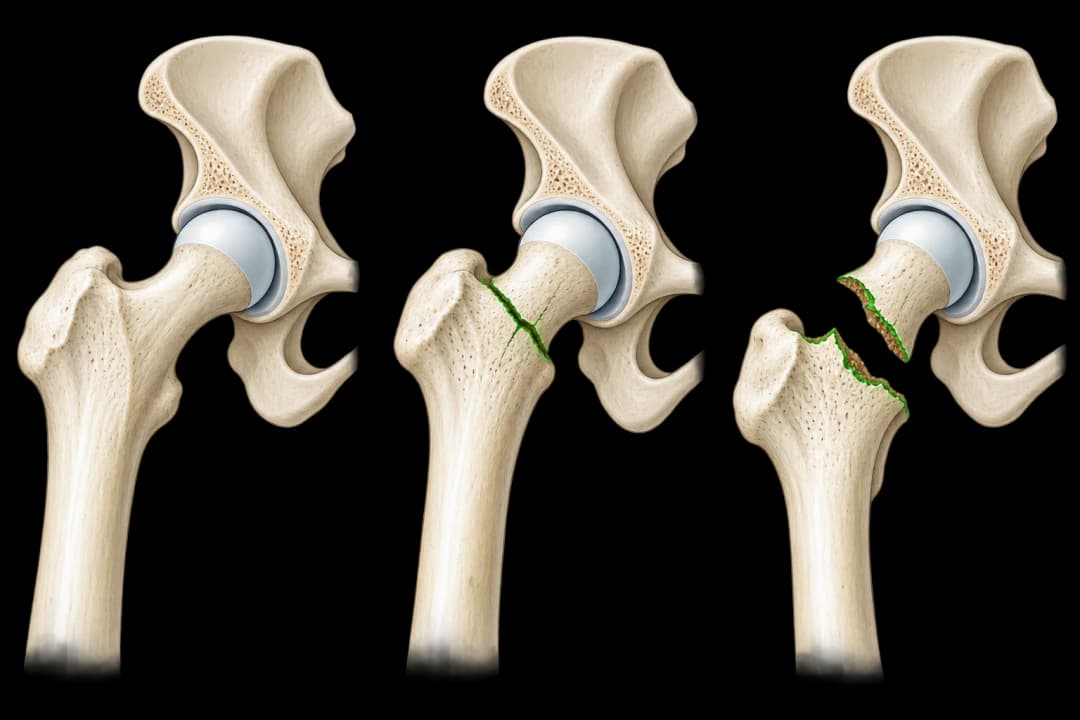
A fracture through the neck of the thigh bone may be secured with screws or treated by replacing the femoral head. A break lower down may be held with a screw-and-plate device or a rod placed inside the bone. Imaging shows the fracture shape and displacement, while the clinical assessment identifies anaesthetic and medical needs.
During the operation, the team aligns or removes the damaged bone, positions the chosen implants, checks their placement, and closes the wound. Anaesthesia may involve a spinal technique, general anaesthesia, or a tailored combination with pain relief.
What to do before and after
Tell the hospital team when food or drink was last taken, list all medicines and allergies, and mention blood thinners, previous anaesthetic problems, dentures, or implanted devices. Follow fasting and medicine instructions exactly.
Once the team says it is safe, practise getting out of bed and walking with the recommended aid. Take pain relief as directed so breathing and movement exercises remain manageable. Keep the wound clean according to discharge instructions, attend follow-up, and avoid changing weight-bearing limits without clinical advice.
Signs that need medical review
Emergency help is needed for chest pain, marked difficulty breathing, fainting, or coughing blood. Contact the treating service promptly if the wound opens, produces pus, becomes increasingly hot or red, or if fever accompanies worsening hip pain.
Report a newly swollen calf, numb or cold foot, sudden loss of movement, or a fall onto the operated side. These changes warrant assessment rather than waiting for the next routine appointment.
Questions about your procedure
Ask for the name of the planned procedure and implant, the reason for that choice, the anaesthetic options, and the permitted weight-bearing level. Also ask how the wound should be managed, when rehabilitation begins, which medicines continue after discharge, and what symptoms should trigger a call.
Find care
General Clinics & Polyclinics in Abu Dhabi
That answer is general. If you want it applied to your own case, these are licensed general clinics & polyclinics listed in Abu Dhabi.
27 Ar Ruwwad St - Shakhbout City - MSH4 - Abu Dhabi - United Arab Emirates
Accepts: Daman, Thiqa, Cigna, MetLife +20 more
Al Ruwais, Al Dhafrah
Accepts: Daman, Thiqa, AXA, Cigna +16 more
Al Bahyah - Al Bahyah Old - Abu Dhabi - United Arab Emirates
Accepts: Daman, Thiqa, Cigna, Allianz Care +18 more
Abu Dhabi
Accepts: Daman, Thiqa, AXA, Cigna +27 more
Ordered by verification status and how complete each clinic's public record is, then alphabetically. This is a directory listing, not a ranking — Zavis does not rate or recommend providers.
A factual listing drawn from the DHA, DOH and MOHAP licence registers. It is not a referral, an endorsement, or advice that any of these providers is right for you.
Questions people ask
Are all broken hip procedures the same?
No. The fracture location and stability help determine whether screws, a plate, a rod, or a replacement joint component is appropriate.
Will physiotherapy be needed afterward?
Rehabilitation commonly helps with transfers, walking technique, strength, and confidence while observing the surgeon's movement and weight-bearing instructions.
Related
Related reading
Keep reading
Medical disclaimer. This page is general health information, not medical advice, and it cannot diagnose you. Always consult a licensed healthcare provider about your own symptoms and treatment. In an emergency in the UAE, call 998 for an ambulance.