
What should you know about BRAF melanoma?
Short answer
BRAF melanoma is melanoma whose cells have a change in the BRAF gene, which can help guide targeted treatment and other care decisions.
This answers one question. It is not a diagnosis and does not replace an assessment by a licensed doctor.
At a glance
- BRAF
- A gene whose change can alter growth signals in melanoma cells.
- How it is found
- Through laboratory testing of melanoma tissue.
- Why it matters
- It may help the care team select and sequence treatment options.
What a BRAF result means
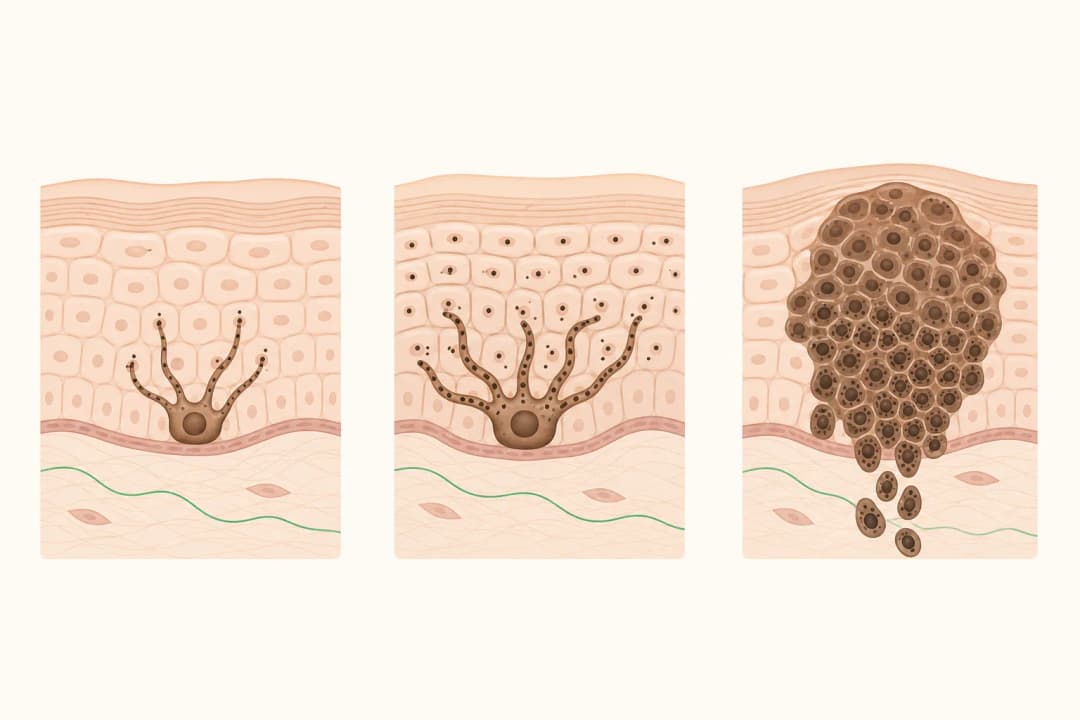
BRAF is a gene involved in signals that tell cells when to grow. In some melanomas, a gene change keeps this growth signal switched on. A laboratory test on tumour tissue can look for a BRAF change, often as part of broader molecular testing. The result describes the tumour biology; it does not by itself describe how advanced the melanoma is or predict exactly how one person will respond.
Your clinician combines the BRAF result with the melanoma's stage, location, symptoms, previous treatment and general health. Staging may involve examination, scans and, in selected situations, a sentinel lymph node biopsy. A BRAF change can be present in melanoma that began in the skin and in melanoma that has spread, including to distant organs. The care plan therefore needs individual discussion.
What to do after a BRAF diagnosis
Ask whether the result is confirmed, which BRAF change was found and whether additional molecular results are relevant. If treatment is needed, the team may discuss medicines that block the BRAF pathway, medicines that block a related pathway, immunotherapy, surgery, or a sequence of approaches. Treatment selection depends on whether the melanoma can be removed, whether it has spread, prior therapies and your medical history.
Keep a copy of the pathology and molecular report, take medicines exactly as prescribed and report new or troublesome effects promptly. Skin checks and planned imaging may be part of follow-up. Sun protection remains useful for protecting skin and spotting new or changing lesions, but it does not replace scheduled cancer care.
When to seek care quickly
Contact your oncology team promptly for a rapidly changing mole, a new lump near a treated area, unexplained bleeding, or symptoms that are new and persistent. Seek urgent medical help for severe breathing difficulty, fainting, sudden weakness, a seizure, confusion, or a severe allergic reaction. These symptoms can have causes unrelated to melanoma, but they need timely assessment.
Do not wait for a routine appointment if treatment causes severe diarrhoea, marked dehydration, a high fever, widespread blistering or peeling skin, or a sudden change in vision. Your team can tell you which clinic or emergency service to use outside office hours.
Questions for your doctor
Useful questions include: What exactly did the BRAF test find? What is the melanoma stage, and what further tests are needed? Which treatment options fit my situation? What symptoms should I report the same day? How will we check whether treatment is working? How often will skin examinations, scans or other follow-up be arranged?
Find care
General Clinics & Polyclinics in Abu Dhabi
That answer is general. If you want it applied to your own case, these are licensed general clinics & polyclinics listed in Abu Dhabi.
27 Ar Ruwwad St - Shakhbout City - MSH4 - Abu Dhabi - United Arab Emirates
Accepts: Daman, Thiqa, Cigna, MetLife +20 more
Al Ruwais, Al Dhafrah
Accepts: Daman, Thiqa, AXA, Cigna +16 more
Al Bahyah - Al Bahyah Old - Abu Dhabi - United Arab Emirates
Accepts: Daman, Thiqa, Cigna, Allianz Care +18 more
Abu Dhabi
Accepts: Daman, Thiqa, AXA, Cigna +27 more
Ordered by verification status and how complete each clinic's public record is, then alphabetically. This is a directory listing, not a ranking — Zavis does not rate or recommend providers.
A factual listing drawn from the DHA, DOH and MOHAP licence registers. It is not a referral, an endorsement, or advice that any of these providers is right for you.
Questions people ask
Does a BRAF change mean the melanoma has spread?
No. A BRAF result describes a molecular feature of the tumour, while scans, examination and other tests assess whether melanoma has spread and determine its stage.
Can BRAF melanoma be treated?
Treatment can include surgery, targeted medicines, immunotherapy or combinations chosen according to stage, tumour features, previous treatment and your overall health.
What follow-up is needed?
Follow-up may include skin examinations, review of symptoms, treatment monitoring and imaging when clinically appropriate. Your schedule should be personalised by the oncology team.
Related
Related reading
Keep reading
Medical disclaimer. This page is general health information, not medical advice, and it cannot diagnose you. Always consult a licensed healthcare provider about your own symptoms and treatment. In an emergency in the UAE, call 998 for an ambulance.