
Bottom Middle Foot Pain: Causes and Next Steps
Short answer
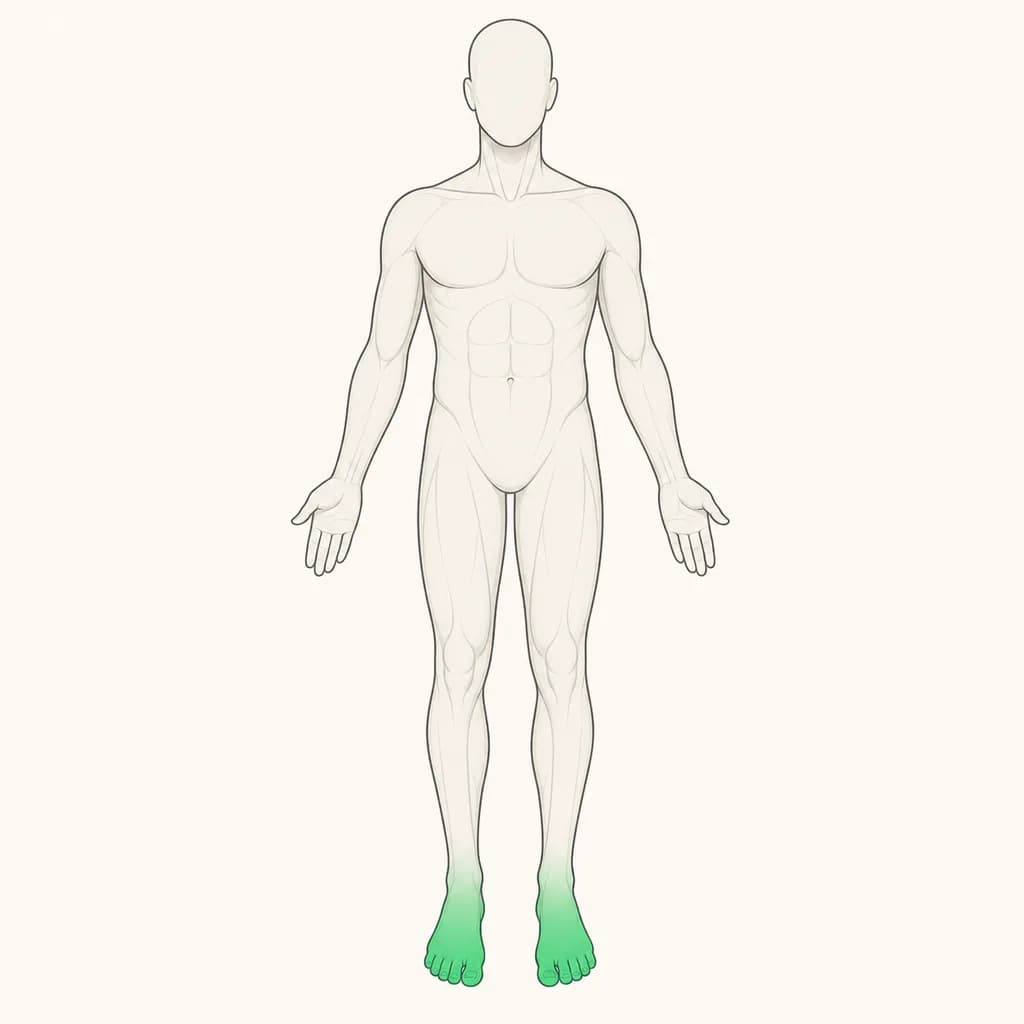
Pain under the middle of the foot can come from irritated soft tissue, altered foot mechanics, pressure, or a bone injury.
This answers one question. It is not a diagnosis and does not replace an assessment by a licensed doctor.
At a glance
- Area
- Sole beneath the arch or central midfoot
- Helpful detail
- Whether pain is diffuse or sharply focused
- First step
- Reduce painful loading and wear supportive footwear
The short answer
The location, trigger, tenderness pattern, and effect on walking help distinguish among possibilities. New pain after a sudden increase in running or walking deserves particular attention, especially when one small spot is sharply tender.
What the location may tell you
The arch contains fascia, muscles, tendons, joints, and bones that share load with every step. Plantar fasciitis often presents with pain along the sole that may be worse with the first steps after rest. Flat feet can change how pressure travels through the arch, while a stress fracture can present with increasingly focal pain during weight-bearing.
A clinician may examine your arch shape, footwear wear pattern, ankle movement, and the precise area of tenderness. Swelling, bruising, numbness, or pain that continues at rest can change which cause needs consideration.
What you can do now
Reduce activities that reproduce the pain and choose supportive, well-fitting shoes rather than walking barefoot on hard floors. A wrapped cold pack can be used briefly with fabric protecting the skin. Do not force stretches through sharp pain or try to run through a new limp.
Note whether discomfort is worst on waking, during push-off, after long standing, or at one exact point. If symptoms persist or return, an assessment can guide footwear changes, exercises, or custom orthotics when foot mechanics make them appropriate.
When to seek medical care
Seek urgent assessment after a significant injury if you cannot bear weight, the foot looks deformed, or it becomes cold, pale, blue, or numb. Rapidly increasing swelling, spreading redness, fever, an open wound, or severe pain at rest also needs prompt care.
Arrange a routine visit when pain is not settling with activity modification, repeatedly limits walking, or is concentrated over a bone. People with diabetes, reduced sensation, or circulation problems should have new foot wounds or unexplained swelling assessed early.
Useful questions for your appointment
Ask which structure seems painful, whether your walking pattern or shoes are contributing, and which movements are safe while it heals. You can also ask whether examination is enough or imaging is needed, and what signs should make you return sooner.
Find care
General Clinics & Polyclinics in Abu Dhabi
That answer is general. If you want it applied to your own case, these are licensed general clinics & polyclinics listed in Abu Dhabi.
27 Ar Ruwwad St - Shakhbout City - MSH4 - Abu Dhabi - United Arab Emirates
Accepts: Daman, Thiqa, Cigna, MetLife +20 more
Al Ruwais, Al Dhafrah
Accepts: Daman, Thiqa, AXA, Cigna +16 more
Al Bahyah - Al Bahyah Old - Abu Dhabi - United Arab Emirates
Accepts: Daman, Thiqa, Cigna, Allianz Care +18 more
Abu Dhabi
Accepts: Daman, Thiqa, AXA, Cigna +27 more
Ordered by verification status and how complete each clinic's public record is, then alphabetically. This is a directory listing, not a ranking — Zavis does not rate or recommend providers.
A factual listing drawn from the DHA, DOH and MOHAP licence registers. It is not a referral, an endorsement, or advice that any of these providers is right for you.
Questions people ask
Can plantar fasciitis cause pain in the middle of the sole?
Yes. Plantar fasciitis can present with pain along the underside of the foot, often around the heel and arch, and may feel worse with early steps after rest.
Should I massage the painful area?
Gentle work around a mildly sore arch may feel comfortable, but avoid pressing hard on a sharply tender point, bruised area, or suspected bone injury. Stop if massage increases pain.
Related
Related reading
Keep reading
Medical disclaimer. This page is general health information, not medical advice, and it cannot diagnose you. Always consult a licensed healthcare provider about your own symptoms and treatment. In an emergency in the UAE, call 998 for an ambulance.