
Blue light cysto: a patient guide
Short answer
Blue light cysto is a cystoscopy technique that uses a bladder imaging agent and blue illumination to highlight suspicious tissue.
This answers one question. It is not a diagnosis and does not replace an assessment by a licensed doctor.
At a glance
- Also called
- Blue light cystoscopy
- Purpose
- An added visual method for finding suspicious bladder tissue
- Diagnostic confirmation
- A pathologist examines sampled tissue when a biopsy is taken
The short answer
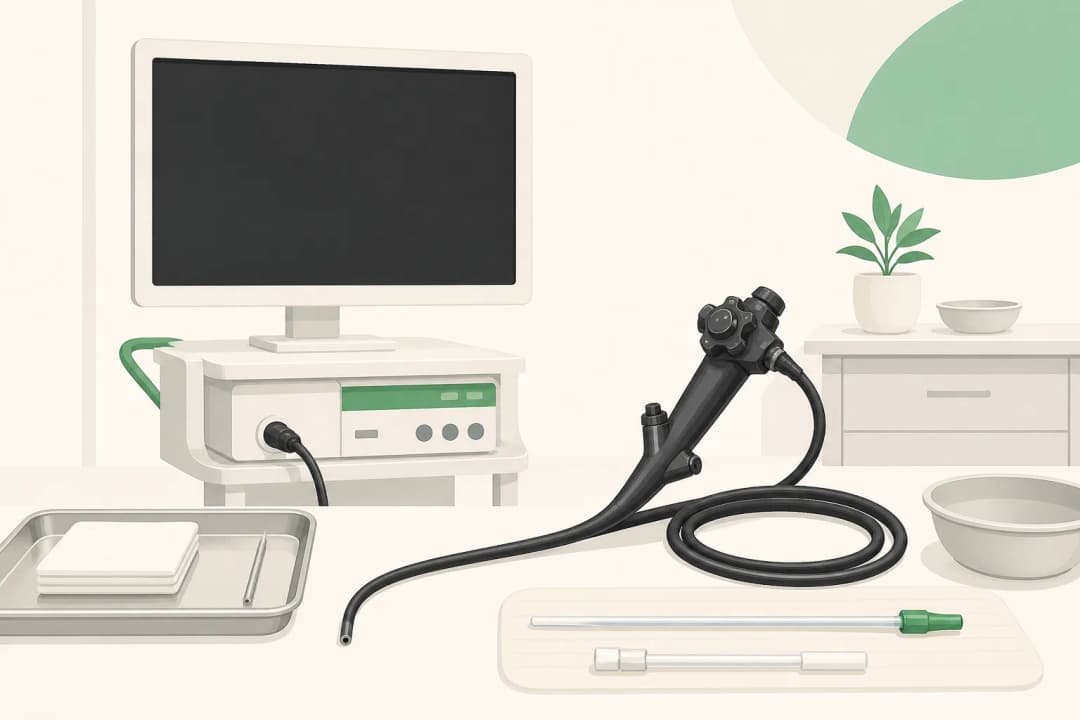
The informal term “cysto” means cystoscopy. During the procedure, the clinician examines the bladder with standard white light and then uses blue light as an additional view; the blue-light view does not replace the full white-light examination.
How the blue-light view works
Before examination, an imaging solution is placed inside the bladder through a urinary catheter. Bladder tissue takes up the agent differently, and areas of concern can fluoresce under the specialised light. The urologist compares both lighting views and decides whether any area needs sampling or removal.
Fluorescence is a visual guide, not a diagnosis by itself. Inflammation, scar tissue, recent treatment, or irritation can also affect how tissue appears, while some abnormal areas may not light up. Laboratory examination of a biopsy provides the tissue diagnosis.
How to prepare and recover
Tell the urology team about medicines, allergies, pregnancy, urinary infection symptoms, recent bladder treatments, and previous reactions to imaging agents. Follow their instructions about eating, drinking, transport, and any medicines around the procedure, because these depend on whether anaesthesia or treatment is planned.
Afterward, use the clinic’s discharge plan. Temporary burning, urinary urgency, or lightly blood-tinged urine can follow catheterisation and cystoscopy. Watch for improvement and arrange the stated follow-up for biopsy findings or the next surveillance decision.
When to seek medical help
Contact the care team promptly for fever, chills, worsening pain, heavy or continuing blood in the urine, repeated clots, cloudy or foul-smelling urine, or symptoms that are intensifying instead of easing. Seek emergency care if you cannot urinate and develop lower abdominal swelling or pain.
A sudden widespread rash, facial or throat swelling, breathing difficulty, or faintness after an imaging agent requires emergency help. Give responders the name of the procedure and imaging agent if known.
Questions to clarify before the appointment
Confirm why blue light is being recommended in your case, whether biopsies or tumour removal may occur, what type of anaesthesia is planned, and how results will be shared. Ask whom to call if urinary symptoms develop after discharge.
Questions people ask
Is blue light cysto the same as ordinary cystoscopy?
It uses the same route into the bladder but adds an imaging agent and specialised blue illumination to the standard white-light examination.
Does fluorescence prove that an area is cancer?
No. The appearance guides the urologist, but inflammation and treatment effects may also fluoresce. A biopsy is assessed in a laboratory when tissue confirmation is needed.
Will I be awake?
That depends on the setting and whether another procedure is planned. Your team can tell you whether local, regional, or general anaesthesia will be used.
Related
Related reading
Keep reading
Cancer care in the UAE
Hospitals & Medical Centers in Abu Dhabi
Most UAE cancer care is delivered inside hospital services rather than by standalone oncology clinics, so these are licensed hospitals & medical centers listed in Abu Dhabi. Confirm the specific cancer service exists before you travel, and know that asking for a second opinion is routine.
Ahalia Hospital Musaffah Building - Musaffah - Musaffah Industrial - Abu Dhabi - United Arab Emirates
Accepts: Daman, Thiqa, AXA, Cigna +26 more
Al Ruwais Industrial City - Abu Dhabi - United Arab Emirates
Accepts: Daman, Thiqa, AXA, Cigna +30 more
Abu Dhabi, Abu Dhabi
Accepts: Daman, Thiqa, AXA, Cigna +30 more
Second opinions are routine in cancer care and asking for one does not affect your treatment. How to arrange a second opinion in the UAE.
Ordered by verification status and how complete each clinic's public record is, then alphabetically. This is a directory listing, not a ranking — Zavis does not rate or recommend providers.
A factual listing drawn from the DHA, DOH and MOHAP licence registers. It is not a referral, an endorsement, or advice that any of these providers is right for you.
Medical disclaimer. This page is general health information, not medical advice, and it cannot diagnose you. Always consult a licensed healthcare provider about your own symptoms and treatment. In an emergency in the UAE, call 998 for an ambulance.