
Blastocyst frozen embryo transfer explained
Short answer
A blastocyst frozen embryo transfer places a thawed blastocyst-stage embryo into a prepared uterus during a carefully timed treatment cycle.
This answers one question. It is not a diagnosis and does not replace an assessment by a licensed doctor.
At a glance
- Embryo stage
- The embryo reached the blastocyst stage before it was frozen.
- Cycle goal
- Transfer timing is coordinated with the receptive phase of the uterine lining.
- Medication caution
- Do not stop progesterone because of spotting unless the clinic instructs you.
What the treatment involves
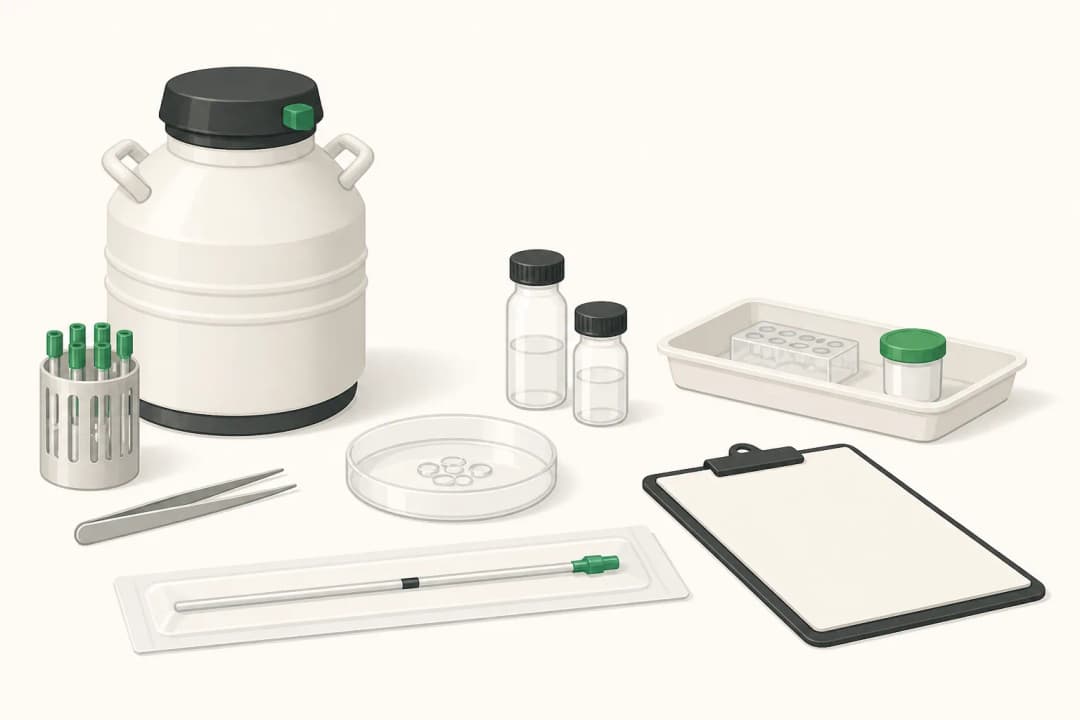
The embryo was created during earlier fertility treatment, allowed to develop to the blastocyst stage and then frozen. Before transfer, the laboratory warms it and checks its condition. Meanwhile, the clinic coordinates the uterine lining with natural ovulation or prescribed hormones.
How timing and thawing fit together
In a natural or modified natural cycle, monitoring identifies ovulation so transfer can be scheduled at the appropriate point. In a hormone-prepared cycle, oestrogen supports lining development and progesterone starts according to a precise timetable. The protocol depends on menstrual regularity, medical history and clinic planning.
The laboratory assesses the blastocyst after warming because embryos can respond differently to the process. If it remains suitable, a thin catheter carries it through the cervix into the uterine cavity, often with ultrasound guidance. Transfer does not guarantee that the blastocyst will implant, and its appearance cannot determine the outcome on its own.
Keeping the cycle on schedule
Take every prescribed medicine at the stated time, particularly progesterone, because the lining and embryo must remain synchronised. If a dose is late, missed or vomited, call the clinic for instructions rather than doubling it without advice. Attend monitoring and follow directions about bladder filling before the procedure.
Resume gentle daily routines after transfer unless your fertility team has set restrictions for another clinical reason. There is no need to remain completely still to keep the embryo inside the uterus. Continue support medicines through spotting unless the clinic changes the plan, and wait for the scheduled pregnancy test to obtain an interpretable result.
When to contact the fertility team
Ask for prompt advice if you have increasing pelvic pain, fever, foul-smelling discharge, persistent vomiting, concerning bleeding or a medication problem. Get urgent medical help for severe one-sided or general abdominal pain, heavy bleeding, shoulder-tip pain, fainting, collapse or difficulty breathing. A positive pregnancy test followed by pain or bleeding also needs timely assessment because the location of the pregnancy must be confirmed.
What to confirm with your clinic
Check whether the cycle uses ovulation tracking or hormone preparation, how the clinic will communicate the thaw update, and exactly when medicines start and stop. Also confirm the testing date, the contact route for an urgent medication query and the next step for either a positive or negative result.
Find care
General Clinics & Polyclinics in Abu Dhabi
That answer is general. If you want it applied to your own case, these are licensed general clinics & polyclinics listed in Abu Dhabi.
27 Ar Ruwwad St - Shakhbout City - MSH4 - Abu Dhabi - United Arab Emirates
Accepts: Daman, Thiqa, Cigna, MetLife +20 more
Al Ruwais, Al Dhafrah
Accepts: Daman, Thiqa, AXA, Cigna +16 more
Al Bahyah - Al Bahyah Old - Abu Dhabi - United Arab Emirates
Accepts: Daman, Thiqa, Cigna, Allianz Care +18 more
Abu Dhabi
Accepts: Daman, Thiqa, AXA, Cigna +27 more
Ordered by verification status and how complete each clinic's public record is, then alphabetically. This is a directory listing, not a ranking — Zavis does not rate or recommend providers.
A factual listing drawn from the DHA, DOH and MOHAP licence registers. It is not a referral, an endorsement, or advice that any of these providers is right for you.
Questions people ask
What should you know about blastocyst frozen embryo transfer?
It combines laboratory warming of a frozen blastocyst with carefully timed preparation of the uterine lining. Medication, monitoring and testing instructions vary with the chosen cycle protocol.
What happens if the blastocyst does not tolerate warming?
The laboratory assesses it after warming and tells the clinical team whether transfer can proceed. Ask your clinic beforehand how it handles this possibility and how you will receive the update.
Can I stop progesterone if bleeding starts?
Bleeding does not by itself show the treatment outcome. Continue prescribed progesterone and contact the fertility team for instructions rather than stopping it independently.
Related
Related reading
Keep reading
Medical disclaimer. This page is general health information, not medical advice, and it cannot diagnose you. Always consult a licensed healthcare provider about your own symptoms and treatment. In an emergency in the UAE, call 998 for an ambulance.