
What should you know about black melanoma?
Short answer
Black melanoma usually refers to a melanoma containing dark pigment, not a separate medical type defined by colour alone.
This answers one question. It is not a diagnosis and does not replace an assessment by a licensed doctor.
At a glance
- Meaning
- A descriptive phrase for a darkly pigmented melanoma, not a diagnosis based on colour alone.
- Confirmation
- Microscopic examination of removed tissue is used to establish the diagnosis.
- Next step
- A new, changing or bleeding pigmented lesion deserves prompt clinical examination.
The short answer
Black melanoma usually refers to a melanoma containing dark pigment, not a separate medical type defined by colour alone. Melanoma can look black, brown, tan, pink, red or nearly colourless. A clinician cannot confirm melanoma from colour or a photograph; diagnosis generally requires examination and testing of sampled tissue.
What the term means
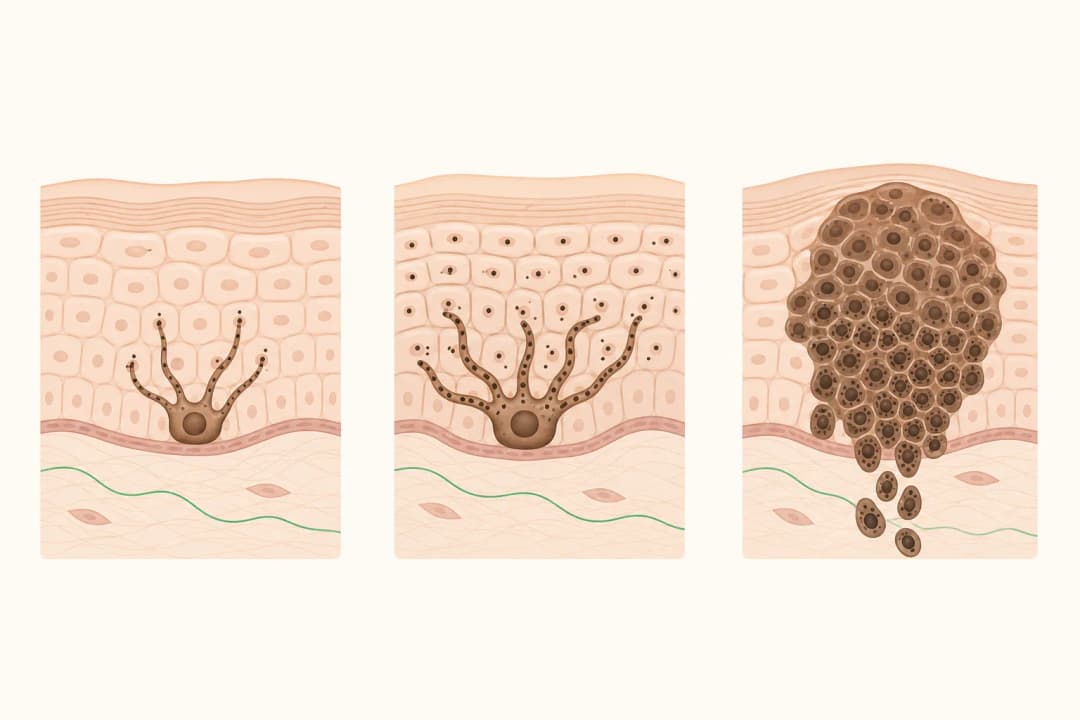
Melanin can give a melanoma a very dark or uneven appearance. Features that raise concern include a new mark, change in an existing mole, asymmetry, an irregular edge, several colours, growth, bleeding or persistent irritation. These signs are reasons for assessment, but they do not establish the diagnosis. Melanoma also presents without dark pigment, so colour should never be the only screening clue.
If tissue testing confirms melanoma, the report describes features that help the specialist plan care. Depending on those findings and the clinical examination, further assessment may be offered to determine whether melanoma cells have moved beyond the original site.
What to do about a suspicious dark mark
Arrange a skin examination rather than trying to scrape, bleach or burn the area. Note when you first saw it and what has changed. A clear photograph with a familiar object for scale can help document change, although it cannot replace an examination. Tell the clinician about previous skin cancers, significant sun exposure and melanoma in close relatives.
When melanoma is suspected, the clinician may remove the entire visible lesion with a margin of skin for diagnosis. Confirmed disease is commonly managed with further surgery around the site. Lymph-node assessment, scans or medicines such as immunotherapy depend on the pathology and whether there is evidence of spread.
When to seek medical care
Book a prompt dermatology appointment for a new or changing dark lesion, a mole that looks unlike your others, or a spot that repeatedly bleeds, crusts, itches or fails to heal. Seek urgent care for heavy bleeding that does not stop with firm pressure or for severe symptoms such as new weakness, confusion, a seizure or a sudden intense headache. Those symptoms require urgent assessment regardless of their cause.
Questions for your dermatologist
Ask whether the whole lesion should be removed for testing, where the sample will be taken and when to expect the pathology discussion. If melanoma is confirmed, ask what the report says about depth and margins, whether lymph-node assessment is relevant, which treatment is recommended and how the rest of your skin and lymph nodes will be monitored afterward.
Find care
General Clinics & Polyclinics in Abu Dhabi
That answer is general. If you want it applied to your own case, these are licensed general clinics & polyclinics listed in Abu Dhabi.
27 Ar Ruwwad St - Shakhbout City - MSH4 - Abu Dhabi - United Arab Emirates
Accepts: Daman, Thiqa, Cigna, MetLife +20 more
Al Ruwais, Al Dhafrah
Accepts: Daman, Thiqa, AXA, Cigna +16 more
Al Bahyah - Al Bahyah Old - Abu Dhabi - United Arab Emirates
Accepts: Daman, Thiqa, Cigna, Allianz Care +18 more
Abu Dhabi
Accepts: Daman, Thiqa, AXA, Cigna +27 more
Ordered by verification status and how complete each clinic's public record is, then alphabetically. This is a directory listing, not a ranking — Zavis does not rate or recommend providers.
A factual listing drawn from the DHA, DOH and MOHAP licence registers. It is not a referral, an endorsement, or advice that any of these providers is right for you.
Questions people ask
Is every black mole a melanoma?
No. Many dark moles and spots are benign, while melanoma may be dark or have little pigment. Change and other clinical features guide assessment, and tissue testing confirms the diagnosis.
Should I remove a suspicious spot myself?
No. Home removal can cause injury, leave infection or scarring, and destroy tissue needed for diagnosis. Keep the area intact and arrange a professional examination.
What happens after melanoma is confirmed?
The specialist reviews the pathology, examines the skin and lymph nodes, and recommends surgery and any further assessment or treatment suited to the findings.
Related
Related reading
Keep reading
Medical disclaimer. This page is general health information, not medical advice, and it cannot diagnose you. Always consult a licensed healthcare provider about your own symptoms and treatment. In an emergency in the UAE, call 998 for an ambulance.