
What should you know about between type 1 and type 2 diabetes?
Short answer
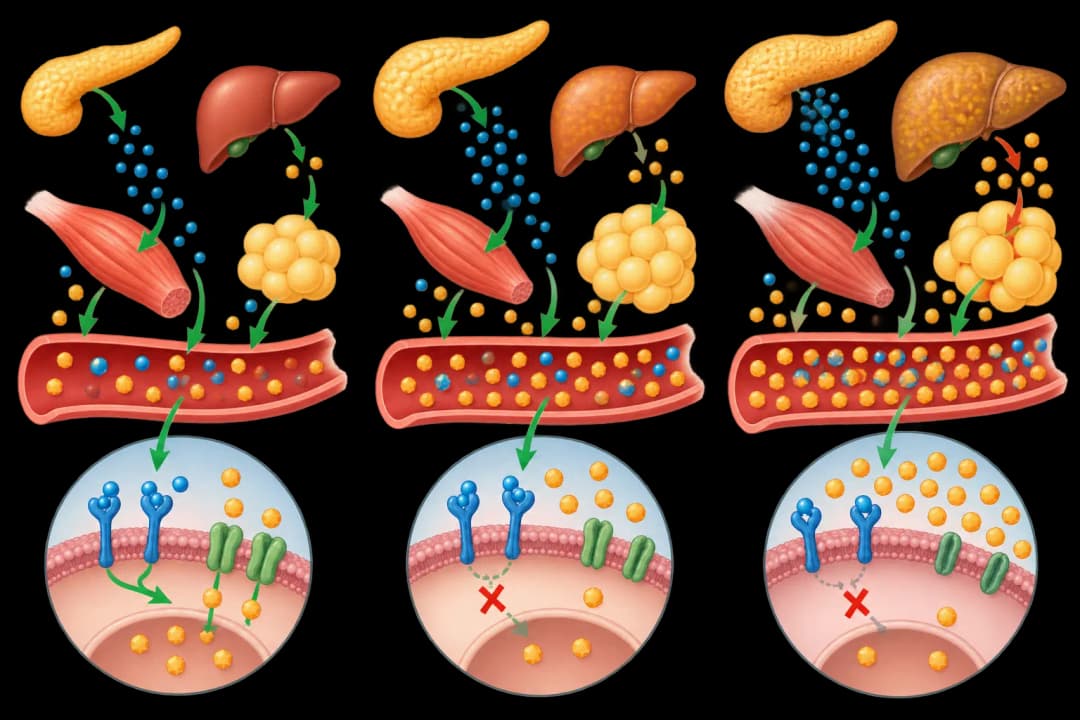
Type 1 diabetes results from the body stopping insulin production, while type 2 diabetes involves insulin resistance and gradually reduced insulin supply.
This answers one question. It is not a diagnosis and does not replace an assessment by a licensed doctor.
At a glance
- Type 1
- Insulin production stops
- Type 2
- Insulin resistance develops
How the two types differ
Insulin moves glucose from the bloodstream into cells for energy. In type 1 diabetes, the immune system damages insulin-producing cells, so insulin replacement is needed. Type 1 can develop at any age and often begins more quickly. In type 2 diabetes, cells respond less effectively to insulin and the pancreas may not keep up; risk is influenced by genes, age, body weight and activity, but it can occur without obesity.
Both types can cause thirst, frequent urination, tiredness and blurred vision. A diagnosis needs blood tests, not symptoms alone. Prediabetes is different: glucose is above the usual range but does not meet the definition of diabetes.
Managing diabetes safely
Use the treatment plan prescribed for your type. Type 1 usually requires insulin, glucose checks and planning around meals and activity. Type 2 may involve food changes, activity, tablets, injectable medicines or insulin, depending on glucose levels and health needs.
Keep appointments for eye, kidney, foot and cardiovascular checks. Good glucose management lowers the chance of problems such as peripheral neuropathy, chronic kidney disease, cellulitis and stroke. Never change insulin or other medicine without clinical advice.
When to seek urgent care
Get urgent help for vomiting, stomach pain, deep or rapid breathing, confusion, severe drowsiness or inability to keep fluids down. Treat suspected hypoglycaemia promptly according to your personal plan; seek help if the person is unconscious, having a seizure or cannot swallow.
Questions for your doctor
Ask which type you have, how to monitor glucose, what your targets are, how to recognise hypoglycaemia, and which kidney, eye, foot and heart checks you need.
Find care
General Clinics & Polyclinics in Abu Dhabi
That answer is general. If you want it applied to your own case, these are licensed general clinics & polyclinics listed in Abu Dhabi.
27 Ar Ruwwad St - Shakhbout City - MSH4 - Abu Dhabi - United Arab Emirates
Accepts: Daman, Thiqa, Cigna, MetLife +20 more
Al Ruwais, Al Dhafrah
Accepts: Daman, Thiqa, AXA, Cigna +16 more
Al Bahyah - Al Bahyah Old - Abu Dhabi - United Arab Emirates
Accepts: Daman, Thiqa, Cigna, Allianz Care +18 more
Abu Dhabi
Accepts: Daman, Thiqa, AXA, Cigna +27 more
Ordered by verification status and how complete each clinic's public record is, then alphabetically. This is a directory listing, not a ranking — Zavis does not rate or recommend providers.
A factual listing drawn from the DHA, DOH and MOHAP licence registers. It is not a referral, an endorsement, or advice that any of these providers is right for you.
Questions people ask
Does type 2 diabetes only affect people with obesity?
No. Body weight is one factor among genes, age, activity and other influences.
Do both types need insulin?
People with type 1 need insulin; some people with type 2 also need it as treatment changes.
Related
Related reading
Keep reading
Medical disclaimer. This page is general health information, not medical advice, and it cannot diagnose you. Always consult a licensed healthcare provider about your own symptoms and treatment. In an emergency in the UAE, call 998 for an ambulance.