
What does benign prostatic hyperplasia mean in older adults?
Short answer
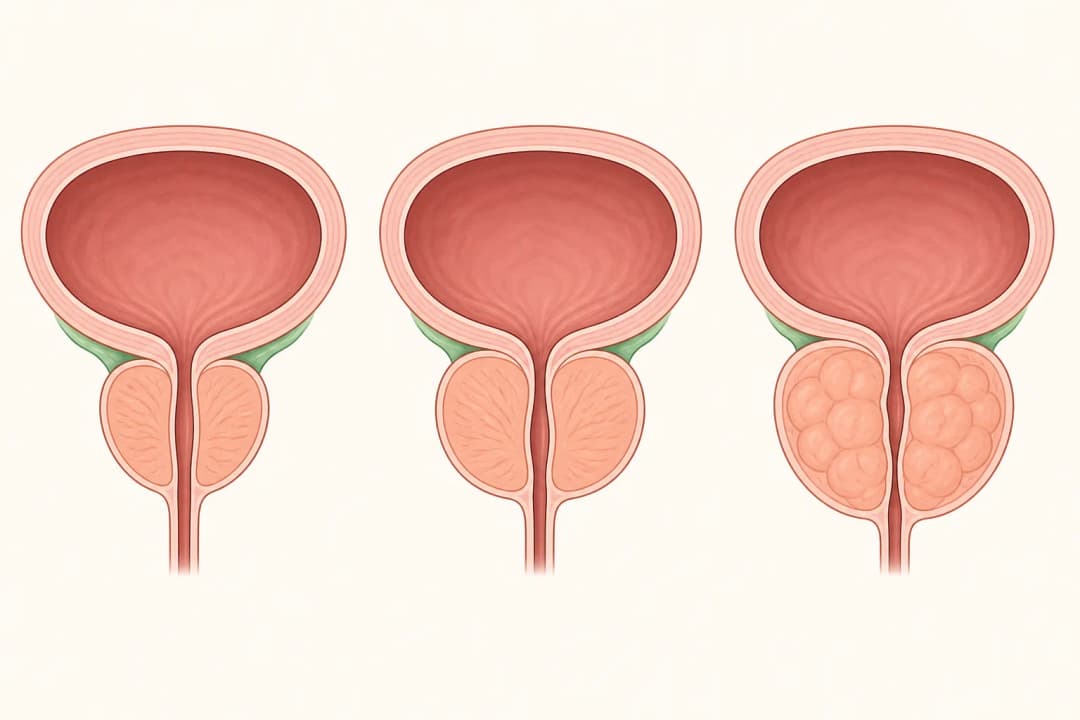
In older adults, benign prostatic hyperplasia is non-cancerous prostate enlargement that can affect urine flow and bladder emptying.
This answers one question. It is not a diagnosis and does not replace an assessment by a licensed doctor.
At a glance
- Meaning
- Non-cancerous prostate enlargement
- Daily impact
- Night waking, urgency, or slower urine flow
- Review focus
- Symptoms, medicines, mobility, and bladder emptying
Understanding the change
The prostate surrounds the urethra beneath the bladder. Enlargement can make the stream weak, delay the start of urination, cause dribbling, or create urgency and frequent visits. Night-time urination can disturb sleep and contribute to fatigue or falls when walking in the dark.
Older adults may have several conditions and medicines at once. Constipation, reduced mobility, diabetes, sleep problems, and medicines that increase urine production can affect bladder symptoms, so a clinician should look at the whole picture rather than assume every change is BPH.
Managing symptoms safely
Book a review when symptoms are new, worsening, or disrupting sleep and daily activities. Bring a current medicine list and mention dizziness, falls, memory concerns, constipation, and fluid habits. A clinician may assess urine, bladder emptying, prostate symptoms, and kidney-related concerns.
Helpful changes may include spreading fluids through the day, limiting drinks before bed when suitable, treating constipation, and allowing time to empty the bladder. Medicines or procedures are considered according to symptoms, examination findings, and general health.
Warning signs
Get urgent help if urine will not pass, there is severe lower abdominal discomfort, blood in the urine, fever with urinary pain, vomiting, confusion, or a sudden marked decline. Seek prompt advice after a fall or new dizziness, particularly if a urinary medicine was recently started.
Questions to take along
Ask whether symptoms could have more than one cause, how medicines may affect balance or blood pressure, how bladder emptying will be checked, and which option protects sleep and independence. Ask when follow-up should occur.
Find care
General Clinics & Polyclinics in Abu Dhabi
That answer is general. If you want it applied to your own case, these are licensed general clinics & polyclinics listed in Abu Dhabi.
27 Ar Ruwwad St - Shakhbout City - MSH4 - Abu Dhabi - United Arab Emirates
Accepts: Daman, Thiqa, Cigna, MetLife +20 more
Al Ruwais, Al Dhafrah
Accepts: Daman, Thiqa, AXA, Cigna +16 more
Al Bahyah - Al Bahyah Old - Abu Dhabi - United Arab Emirates
Accepts: Daman, Thiqa, Cigna, Allianz Care +18 more
Abu Dhabi
Accepts: Daman, Thiqa, AXA, Cigna +27 more
Ordered by verification status and how complete each clinic's public record is, then alphabetically. This is a directory listing, not a ranking — Zavis does not rate or recommend providers.
A factual listing drawn from the DHA, DOH and MOHAP licence registers. It is not a referral, an endorsement, or advice that any of these providers is right for you.
Questions people ask
Is BPH a normal part of ageing that needs no review?
It is common with age, but troublesome, new, or changing urinary symptoms should be assessed.
Why mention falls or dizziness?
Night-time rushing and some urinary medicines can affect balance or blood pressure, so these details help guide safer care.
Related
Related reading
Keep reading
Medical disclaimer. This page is general health information, not medical advice, and it cannot diagnose you. Always consult a licensed healthcare provider about your own symptoms and treatment. In an emergency in the UAE, call 998 for an ambulance.