
What should you know about benign hypertension with chronic kidney disease?
Short answer
Benign hypertension with chronic kidney disease needs coordinated monitoring because raised pressure and reduced kidney function can worsen each other.
This answers one question. It is not a diagnosis and does not replace an assessment by a licensed doctor.
At a glance
- Shared concern
- Blood pressure and kidney function can influence each other.
- Monitoring
- Readings, blood tests and urine tests may all matter.
- Medicines
- Check new products before taking them.
How the conditions connect
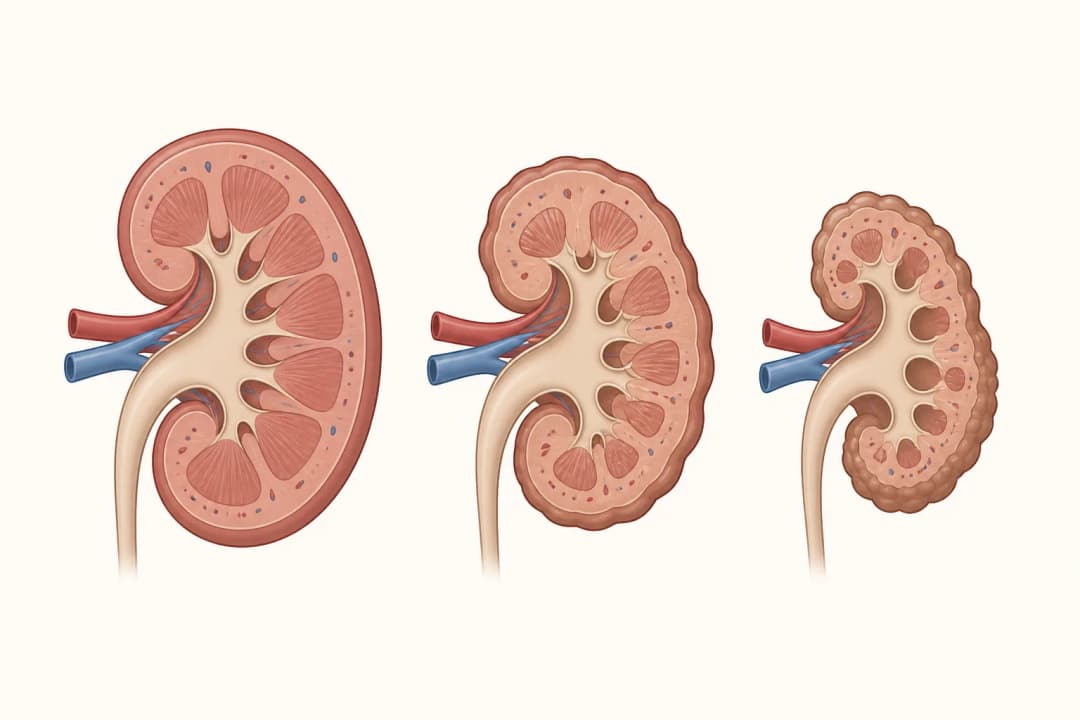
Chronic kidney disease can affect fluid balance and the systems that regulate blood pressure. In turn, persistently raised pressure can place additional stress on the kidney's filtering structures. Benign is an older label for hypertension; it does not mean the combination is harmless or that kidney function will behave the same for everyone.
Kidney reviews may include blood tests, urine testing, medication checks and blood pressure measurements. Fatigue or excessive thirst can have many explanations and should be assessed in context, rather than used to diagnose either condition. Type 2 Diabetes is another health issue often considered in kidney and blood pressure care.
Managing both safely
Take blood pressure and kidney medicines exactly as prescribed, and keep appointments even when you feel well. Record readings if home monitoring is part of your plan. Do not start anti-inflammatory pain medicines, herbal products or salt substitutes without checking, because some can affect kidney function, fluid balance or potassium.
Ask how much fluid and salt is suitable for you; advice can change with kidney function and other conditions. Bring a complete medicine list to every review. Your team may also discuss gout, anaemia or restless legs syndrome if symptoms or test results make them relevant.
When to get help
Seek prompt clinical advice for a sustained change in readings, much less urine, swelling, worsening breathlessness, repeated vomiting or difficulty keeping medicines down. Emergency help is needed for chest pain, severe breathlessness, collapse, new confusion, sudden weakness or trouble speaking. These warning signs can reflect a serious heart, brain or fluid-related problem.
Questions to take along
Ask what blood pressure range is appropriate for your kidney function, which blood and urine tests you need, and when results should be reviewed. Check which painkillers, supplements and salt substitutes to avoid, and ask how to respond to illness, vomiting or a missed dose.
Find care
General Clinics & Polyclinics in Abu Dhabi
That answer is general. If you want it applied to your own case, these are licensed general clinics & polyclinics listed in Abu Dhabi.
27 Ar Ruwwad St - Shakhbout City - MSH4 - Abu Dhabi - United Arab Emirates
Accepts: Daman, Thiqa, Cigna, MetLife +20 more
Al Ruwais, Al Dhafrah
Accepts: Daman, Thiqa, AXA, Cigna +16 more
Al Bahyah - Al Bahyah Old - Abu Dhabi - United Arab Emirates
Accepts: Daman, Thiqa, Cigna, Allianz Care +18 more
Abu Dhabi
Accepts: Daman, Thiqa, AXA, Cigna +27 more
Ordered by verification status and how complete each clinic's public record is, then alphabetically. This is a directory listing, not a ranking — Zavis does not rate or recommend providers.
A factual listing drawn from the DHA, DOH and MOHAP licence registers. It is not a referral, an endorsement, or advice that any of these providers is right for you.
Questions people ask
Can hypertension affect chronic kidney disease?
Persistently raised pressure can strain kidney blood vessels and filtering structures, so control and follow-up are important.
Should I change how much I drink?
Only follow a fluid plan agreed with your kidney team, because the right amount depends on your kidney function and other findings.
Related
Related reading
Keep reading
Medical disclaimer. This page is general health information, not medical advice, and it cannot diagnose you. Always consult a licensed healthcare provider about your own symptoms and treatment. In an emergency in the UAE, call 998 for an ambulance.