
Basal cell carcinoma and melanoma: what to know
Short answer
Basal cell carcinoma and melanoma are different skin cancers that require an accurate diagnosis and treatment matched to the tumour.
This answers one question. It is not a diagnosis and does not replace an assessment by a licensed doctor.
At a glance
- Diagnosis
- A biopsy distinguishes these cancers and identifies features that guide care.
- Appearance
- Colour alone cannot reliably separate basal cell carcinoma from melanoma.
- Follow-up
- Ongoing skin checks help detect recurrence and separate new lesions.
The short answer
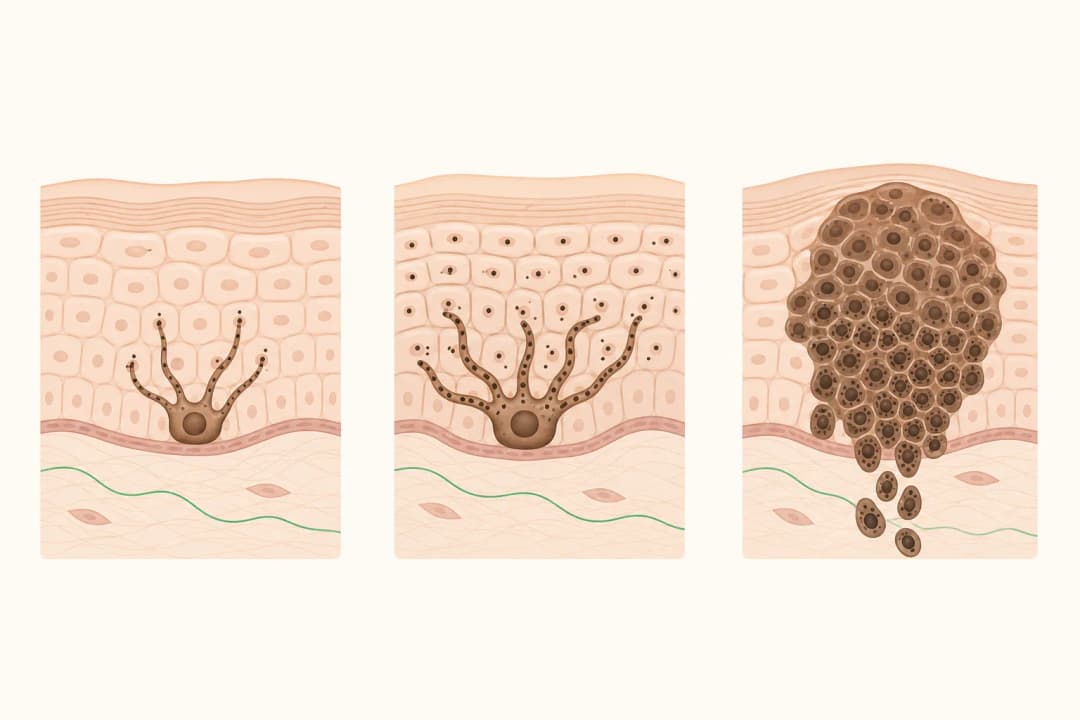
Basal cell carcinoma often develops on sun-exposed skin and mainly damages nearby tissue. Melanoma begins in pigment-producing cells and has a greater potential to spread. Their appearance can overlap, so a dermatologist may need dermoscopy and a biopsy rather than relying on a photograph or visual description.
Why the distinction matters
A basal cell carcinoma may look like a pearly bump, a sore that repeatedly crusts or bleeds, or a flat scar-like patch. Melanoma may appear as a new pigmented mark or as an existing mole changing in shape, colour, size or sensation. Neither cancer can be identified safely from colour alone: basal cell lesions may contain pigment, while melanoma is not always dark.
The pathology report names the cancer and describes features that guide management. For melanoma, thickness and other microscopic findings help determine whether staging procedures such as sentinel lymph node biopsy should be discussed. For basal cell carcinoma, subtype, borders, location and whether the lesion has returned influence the removal method.
What to do about a suspicious change
Arrange a skin assessment if a spot is new, changing, persistently scabbed or not healing. Note when you first noticed it, photograph it in consistent lighting, and mention bleeding, itching or tenderness. Avoid picking or applying corrosive remedies because irritation can obscure its surface without treating a cancer.
If biopsy confirms cancer, ask how the diagnosis, anatomical site and pathology findings shape the plan. Surgical excision is used for many lesions. Melanoma care can also involve staging and, when indicated, systemic treatment; basal cell treatment focuses primarily on controlling the tumour at its site.
When to seek medical care
Book a prompt appointment for a rapidly changing mole, a growing skin lesion, unexplained bleeding, repeated ulceration, or a mark that looks unlike your other marks. Seek urgent assessment if bleeding will not stop with firm pressure or if a lesion is accompanied by a new persistent lump in a nearby lymph-node area. These features call for examination; they do not establish the diagnosis by themselves.
Questions to take to your appointment
Ask whether the whole lesion or a sample will be biopsied, when the pathology result will be available, and which report findings affect treatment. If cancer is confirmed, clarify the proposed margins, likely reconstruction, whether staging is appropriate, and how your skin and lymph nodes will be checked after treatment.
Find care
General Clinics & Polyclinics in Abu Dhabi
That answer is general. If you want it applied to your own case, these are licensed general clinics & polyclinics listed in Abu Dhabi.
27 Ar Ruwwad St - Shakhbout City - MSH4 - Abu Dhabi - United Arab Emirates
Accepts: Daman, Thiqa, Cigna, MetLife +20 more
Al Ruwais, Al Dhafrah
Accepts: Daman, Thiqa, AXA, Cigna +16 more
Al Bahyah - Al Bahyah Old - Abu Dhabi - United Arab Emirates
Accepts: Daman, Thiqa, Cigna, Allianz Care +18 more
Abu Dhabi
Accepts: Daman, Thiqa, AXA, Cigna +27 more
Ordered by verification status and how complete each clinic's public record is, then alphabetically. This is a directory listing, not a ranking — Zavis does not rate or recommend providers.
A factual listing drawn from the DHA, DOH and MOHAP licence registers. It is not a referral, an endorsement, or advice that any of these providers is right for you.
Questions people ask
Can basal cell carcinoma turn into melanoma?
No. They arise from different types of skin cells. A person can develop both, but one does not transform into the other.
Does every suspicious mole need to be removed?
Not necessarily. A dermatologist assesses its history and appearance, often with dermoscopy, and recommends monitoring or biopsy according to the findings.
Why might melanoma need lymph-node assessment?
Selected melanomas have features that make checking the nearest draining lymph nodes useful for staging and treatment planning.
Related
Related reading
Keep reading
Medical disclaimer. This page is general health information, not medical advice, and it cannot diagnose you. Always consult a licensed healthcare provider about your own symptoms and treatment. In an emergency in the UAE, call 998 for an ambulance.