
B16F10 melanoma: a laboratory model, not a patient diagnosis
Short answer
B16F10 is a mouse melanoma cell line used in laboratory experiments; it is not a subtype or diagnostic label for melanoma in people.
This answers one question. It is not a diagnosis and does not replace an assessment by a licensed doctor.
At a glance
- Meaning
- B16F10 names an experimental mouse melanoma cell line.
- Human diagnosis
- A biopsy and pathology examination establish melanoma.
- Treatment basis
- Personal tumour findings and disease extent guide clinical care.
What B16F10 refers to
Scientists use cell lines to examine tumour behaviour and test ideas under controlled conditions. Findings from this model cannot by themselves predict how an individual person's melanoma will behave or which treatment that person should receive.
How this differs from human melanoma
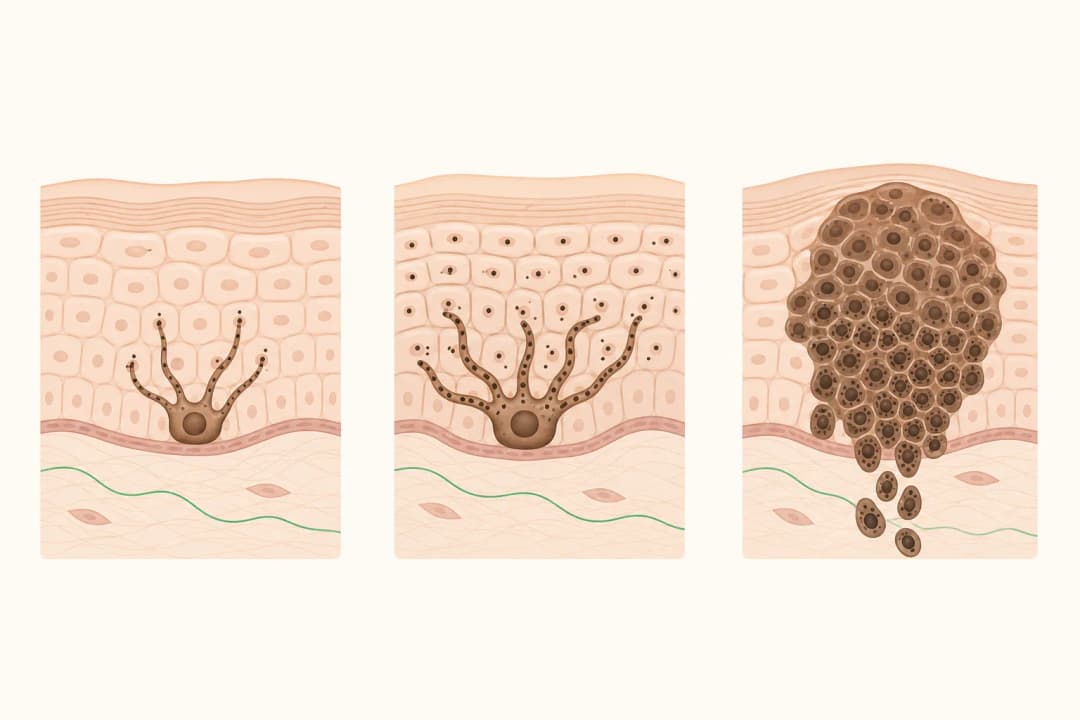
Human melanoma begins in pigment-producing cells and is diagnosed by examining tissue removed in a biopsy. The pathology report describes features of the person's tumour; further assessment may determine whether it has reached nearby lymph nodes or other organs. B16F10 terminology belongs to experimental work and does not replace those clinical findings.
A changing mole or pigmented spot can be one presentation of melanoma, but appearance alone cannot confirm the diagnosis. Clinicians assess asymmetry, borders, colours, size, evolution and symptoms, then decide whether the lesion should be sampled or removed.
What patients should do
If you encountered B16F10 in an article or test description, check whether the material discusses laboratory cells rather than your own records. For a personal melanoma diagnosis, rely on the pathology report and the treating team's staging information. Ask them to translate unfamiliar terms and explain which findings actually guide your care.
Do not use an experimental cell-line result to choose, start or stop cancer treatment. Human melanoma care can involve surgical excision, lymph-node assessment, immunotherapy or surveillance, with the plan tailored to tumour features, extent of disease and overall health.
When a skin change needs attention
Book a timely skin assessment for a new or changing mole, a spot with uneven shape or colour, or a lesion that bleeds, crusts, itches or fails to heal. These changes deserve examination because they can require biopsy, not because they prove melanoma.
A person already treated for melanoma should follow the agreed surveillance schedule and report a new lump, persistent unexplained symptom, or concerning skin lesion between visits. Sudden severe neurological symptoms, such as a new seizure, major weakness or confusion, require emergency assessment.
Questions for your cancer team
Ask for the exact diagnosis from your pathology report, what stage has been assigned, whether further imaging or lymph-node assessment is needed, and what each proposed treatment aims to achieve. Clarify the follow-up schedule and which new symptoms should trigger contact between appointments.
Find care
General Clinics & Polyclinics in Abu Dhabi
That answer is general. If you want it applied to your own case, these are licensed general clinics & polyclinics listed in Abu Dhabi.
27 Ar Ruwwad St - Shakhbout City - MSH4 - Abu Dhabi - United Arab Emirates
Accepts: Daman, Thiqa, Cigna, MetLife +20 more
Al Ruwais, Al Dhafrah
Accepts: Daman, Thiqa, AXA, Cigna +16 more
Al Bahyah - Al Bahyah Old - Abu Dhabi - United Arab Emirates
Accepts: Daman, Thiqa, Cigna, Allianz Care +18 more
Abu Dhabi
Accepts: Daman, Thiqa, AXA, Cigna +27 more
Ordered by verification status and how complete each clinic's public record is, then alphabetically. This is a directory listing, not a ranking — Zavis does not rate or recommend providers.
A factual listing drawn from the DHA, DOH and MOHAP licence registers. It is not a referral, an endorsement, or advice that any of these providers is right for you.
Questions people ask
Does B16F10 mean I have a particular kind of melanoma?
No. It refers to a laboratory mouse cell line. Your pathology report provides the terminology relevant to a human diagnosis.
Can B16F10 results tell me whether immunotherapy will work for me?
No. A result in an experimental model does not determine an individual's response. Your oncology team considers the clinical diagnosis, tumour characteristics, disease extent and health when discussing systemic treatment.
Should a changing mole be biopsied?
A clinician should examine a changing lesion and decide whether biopsy or complete removal is appropriate. Change is a reason for assessment, not confirmation of cancer.
Related
Related reading
Keep reading
Medical disclaimer. This page is general health information, not medical advice, and it cannot diagnose you. Always consult a licensed healthcare provider about your own symptoms and treatment. In an emergency in the UAE, call 998 for an ambulance.