
At-home urinalysis
Short answer
At-home urinalysis can flag changes in urine, but it cannot by itself diagnose their cause or replace clinical assessment.
This answers one question. It is not a diagnosis and does not replace an assessment by a licensed doctor.
At a glance
- Result type
- A screening clue, not a stand-alone diagnosis
- Sample tip
- Follow clean midstream collection instructions where provided
- Do not delay
- Urgent assessment for fever with flank pain or inability to urinate
What does at-home urinalysis show?
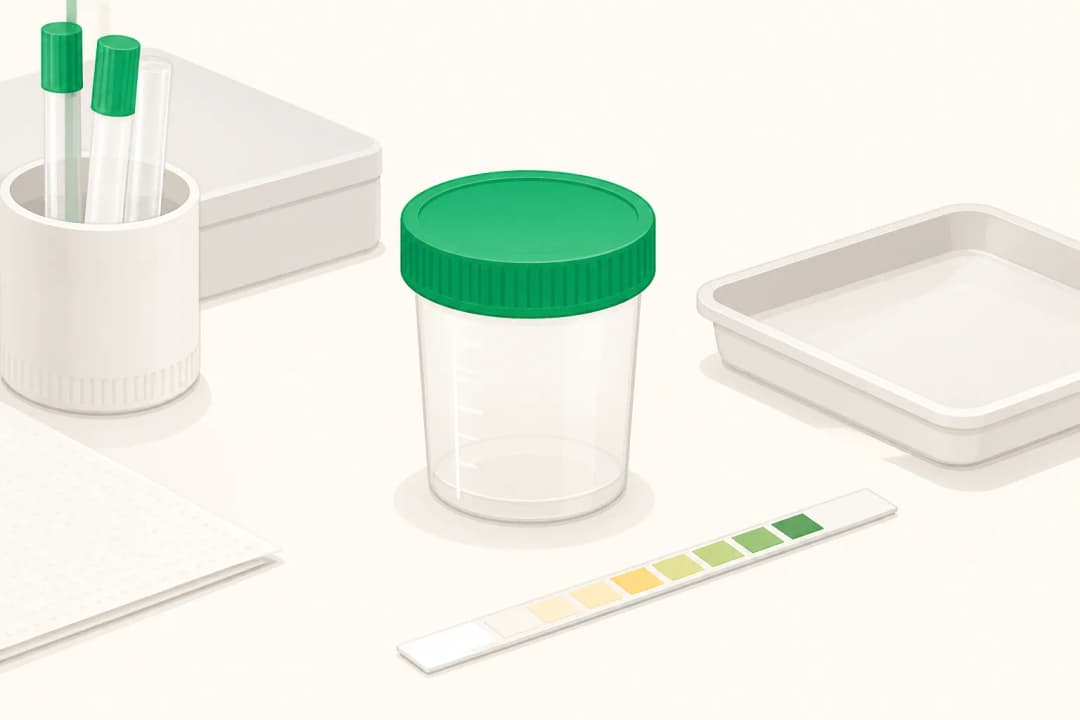
Dipsticks may react to substances such as blood, protein, glucose, ketones, acidity markers, or indicators associated with inflammation. The exact pads and reading method vary by product, so use the supplied chart and timing instructions.
Why a dipstick may change colour
An abnormal pad is a clue rather than a diagnosis. Menstrual blood, vaginal discharge, dehydration, strenuous activity, medicines, supplements, and sample contamination can affect findings. Different health conditions can also produce the same dipstick change.
Urinary tract infection may present with burning, urgency, frequent urination, or lower abdominal discomfort, but symptoms and properly collected clinical tests guide diagnosis. Kidney infection can present with fever, side or back pain, nausea, and feeling markedly unwell.
How to use the result safely
Check the expiry date, wash your hands, and collect a clean midstream sample in a clean container if the instructions specify one. Avoid touching the test pads, read each pad at its stated time, and record the result before discarding the strip.
Contact a clinician for a positive or repeatedly abnormal finding, especially when symptoms are present. They may request a laboratory sample or other tests. Do not take leftover antibiotics; the cause may not be bacterial, and medicine selection requires assessment.
When urinary symptoms need care
Seek prompt medical advice for visible blood in urine, persistent painful urination, difficulty passing urine, or symptoms that worsen despite fluids and rest. Pregnancy, childhood, recurrent infections, kidney disease, or reduced immunity also warrant clinician-led testing.
Get urgent help for fever with pain in the side or back, vomiting that prevents drinking, confusion, severe weakness, or inability to pass urine. Act on these warning signs even if a home strip looks normal.
What to ask about an abnormal result
Ask whether you need urine microscopy, culture, blood tests, or repeat sampling. Mention the dipstick brand, collection method, symptoms, medicines, supplements, menstrual timing, and any previous urinary or kidney problems.
Find care
General Clinics & Polyclinics in Abu Dhabi
That answer is general. If you want it applied to your own case, these are licensed general clinics & polyclinics listed in Abu Dhabi.
27 Ar Ruwwad St - Shakhbout City - MSH4 - Abu Dhabi - United Arab Emirates
Accepts: Daman, Thiqa, Cigna, MetLife +20 more
Al Ruwais, Al Dhafrah
Accepts: Daman, Thiqa, AXA, Cigna +16 more
Al Bahyah - Al Bahyah Old - Abu Dhabi - United Arab Emirates
Accepts: Daman, Thiqa, Cigna, Allianz Care +18 more
Abu Dhabi
Accepts: Daman, Thiqa, AXA, Cigna +27 more
Ordered by verification status and how complete each clinic's public record is, then alphabetically. This is a directory listing, not a ranking — Zavis does not rate or recommend providers.
A factual listing drawn from the DHA, DOH and MOHAP licence registers. It is not a referral, an endorsement, or advice that any of these providers is right for you.
Questions people ask
Can a normal strip rule out a urine infection?
No. Home strips can miss relevant changes, and symptoms may require examination, laboratory urinalysis, or culture.
Can I use an abnormal result to choose an antibiotic?
No. A dipstick does not identify the responsible organism or show which medicine is suitable. A clinician can arrange appropriate testing.
Can contamination affect the result?
Yes. Blood, discharge, an unclean container, or touching the pads can alter findings, so careful collection matters.
Related
Related reading
Keep reading
Medical disclaimer. This page is general health information, not medical advice, and it cannot diagnose you. Always consult a licensed healthcare provider about your own symptoms and treatment. In an emergency in the UAE, call 998 for an ambulance.