
What should you know about asymptomatic inflammatory prostatitis?
Short answer
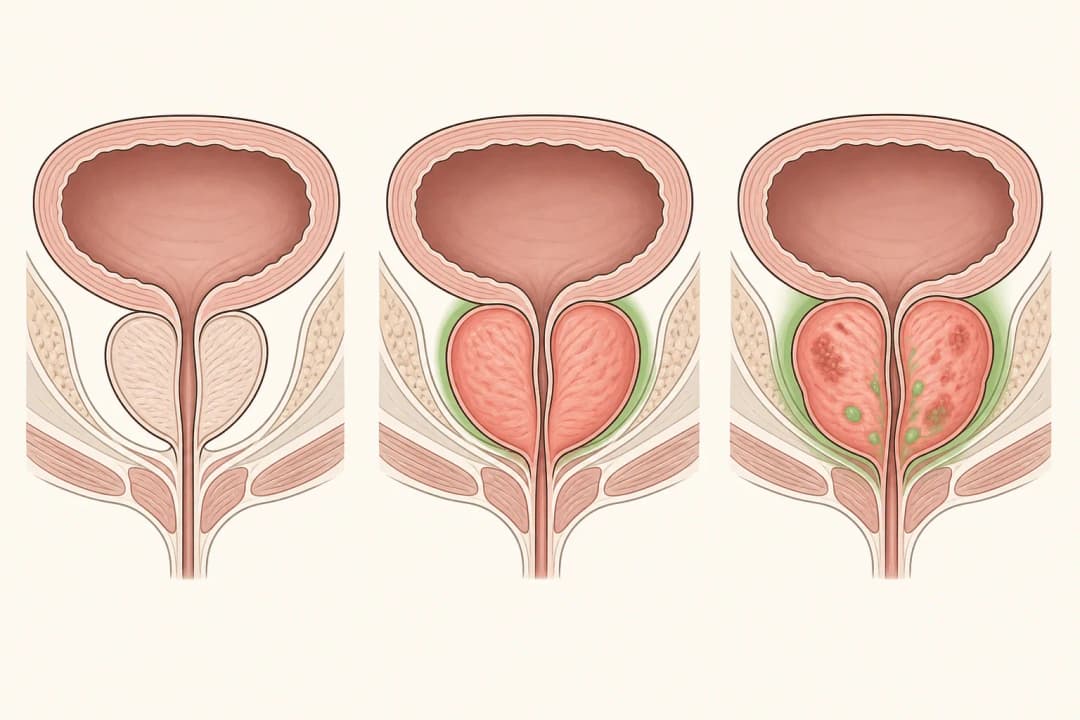
Asymptomatic inflammatory prostatitis means signs of prostate inflammation were found despite there being no noticeable urinary or pelvic symptoms.
This answers one question. It is not a diagnosis and does not replace an assessment by a licensed doctor.
At a glance
- Key feature
- Inflammation is detected without noticeable prostate or urinary symptoms.
- Treatment
- The finding alone does not automatically call for antibiotics.
- Follow-up
- Interpretation depends on why the test was performed and what else it showed.
The short answer
It is often identified unexpectedly during examination of prostate fluid, semen, urine, or prostate tissue for another reason. The finding is different from bacterial prostatitis that causes fever, pain, or urinary difficulty.
How to understand the finding
Inflammatory cells show that the immune system is active in or around the prostate, but they do not by themselves identify an infection or explain why the inflammation is present. A clinician interprets the result alongside the reason for testing, examination findings, urine results, medicines, and any previous urinary problems.
The absence of symptoms is central to the diagnosis. If pelvic discomfort, painful urination, urinary urgency, or a weak stream develops, the situation needs reassessment rather than simply retaining the asymptomatic label.
What to do next
Arrange routine follow-up with the clinician who requested the test. Bring the report and explain whether the sample was taken during fertility testing, prostate assessment, or investigation of another concern. Further testing may not be necessary when you remain well and the broader assessment is reassuring.
Antibiotics are not automatically appropriate because inflammatory cells alone do not establish a bacterial infection. If infection is suspected, the choice to test or treat should be based on clinical findings and relevant cultures. Do not use leftover antibiotics or someone else’s prescription.
Changes that need medical care
Seek prompt medical assessment if you develop fever, chills, new pelvic or lower-back pain, painful urination, blood in the urine, or a marked change in urinary frequency or urgency. These symptoms can indicate an active urinary or prostate problem that requires a fresh assessment.
Get urgent care if you cannot pass urine, feel severely unwell, become confused, or have rapidly worsening pain with fever. Urinary retention and systemic illness should not wait for a routine appointment.
Useful questions for your appointment
Ask what sample showed inflammation, whether there was evidence of bacteria, and whether the result changes the original reason for testing. You can also ask which new urinary or pelvic symptoms should prompt another visit and whether any planned follow-up has a specific purpose.
Find care
General Clinics & Polyclinics in Abu Dhabi
That answer is general. If you want it applied to your own case, these are licensed general clinics & polyclinics listed in Abu Dhabi.
27 Ar Ruwwad St - Shakhbout City - MSH4 - Abu Dhabi - United Arab Emirates
Accepts: Daman, Thiqa, Cigna, MetLife +20 more
Al Ruwais, Al Dhafrah
Accepts: Daman, Thiqa, AXA, Cigna +16 more
Al Bahyah - Al Bahyah Old - Abu Dhabi - United Arab Emirates
Accepts: Daman, Thiqa, Cigna, Allianz Care +18 more
Abu Dhabi
Accepts: Daman, Thiqa, AXA, Cigna +27 more
Ordered by verification status and how complete each clinic's public record is, then alphabetically. This is a directory listing, not a ranking — Zavis does not rate or recommend providers.
A factual listing drawn from the DHA, DOH and MOHAP licence registers. It is not a referral, an endorsement, or advice that any of these providers is right for you.
Questions people ask
Is asymptomatic inflammatory prostatitis an infection?
Not necessarily. Inflammatory cells can be present without proof of bacterial infection, so clinicians use symptoms, examination, urine testing, and cultures when appropriate to distinguish the possibilities.
Do I need treatment if I feel well?
Some people need only an explanation and routine follow-up. Treatment is guided by the reason for testing and any evidence of a specific infection or another prostate problem.
Can the diagnosis change later?
Yes. New fever, pelvic pain, painful urination, urgency, or difficulty passing urine means the condition is no longer symptom-free and should be reassessed.
Related
Related reading
Keep reading
Medical disclaimer. This page is general health information, not medical advice, and it cannot diagnose you. Always consult a licensed healthcare provider about your own symptoms and treatment. In an emergency in the UAE, call 998 for an ambulance.