
Understanding asthma in children
Short answer
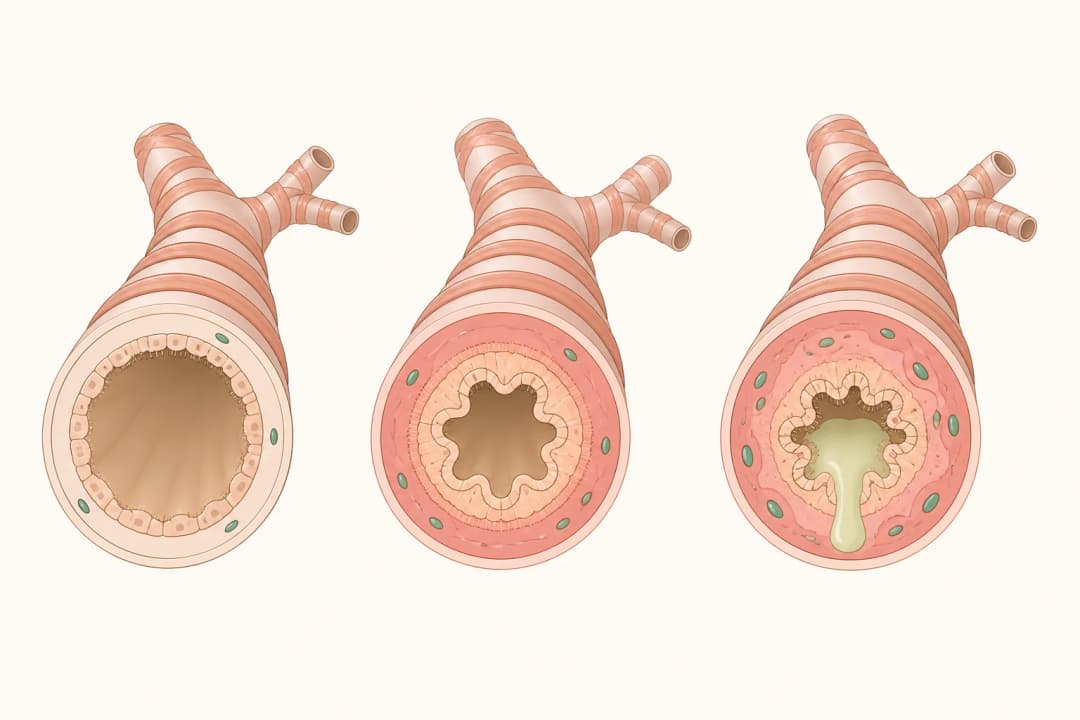
Asthma in children is a long-term condition in which sensitive airways become inflamed and narrow at times, causing variable breathing symptoms.
This answers one question. It is not a diagnosis and does not replace an assessment by a licensed doctor.
At a glance
- Common pattern
- Symptoms may vary and can be worse at night, during illness or with activity.
- Treatment tool
- A correctly fitted spacer supports effective use of an inhaler.
- Shared plan
- Caregivers and school staff should know the child's written asthma actions.
What asthma may look like in a child
Children with asthma may have episodes of wheezing, coughing, shortness of breath or chest tightness. Cough may be more noticeable at night, with running or laughing, during a viral illness, or around a personal trigger. Symptoms can settle between episodes, so the pattern over time is often as useful as what is heard during one appointment.
A clinician considers the child's history, examination, response to treatment and, when the child is able, breathing tests. Not every cough or wheeze is asthma, particularly in young children, and assessment may need follow-up as the pattern becomes clearer.
Managing asthma day to day
Give medicines according to the child's written asthma action plan. A spacer with the correct mask or mouthpiece helps inhaled medicine reach the airways; ask a clinician or pharmacist to watch the child's technique. Preventer medicine is taken on the prescribed schedule, while reliever medicine is used for symptoms as the plan directs.
Record daytime symptoms, night waking, activity limits and reliever use. Reduce exposure to confirmed triggers such as smoke or irritating aerosols, but do not remove foods or restrict exercise without clinical advice. Tell school or nursery staff where the action plan and reliever are kept and who should help the child use them.
Signs that need prompt help
Seek emergency help if the child is struggling to breathe, cannot speak or feed comfortably, has marked pulling-in around the ribs or neck, becomes unusually sleepy or confused, develops blue or grey lips, or does not improve with reliever treatment given according to the action plan.
Contact the child's clinician promptly when symptoms wake them, interrupt play or school, return frequently, or require the reliever more often than their plan allows. A review can check the diagnosis, technique, medicine schedule and exposure to triggers.
Questions for the child's clinician
Ask which symptoms should trigger each action-plan step, how to tell a reliever from a preventer, which spacer fits the child, and when technique should be rechecked. Also clarify what school staff should do during symptoms and where follow-up will occur after an urgent episode.
Find care
General Clinics & Polyclinics in Abu Dhabi
That answer is general. If you want it applied to your own case, these are licensed general clinics & polyclinics listed in Abu Dhabi.
27 Ar Ruwwad St - Shakhbout City - MSH4 - Abu Dhabi - United Arab Emirates
Accepts: Daman, Thiqa, Cigna, MetLife +20 more
Al Ruwais, Al Dhafrah
Accepts: Daman, Thiqa, AXA, Cigna +16 more
Al Bahyah - Al Bahyah Old - Abu Dhabi - United Arab Emirates
Accepts: Daman, Thiqa, Cigna, Allianz Care +18 more
Abu Dhabi
Accepts: Daman, Thiqa, AXA, Cigna +27 more
Ordered by verification status and how complete each clinic's public record is, then alphabetically. This is a directory listing, not a ranking — Zavis does not rate or recommend providers.
A factual listing drawn from the DHA, DOH and MOHAP licence registers. It is not a referral, an endorsement, or advice that any of these providers is right for you.
Questions people ask
Can a child with asthma exercise?
Most children with well-managed asthma can take part in physical activity. The action plan should explain what to do if activity brings on symptoms and whether medicine is needed beforehand.
Why does my child need a spacer?
A spacer makes inhaler timing easier and helps more medicine travel toward the lungs instead of settling in the mouth. Its mask or mouthpiece must fit and be used correctly.
Does every wheeze in a child mean asthma?
No. Several illnesses can cause wheezing, especially in younger children. A clinician uses the recurring symptom pattern, examination and suitable tests or treatment response to assess asthma.
Related
Related reading
Keep reading
Medical disclaimer. This page is general health information, not medical advice, and it cannot diagnose you. Always consult a licensed healthcare provider about your own symptoms and treatment. In an emergency in the UAE, call 998 for an ambulance.