
What to know about melanoma
Short answer
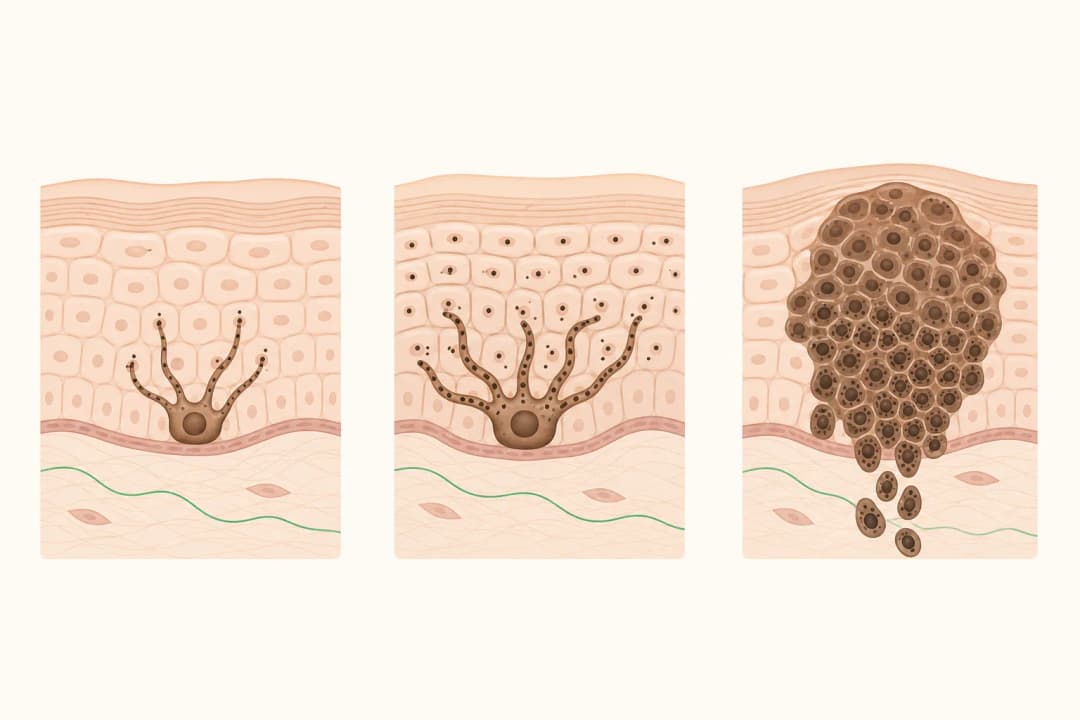
Melanoma is a skin cancer arising from pigment-producing cells, and prompt assessment of suspicious changes supports earlier treatment.
This answers one question. It is not a diagnosis and does not replace an assessment by a licensed doctor.
At a glance
- Cell of origin
- A melanocyte, which produces pigment
- Diagnosis
- Clinical assessment followed by tissue examination when suspicious
- First action
- Promptly show a new or changing mark to a qualified clinician
The short answer
It may develop in an existing mole or appear as a new mark. It can occur on skin that receives little sun and, less commonly, in places such as beneath a nail or in the eye.
How melanoma may present
Melanoma may present with a spot that changes in size, shape, colour or surface. Uneven borders, several colours, a mark that looks different from a person's other moles, persistent itching, bleeding or a sore that does not heal all deserve attention.
These features do not diagnose melanoma. A clinician assesses the history and examines the skin, often with magnification. If melanoma is suspected, removing tissue for laboratory examination establishes the diagnosis and provides information used for planning care.
What to do about a suspicious mark
Arrange a prompt skin assessment for a new or changing lesion, especially if it stands out from nearby marks. Note when the change began and, if practical, bring dated photographs that show its evolution.
Do not burn, freeze or apply lightening products to the spot before it is assessed. If melanoma is confirmed, the care team may discuss wider surgical removal, assessment of nearby lymph nodes, medicines for selected disease, and a schedule for skin and general follow-up.
When to seek medical care
Seek timely medical review if a mole or spot is rapidly changing, repeatedly bleeding, becoming ulcerated or failing to heal. A dark streak under a nail that is new or widening also warrants examination, particularly when there has been no clear injury.
Someone already treated for melanoma should contact their cancer team about a new lump, persistent unexplained pain, new neurological symptoms, breathing difficulty or another sustained change in health. Sudden weakness, a seizure, severe confusion or major breathing difficulty requires emergency care.
Questions to take to the appointment
Ask whether the whole lesion should be removed for diagnosis, what the pathology describes, whether further surgery or lymph-node evaluation is advised, and which symptoms should trigger contact between visits. If treatment is proposed, request a clear explanation of its aim, likely effects and monitoring plan.
Find care
General Clinics & Polyclinics in Abu Dhabi
That answer is general. If you want it applied to your own case, these are licensed general clinics & polyclinics listed in Abu Dhabi.
27 Ar Ruwwad St - Shakhbout City - MSH4 - Abu Dhabi - United Arab Emirates
Accepts: Daman, Thiqa, Cigna, MetLife +20 more
Al Ruwais, Al Dhafrah
Accepts: Daman, Thiqa, AXA, Cigna +16 more
Al Bahyah - Al Bahyah Old - Abu Dhabi - United Arab Emirates
Accepts: Daman, Thiqa, Cigna, Allianz Care +18 more
Abu Dhabi
Accepts: Daman, Thiqa, AXA, Cigna +27 more
Ordered by verification status and how complete each clinic's public record is, then alphabetically. This is a directory listing, not a ranking — Zavis does not rate or recommend providers.
A factual listing drawn from the DHA, DOH and MOHAP licence registers. It is not a referral, an endorsement, or advice that any of these providers is right for you.
Questions people ask
What should you know about apa itu melanoma?
Melanoma is a cancer of pigment-producing cells. A changing or unusual mark needs clinical assessment because visual features alone cannot confirm or exclude it.
Can melanoma occur without a pre-existing mole?
Yes. Melanoma may arise as a new lesion as well as within an existing mole, so a newly appearing mark that evolves should be examined.
How is suspected melanoma diagnosed?
A clinician examines the lesion and usually arranges removal of appropriate tissue for laboratory assessment. The pathology findings guide whether more evaluation or treatment is needed.
Related
Related reading
Keep reading
Medical disclaimer. This page is general health information, not medical advice, and it cannot diagnose you. Always consult a licensed healthcare provider about your own symptoms and treatment. In an emergency in the UAE, call 998 for an ambulance.