
Antibiotics for pyelonephritis: what patients should know
Short answer
Pyelonephritis needs prompt antibiotic treatment chosen for the likely bacteria, illness severity, medical history, and urine test results.
This answers one question. It is not a diagnosis and does not replace an assessment by a licensed doctor.
At a glance
- Also called
- Kidney infection
- Key test
- A urine culture helps identify the bacteria and guide antibiotic choice
- Treatment setting
- Tablets may suit stable patients; more severe illness may need hospital care
The short answer
Pyelonephritis needs prompt antibiotic treatment chosen for the likely bacteria, illness severity, medical history, and urine test results. A clinician may begin treatment before the laboratory result is ready, then change the medicine if the identified bacteria are resistant. Some people can take tablets at home, while severe illness, vomiting, pregnancy, or other health concerns may require hospital assessment and antibiotics through a vein.
How treatment is chosen
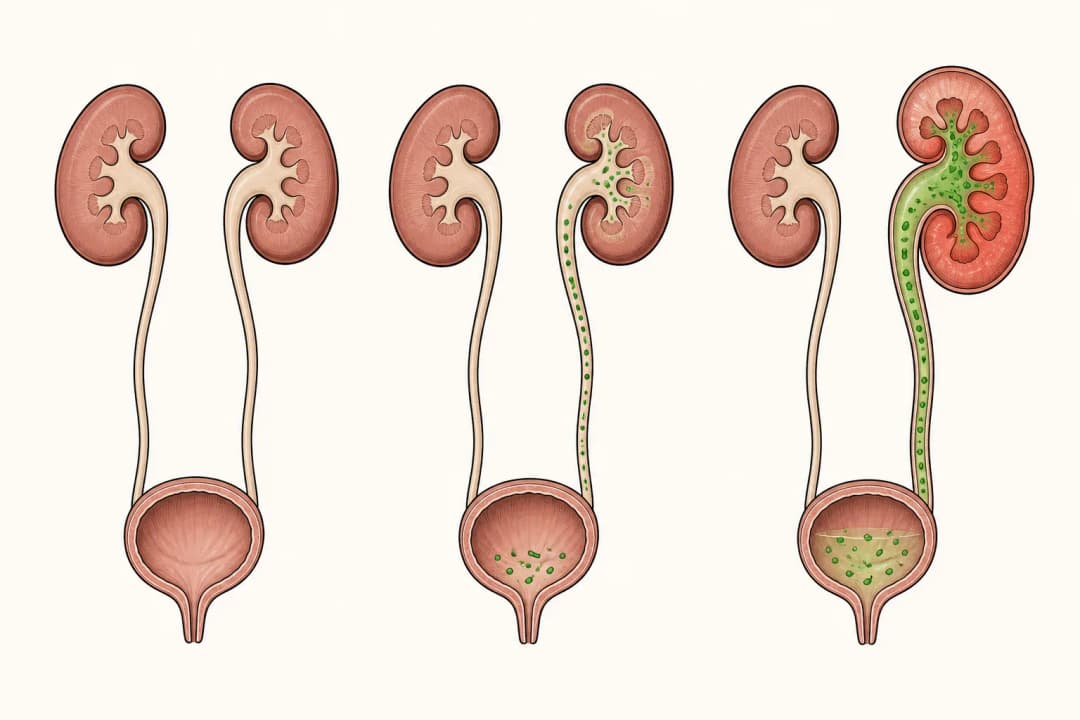
Pyelonephritis is an infection involving the kidney, often arising after bacteria travel upward from the urinary tract. The antibiotic must reach the kidney tissue and work against the suspected organism. The choice can change according to local resistance patterns, medication allergies, pregnancy, kidney function, previous culture results, recent antibiotics, and whether infection has entered the bloodstream. A urine sample is ideally collected before the first dose when this does not delay treatment. Its culture can identify the organism and show which medicines are likely to work.
What to do during treatment
Take each dose exactly as prescribed and complete the prescribed course unless the treating clinician changes it. Do not use leftover antibiotics or share medication, because the drug and dose may be unsuitable. Drink enough fluid to avoid dehydration if you can keep liquids down, and follow any advice given for pain or fever relief. Confirm how you will receive culture results and whether a follow-up sample or appointment is needed. Contact the treating service if you miss doses, develop troublesome side effects, or are not beginning to improve as expected.
Seek advice promptly for a new rash, severe diarrhoea, or other unexpected reaction. Swelling of the lips or tongue, wheezing, or difficulty breathing after a dose needs emergency help because these can signal a serious allergic reaction.
When to seek urgent care
Get urgent medical assessment for fever with pain in the side or back, shaking chills, repeated vomiting, inability to keep fluids or medicine down, marked weakness, reduced alertness, confusion, fainting, or very little urine. Also seek prompt assessment if symptoms worsen after antibiotics begin or return after treatment. Pregnancy, a known urinary blockage, kidney disease, a weakened immune system, or a single functioning kidney lowers the threshold for urgent review because complications may require closer monitoring or a different treatment plan.
Questions for your clinician
Ask which antibiotic you are receiving, how and when to take it, which side effects need attention, and whether it interacts with your other medicines. Clarify when culture results should be available, who will contact you if treatment must change, what improvement should look like, and which symptoms mean you should go to an emergency department. If you are pregnant, breastfeeding, allergic to an antibiotic, or have reduced kidney function, make sure the prescriber knows before treatment is selected.
Find care
General Clinics & Polyclinics in Abu Dhabi
That answer is general. If you want it applied to your own case, these are licensed general clinics & polyclinics listed in Abu Dhabi.
27 Ar Ruwwad St - Shakhbout City - MSH4 - Abu Dhabi - United Arab Emirates
Accepts: Daman, Thiqa, Cigna, MetLife +20 more
Al Ruwais, Al Dhafrah
Accepts: Daman, Thiqa, AXA, Cigna +16 more
Al Bahyah - Al Bahyah Old - Abu Dhabi - United Arab Emirates
Accepts: Daman, Thiqa, Cigna, Allianz Care +18 more
Abu Dhabi
Accepts: Daman, Thiqa, AXA, Cigna +27 more
Ordered by verification status and how complete each clinic's public record is, then alphabetically. This is a directory listing, not a ranking — Zavis does not rate or recommend providers.
A factual listing drawn from the DHA, DOH and MOHAP licence registers. It is not a referral, an endorsement, or advice that any of these providers is right for you.
Questions people ask
Can the antibiotic change after treatment starts?
Yes. A clinician may adjust treatment when the urine culture identifies the bacteria and its antibiotic susceptibility, or if symptoms, side effects, allergies, or kidney function make another option more suitable.
What if I vomit after taking an antibiotic?
Contact the prescribing service or a pharmacist for advice rather than automatically repeating the dose. Repeated vomiting or inability to keep medicine and fluids down needs urgent assessment because oral treatment may not be absorbed reliably.
Should I stop when I feel better?
Continue for the prescribed course unless your clinician tells you to change or stop. Feeling better does not by itself confirm that the infection has been adequately treated.
Related
Related reading
Keep reading
Medical disclaimer. This page is general health information, not medical advice, and it cannot diagnose you. Always consult a licensed healthcare provider about your own symptoms and treatment. In an emergency in the UAE, call 998 for an ambulance.