
Antegrade cystoscopy
Short answer
Antegrade cystoscopy examines the bladder through an opening in the lower abdomen rather than passing the scope through the urethra.
This answers one question. It is not a diagnosis and does not replace an assessment by a licensed doctor.
At a glance
- Organ examined
- Bladder
- Access direction
- Through lower-abdominal access into the bladder
- Instrument
- Cystoscope
The short answer
A clinician may consider this route when the usual passage through the urethra is narrowed, blocked, altered by previous treatment or otherwise unsuitable. The exact access plan depends on why the examination is needed and whether a suprapubic tract is already present.
How the procedure works
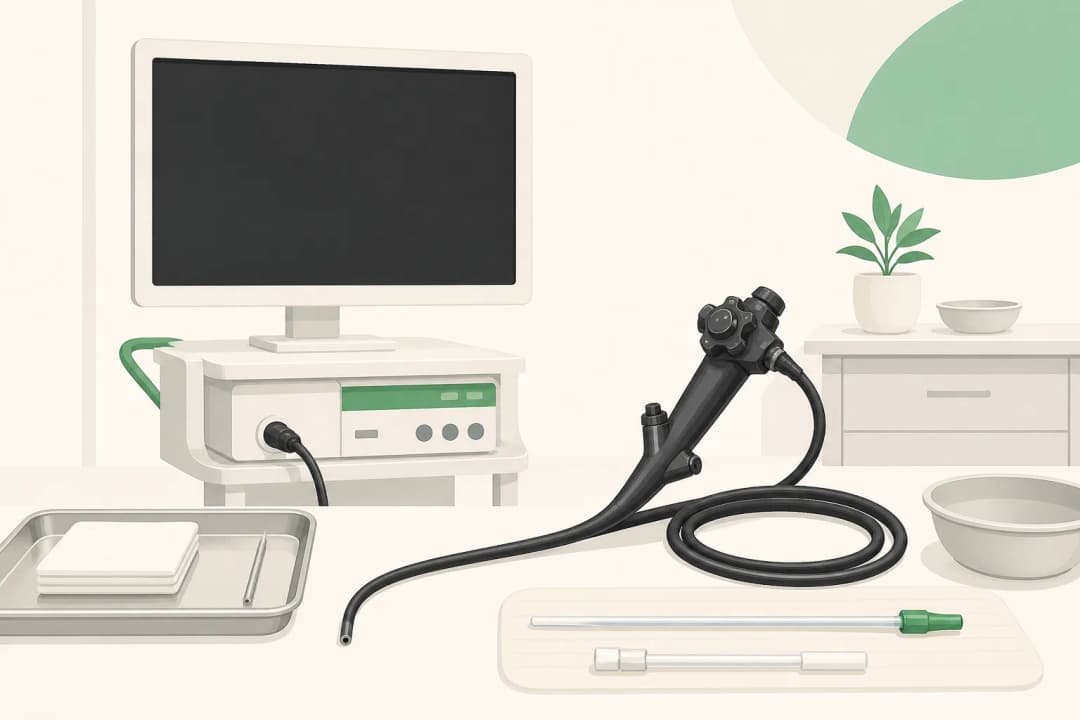
A cystoscope is a thin viewing instrument that lets the clinician inspect the bladder lining. In an antegrade examination, it enters from above through lower-abdominal access into the bladder. The team may use the view to investigate a blockage, assess the bladder and urethral outlet, or guide another planned step. Tissue sampling or treatment is performed only when it forms part of the agreed procedure.
The type of anaesthesia or sedation and whether you go home the same day vary with the access method and any additional work planned.
Preparing and recovering
Before the appointment, give the team a complete medicine list and mention blood-thinning medicines, allergies, recent urinary infection symptoms and any existing catheter or abdominal urinary opening. Follow the hospital's instructions about eating, drinking and medicine changes; do not stop a prescribed blood thinner unless the responsible clinician gives you a specific plan. Arrange transport if sedation or anaesthesia is expected.
Afterward, follow the instructions for catheter or wound care and activity. Mild bladder irritation or a small amount of blood in the urine can occur after instrumentation, but the team should explain what is expected in your particular case and how long it may last.
When to seek medical care
Seek urgent medical advice for fever or chills, worsening lower-abdominal pain, heavy or increasing bleeding, blood clots, inability to pass urine, a catheter that stops draining, or redness, swelling or discharge around the access site. Call emergency services for severe breathing difficulty, collapse or rapidly worsening symptoms after the procedure. Use the discharge contact number when available because the treating unit knows which access route and additional procedures were used.
Questions to ask before the examination
Ask why an antegrade route is recommended, whether access already exists or must be created, what anaesthesia is planned, and whether a biopsy or another procedure may be performed. Clarify catheter plans, expected recovery, who will discuss the findings and which symptoms should trigger a call after discharge.
Questions people ask
How is antegrade cystoscopy different from standard cystoscopy?
Standard cystoscopy usually passes the instrument through the urethra. The antegrade route approaches the bladder through lower-abdominal access.
Will I need anaesthesia for antegrade cystoscopy?
Anaesthesia or sedation depends on how access is obtained and whether another procedure is planned. Your team should explain the approach before consent.
Can a biopsy be taken during the examination?
A sample may be taken if it is clinically needed and included in the agreed plan. Ask beforehand what additional steps may be performed and when results will be discussed.
Related
Related reading
Keep reading
Cancer care in the UAE
Hospitals & Medical Centers in Abu Dhabi
Most UAE cancer care is delivered inside hospital services rather than by standalone oncology clinics, so these are licensed hospitals & medical centers listed in Abu Dhabi. Confirm the specific cancer service exists before you travel, and know that asking for a second opinion is routine.
Ahalia Hospital Musaffah Building - Musaffah - Musaffah Industrial - Abu Dhabi - United Arab Emirates
Accepts: Daman, Thiqa, AXA, Cigna +26 more
Al Ruwais Industrial City - Abu Dhabi - United Arab Emirates
Accepts: Daman, Thiqa, AXA, Cigna +30 more
Abu Dhabi, Abu Dhabi
Accepts: Daman, Thiqa, AXA, Cigna +30 more
Second opinions are routine in cancer care and asking for one does not affect your treatment. How to arrange a second opinion in the UAE.
Ordered by verification status and how complete each clinic's public record is, then alphabetically. This is a directory listing, not a ranking — Zavis does not rate or recommend providers.
A factual listing drawn from the DHA, DOH and MOHAP licence registers. It is not a referral, an endorsement, or advice that any of these providers is right for you.
Medical disclaimer. This page is general health information, not medical advice, and it cannot diagnose you. Always consult a licensed healthcare provider about your own symptoms and treatment. In an emergency in the UAE, call 998 for an ambulance.