
What should you know about anorectal melanoma staging?
Short answer
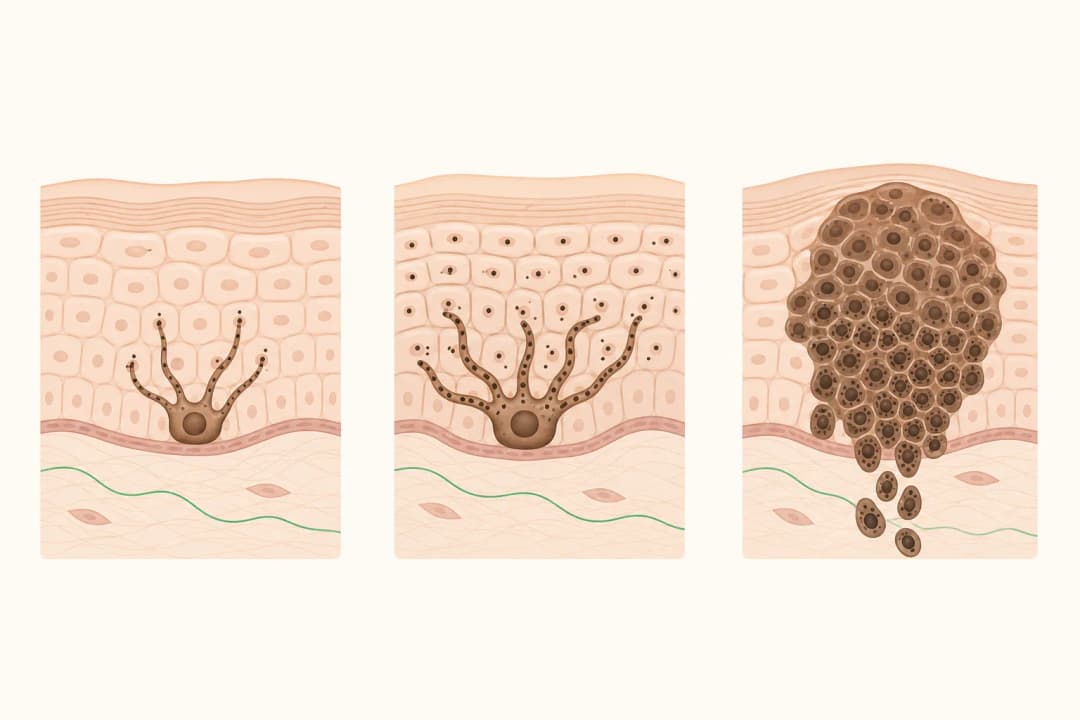
Anorectal melanoma staging determines whether cancer is confined locally, involves lymph nodes or has spread to distant organs.
This answers one question. It is not a diagnosis and does not replace an assessment by a licensed doctor.
At a glance
- Staging inputs
- Examination, pathology and imaging
- Main question
- Whether disease is local, nodal or distant
- Planning team
- A multidisciplinary specialist cancer team
The short answer
Doctors combine examination, biopsy pathology and imaging rather than relying on a single test. The result describes the extent of disease, guides discussion of surgery and systemic therapy, and creates a baseline for follow-up.
How clinicians assess extent
The team reviews the tumour’s exact site, size, depth and involvement of nearby structures. Pathology confirms melanoma and may provide tumour features relevant to treatment. Imaging checks regional lymph nodes and organs elsewhere in the body; additional tests are selected from symptoms and earlier results.
Staging terminology can differ between specialist teams because anorectal melanoma is distinct from melanoma arising in the skin. Ask which system appears in your report and what each category means for your own treatment plan.
What happens after staging
Care is usually planned by a multidisciplinary cancer team. For disease that can be removed, surgeons consider the tumour location, sphincter function and whether a clear margin is achievable. Wider surgery is not automatically appropriate for every person.
If cancer has reached nodes or distant sites, the team may discuss immunotherapy or another systemic approach, sometimes alongside treatment aimed at a particular troublesome area. Molecular testing may help identify suitable medicines. Support for bowel symptoms, pain, nutrition and emotional wellbeing can begin during staging.
When to contact the care team
Report heavy or persistent rectal bleeding, worsening pain, difficulty passing stool, black stool, new abdominal swelling or unexplained weakness promptly. New severe headache, confusion, seizures, weakness on one side, loss of balance or sudden vision change requires urgent assessment.
During treatment, follow the oncology team’s instructions for fever, diarrhoea, rash, breathlessness or other new symptoms. Immunotherapy can inflame healthy organs, and early reporting allows the team to assess whether treatment is responsible.
Questions for your cancer team
Ask what the biopsy shows, which scans were performed, whether lymph nodes or distant organs are involved, and whether more testing could change the plan. Request a plain-language explanation of treatment goals, effects on bowel function, alternatives, side effects and the schedule for surveillance.
Find care
General Clinics & Polyclinics in Abu Dhabi
That answer is general. If you want it applied to your own case, these are licensed general clinics & polyclinics listed in Abu Dhabi.
27 Ar Ruwwad St - Shakhbout City - MSH4 - Abu Dhabi - United Arab Emirates
Accepts: Daman, Thiqa, Cigna, MetLife +20 more
Al Ruwais, Al Dhafrah
Accepts: Daman, Thiqa, AXA, Cigna +16 more
Al Bahyah - Al Bahyah Old - Abu Dhabi - United Arab Emirates
Accepts: Daman, Thiqa, Cigna, Allianz Care +18 more
Abu Dhabi
Accepts: Daman, Thiqa, AXA, Cigna +27 more
Ordered by verification status and how complete each clinic's public record is, then alphabetically. This is a directory listing, not a ranking — Zavis does not rate or recommend providers.
A factual listing drawn from the DHA, DOH and MOHAP licence registers. It is not a referral, an endorsement, or advice that any of these providers is right for you.
Questions people ask
Does a biopsy alone establish the full stage?
Usually not. Biopsy establishes the diagnosis and tumour features, while examination and imaging assess lymph nodes, nearby structures and distant organs.
Can the stage change after surgery?
It can. Examination of removed tissue may reveal details that were not visible on scans, allowing the team to refine the recorded stage and treatment plan.
Related
Related reading
Keep reading
Medical disclaimer. This page is general health information, not medical advice, and it cannot diagnose you. Always consult a licensed healthcare provider about your own symptoms and treatment. In an emergency in the UAE, call 998 for an ambulance.