
Ano ang sintomas ng chronic kidney disease?
Short answer
Chronic kidney disease may cause no early symptoms; later signs can include fatigue, swelling, nausea and urinary changes.
This answers one question. It is not a diagnosis and does not replace an assessment by a licensed doctor.
At a glance
- Early stage
- A person may feel well despite reduced kidney function.
- How it is found
- Blood and urine tests are central to assessment.
- Possible later clues
- Swelling, fatigue, nausea, itching and changes in urination.
The short answer
Other possible features include itchy skin, reduced appetite, muscle cramps, restless legs, difficulty concentrating, breathlessness and puffiness around the eyes. Urine may look foamy or bloody, and a person may pass urine more or less often than usual.
Why symptoms can be a late clue
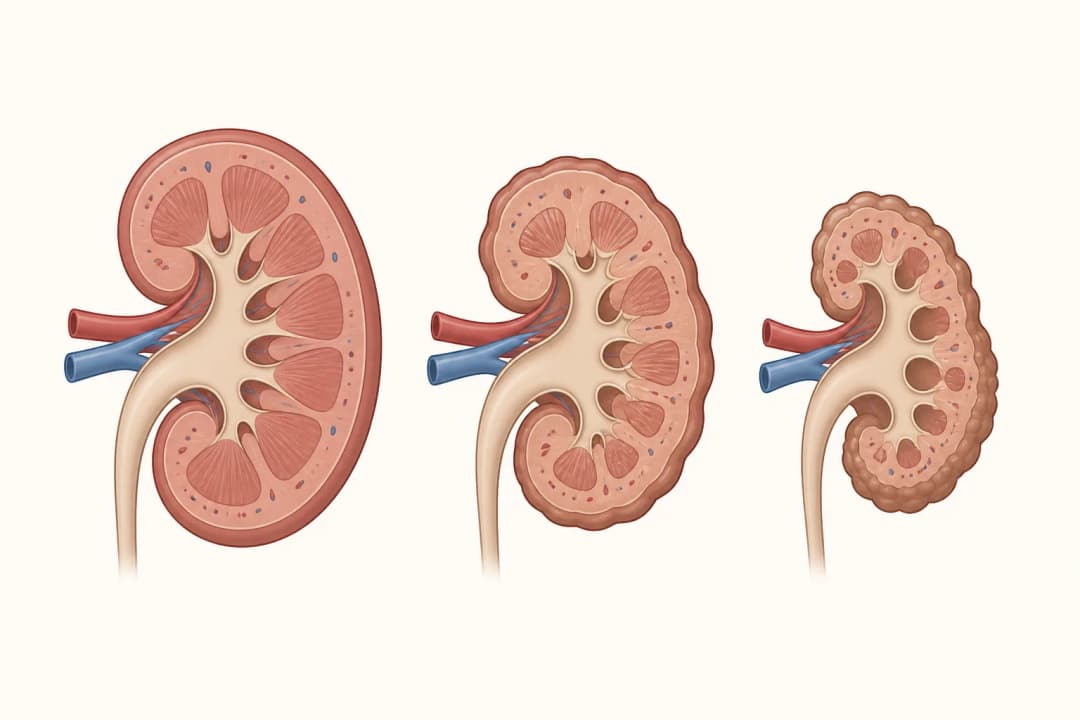
Kidneys filter waste, balance fluid and minerals, help regulate blood pressure and support red blood cell production. Gradual loss of function can be silent because the body adapts. When symptoms develop, they may reflect fluid retention, waste accumulation, mineral imbalance or anaemia.
These complaints are not specific to kidney disease. Diagnosis relies on blood and urine tests, blood-pressure measurement and sometimes imaging rather than symptoms alone. People with diabetes, high blood pressure, heart disease or a family history of kidney problems may be offered testing even when they feel well.
Practical next steps
Book a primary-care appointment for persistent ankle swelling, ongoing fatigue, repeated urinary changes or unexplained itching and nausea. Bring a medication and supplement list because some products need dose adjustment when kidney function is reduced. Mention diabetes, hypertension, previous kidney stones, recurrent urine infections and any relatives with kidney disease.
Do not stop prescribed medicines or sharply change fluid intake without clinical advice. A clinician can interpret kidney tests in context, repeat abnormal results when appropriate and discuss blood-pressure, glucose and medication management.
Signs that need prompt assessment
Seek urgent care for severe breathlessness, chest pain, confusion, fainting, new weakness, rapidly increasing swelling, very little or no urine, or repeated vomiting that prevents fluid intake. Visible blood in urine, fever with pain in the back or side, and sudden painful swelling also warrant prompt medical assessment.
Urgency comes from the severity and speed of the change, not from whether chronic kidney disease is a common explanation. Emergency evaluation can check for fluid overload, infection, obstruction and dangerous mineral disturbances.
What to clarify with your clinician
Ask what your blood and urine results show, whether they need repeating, and whether medicines require adjustment. Discuss your blood-pressure target, safe pain relief, dietary advice suited to your test results, and which changes in swelling, urine output or breathing should trigger urgent care.
Find care
General Clinics & Polyclinics in Abu Dhabi
That answer is general. If you want it applied to your own case, these are licensed general clinics & polyclinics listed in Abu Dhabi.
27 Ar Ruwwad St - Shakhbout City - MSH4 - Abu Dhabi - United Arab Emirates
Accepts: Daman, Thiqa, Cigna, MetLife +20 more
Al Ruwais, Al Dhafrah
Accepts: Daman, Thiqa, AXA, Cigna +16 more
Al Bahyah - Al Bahyah Old - Abu Dhabi - United Arab Emirates
Accepts: Daman, Thiqa, Cigna, Allianz Care +18 more
Abu Dhabi
Accepts: Daman, Thiqa, AXA, Cigna +27 more
Ordered by verification status and how complete each clinic's public record is, then alphabetically. This is a directory listing, not a ranking — Zavis does not rate or recommend providers.
A factual listing drawn from the DHA, DOH and MOHAP licence registers. It is not a referral, an endorsement, or advice that any of these providers is right for you.
Questions people ask
Can chronic kidney disease exist without pain?
Yes. Chronic kidney disease often develops without kidney pain, particularly before function is substantially reduced. Testing is more reliable than waiting for discomfort.
Does foamy urine mean kidney disease?
Persistent foam can occur when protein enters urine, but bubbles can also have harmless explanations. A urine test can distinguish these possibilities.
Why can kidney disease cause tiredness?
Reduced kidney function can contribute to anaemia and the build-up of waste, both of which can cause fatigue. Sleep problems and other conditions may contribute as well.
Related
Related reading
Keep reading
Medical disclaimer. This page is general health information, not medical advice, and it cannot diagnose you. Always consult a licensed healthcare provider about your own symptoms and treatment. In an emergency in the UAE, call 998 for an ambulance.