
Anal malignant melanoma: diagnosis and next steps
Short answer
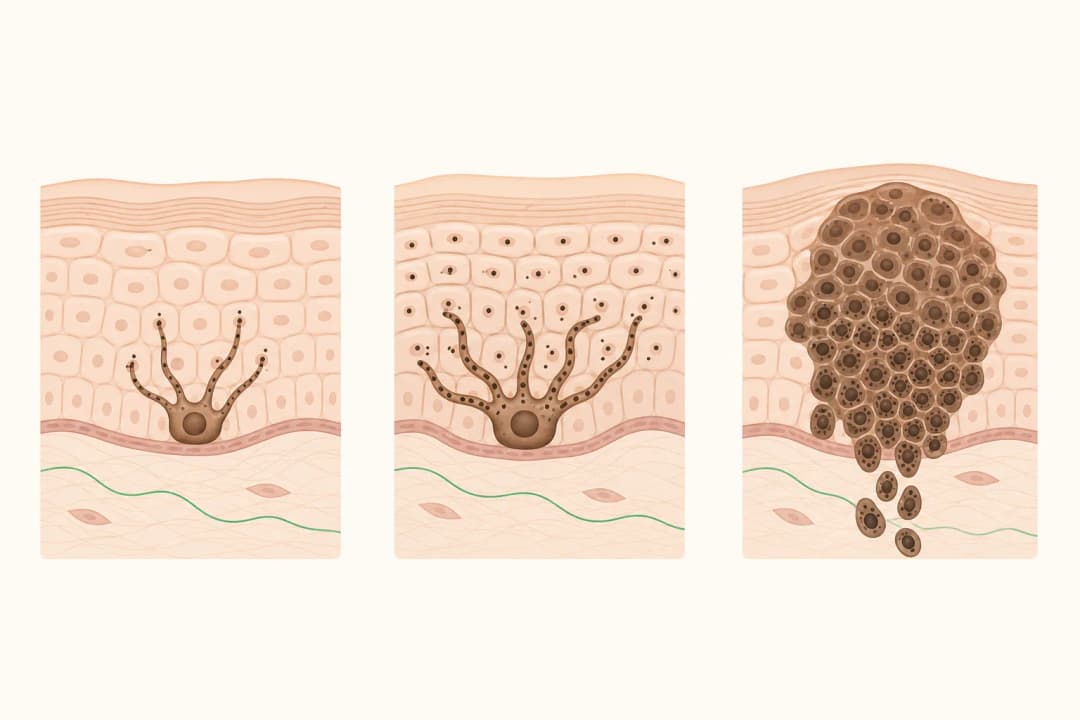
Anal malignant melanoma is a cancer arising from pigment-producing cells in or around the anal canal and requires specialist assessment and treatment.
This answers one question. It is not a diagnosis and does not replace an assessment by a licensed doctor.
At a glance
- Origin
- Pigment-producing cells in or around the anal canal
- Confirmation
- Examination, biopsy and pathology assessment
- Planning
- Tumour extent, biology, health and bowel function all matter
The essential answer
It can resemble more familiar anal problems, and some tumours have little visible pigment. Diagnosis depends on examination and a tissue sample rather than appearance alone.
How the diagnosis is established
Anal melanoma may present with rectal bleeding, discomfort, a lump, altered bowel habits, discharge or a dark patch near the anus. These symptoms have many possible causes; anal melanoma can present with them, but their presence does not establish cancer.
A specialist examines the anal region and rectum, then arranges biopsy of a suspicious area. A pathologist examines the sample and may use laboratory markers to confirm melanoma. Imaging and lymph-node assessment then help show whether disease is confined to the original site or has spread.
What happens after confirmation
Care is usually coordinated by a team familiar with melanoma and cancers of the anal region. Bring the biopsy report, scan reports and a current medicine list to consultations. The team considers the tumour's location, extent, molecular features, your general health and the effect each option may have on bowel function.
Treatment may involve surgery to remove the tumour, medicines that activate the immune system, targeted medicines when relevant, radiotherapy or a combination. The appropriate sequence is individual, so another patient's plan may not match yours.
Symptoms that should not wait
Arrange prompt assessment for unexplained or repeated rectal bleeding, a new anal lump, persistent pain, a changing pigmented patch, discharge or a lasting change in bowel habits. Seek urgent help for heavy bleeding, fainting, inability to pass stool or gas, severe worsening pain, fever or marked weakness.
If melanoma is already diagnosed, contact the treating team about new neurological symptoms, breathlessness, jaundice, uncontrolled pain or a rapid decline in function. These changes require evaluation and should not be saved for a routine follow-up visit.
Questions that clarify your care plan
Ask what the biopsy shows, where the melanoma began, what imaging is needed and whether molecular testing could influence treatment. Request a plain-language explanation of the goal of treatment, expected effects on bowel function, side effects that need urgent contact and the follow-up schedule.
Find care
General Clinics & Polyclinics in Abu Dhabi
That answer is general. If you want it applied to your own case, these are licensed general clinics & polyclinics listed in Abu Dhabi.
27 Ar Ruwwad St - Shakhbout City - MSH4 - Abu Dhabi - United Arab Emirates
Accepts: Daman, Thiqa, Cigna, MetLife +20 more
Al Ruwais, Al Dhafrah
Accepts: Daman, Thiqa, AXA, Cigna +16 more
Al Bahyah - Al Bahyah Old - Abu Dhabi - United Arab Emirates
Accepts: Daman, Thiqa, Cigna, Allianz Care +18 more
Abu Dhabi
Accepts: Daman, Thiqa, AXA, Cigna +27 more
Ordered by verification status and how complete each clinic's public record is, then alphabetically. This is a directory listing, not a ranking — Zavis does not rate or recommend providers.
A factual listing drawn from the DHA, DOH and MOHAP licence registers. It is not a referral, an endorsement, or advice that any of these providers is right for you.
Questions people ask
Is every anal melanoma dark in colour?
No. Some contain little obvious pigment, which is why biopsy and pathology are needed to identify the tumour accurately.
Can haemorrhoid-like symptoms be anal melanoma?
Anal melanoma can present with bleeding, discomfort or a lump, but these symptoms also occur in many non-cancerous conditions. Persistent or unexplained symptoms need examination.
Who usually treats anal malignant melanoma?
Care commonly involves specialists in colorectal or surgical oncology, medical oncology, radiology, pathology and supportive care, with other expertise added as needed.
Related
Related reading
Keep reading
Medical disclaimer. This page is general health information, not medical advice, and it cannot diagnose you. Always consult a licensed healthcare provider about your own symptoms and treatment. In an emergency in the UAE, call 998 for an ambulance.