
What should you know about amoebiasis colitis?
Short answer
Amoebic colitis is inflammation and injury of the large bowel caused by invasive Entamoeba histolytica infection.
This answers one question. It is not a diagnosis and does not replace an assessment by a licensed doctor.
At a glance
- Affected area
- The large bowel, also called the colon
- Possible presentation
- Diarrhoea with cramps, urgency, blood, or mucus
- Treatment aim
- Treat invasive disease and clear parasites left in the bowel
What happens in the bowel
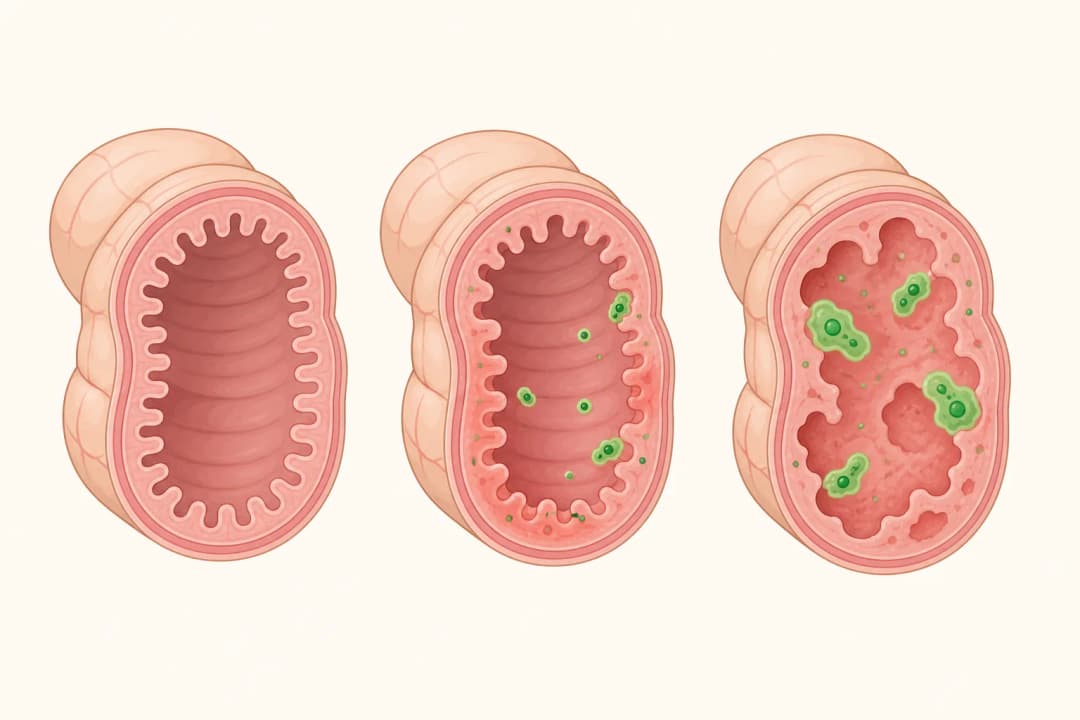
After the parasite reaches the colon, it may invade the lining and create areas of inflammation and ulceration. Amoebic colitis can present with diarrhoea, cramping, urgency, and stool containing blood or mucus. Symptoms may develop gradually or become more intense, and some people also lose appetite or feel unusually tired.
These features overlap with bacterial infections, inflammatory bowel disease, and other causes of colitis. A clinician therefore considers symptoms, travel and exposure history, examination findings, and laboratory testing together. Correct identification matters because medicines used for other forms of colitis may be unsuitable when an invasive infection is present.
Assessment and treatment
Contact a healthcare professional if bowel symptoms persist, recur, or include blood. Provide details about recent travel, untreated water, similar illness among close contacts, medicines, and any previous bowel condition. Stool tests can look for Entamoeba histolytica and help exclude other infections; blood tests or imaging may be considered if illness is more severe or disease outside the bowel is suspected.
Prescribed treatment commonly includes an anti-amoebic medicine for invading parasites, followed by a medicine that clears organisms remaining in the bowel. Finish the prescribed course even if stools improve earlier. Replace lost fluid with frequent drinks or oral rehydration solution, choose foods you can tolerate, and check before using medicines that slow bowel movement when there is bloody diarrhoea.
Symptoms needing prompt care
Get urgent help if abdominal pain becomes severe, the abdomen swells or becomes rigid, bleeding is substantial, or you feel faint, confused, or unable to drink. Repeated vomiting, reduced urination, pronounced drowsiness, or rapidly worsening weakness can indicate dehydration or serious illness. Fever with pain beneath the right ribs may suggest involvement beyond the colon and should be assessed promptly.
Questions for your doctor
You might ask how the diagnosis will be confirmed, whether another cause of colitis is being considered, and which medicines target each stage of infection. Confirm what to drink while recovering, what changes should trigger urgent reassessment, whether testing after treatment is needed, and how to lower the chance of passing the infection to household members.
Find care
General Clinics & Polyclinics in Abu Dhabi
That answer is general. If you want it applied to your own case, these are licensed general clinics & polyclinics listed in Abu Dhabi.
27 Ar Ruwwad St - Shakhbout City - MSH4 - Abu Dhabi - United Arab Emirates
Accepts: Daman, Thiqa, Cigna, MetLife +20 more
Al Ruwais, Al Dhafrah
Accepts: Daman, Thiqa, AXA, Cigna +16 more
Al Bahyah - Al Bahyah Old - Abu Dhabi - United Arab Emirates
Accepts: Daman, Thiqa, Cigna, Allianz Care +18 more
Abu Dhabi
Accepts: Daman, Thiqa, AXA, Cigna +27 more
Ordered by verification status and how complete each clinic's public record is, then alphabetically. This is a directory listing, not a ranking — Zavis does not rate or recommend providers.
A factual listing drawn from the DHA, DOH and MOHAP licence registers. It is not a referral, an endorsement, or advice that any of these providers is right for you.
Questions people ask
Is amoebic colitis the same as having the parasite without symptoms?
No. Colitis means the parasite has invaded and inflamed the bowel lining; some infections remain within the bowel contents without causing colitis.
Why might more than one medicine be prescribed?
One medicine may treat parasites invading tissue, while another clears organisms that remain inside the bowel and could cause recurrence or transmission.
Should I take an anti-diarrhoeal medicine?
Check with a clinician first, particularly if there is blood, fever, or significant pain, because slowing the bowel may be inappropriate in invasive illness.
Related
Related reading
Keep reading
Medical disclaimer. This page is general health information, not medical advice, and it cannot diagnose you. Always consult a licensed healthcare provider about your own symptoms and treatment. In an emergency in the UAE, call 998 for an ambulance.