
What should you know about amniocentesis for polyhydramnios?
Short answer
Polyhydramnios alone does not automatically mean you need amniocentesis; the test may be offered when your care team needs more information about a possible genetic condition or infection.
This answers one question. It is not a diagnosis and does not replace an assessment by a licensed doctor.
At a glance
- Purpose
- To test amniotic fluid for a specific suspected genetic condition or infection.
- Guidance
- Ultrasound guides the needle away from the baby and placenta.
- Choice
- Diagnostic amniocentesis is offered, and the decision remains yours.
The short answer
Your ultrasound findings, pregnancy history, blood tests, and preferences all help determine whether the information from amniocentesis would be useful. It is your choice whether to have diagnostic testing after the benefits, limitations, and procedure-related risks have been explained.
Why amniocentesis may be discussed
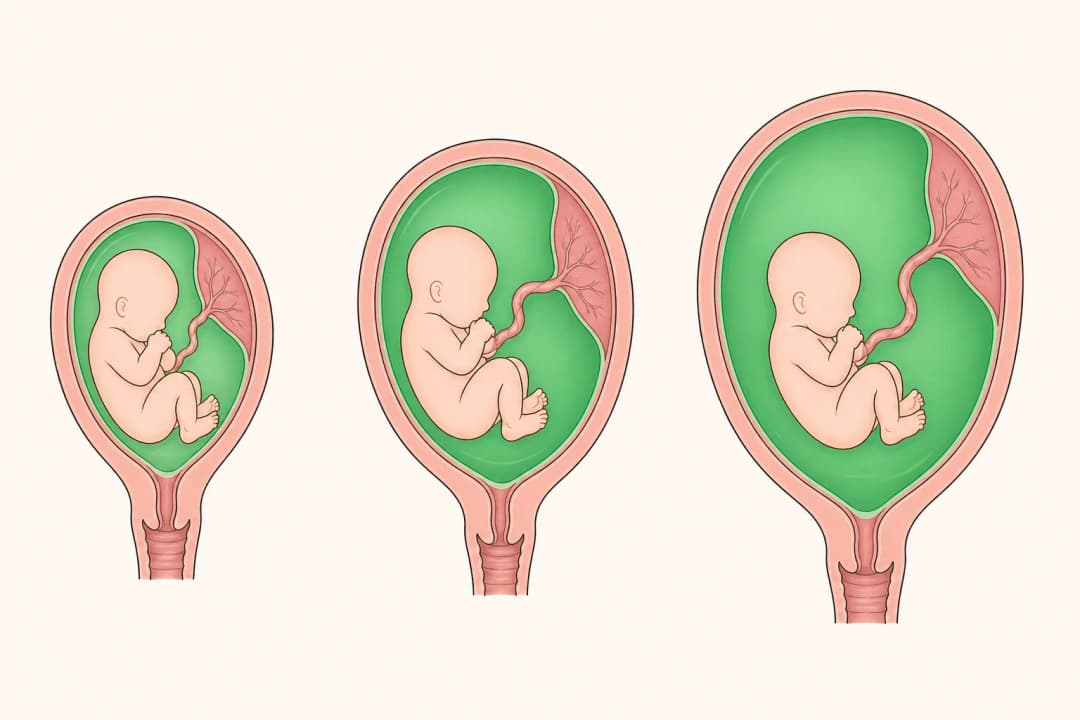
Polyhydramnios means there is more amniotic fluid around the baby than expected for that stage of pregnancy. Possible explanations include gestational diabetes, an infection, a difference that affects the baby's swallowing, or a genetic condition, although a cause is not always found.
Diagnostic amniocentesis uses a thin needle, guided by ultrasound, to take a small sample of amniotic fluid for laboratory testing. It does not treat the extra fluid. Removing a larger volume to ease symptoms is called amnioreduction; although the approach may look similar, its purpose is different.
The result can answer only the specific questions covered by the requested tests. A normal result cannot exclude every health or developmental condition, so clarify exactly what the laboratory will examine and what each possible result could mean.
Preparing for the decision and procedure
Ask which scan finding or clinical concern prompted the offer and whether detailed ultrasound, glucose testing, blood tests for infection, or genetic counselling could add useful information first. If you proceed, the clinician checks the baby's position, the placenta, and a suitable pocket of fluid before inserting the needle through the abdomen under continuous ultrasound guidance.
Tell the team about medicines, allergies, blood-borne infections, your blood group, and any bleeding or fluid leakage before the appointment. If your blood group is rhesus negative, ask whether you need an anti-D injection afterward. Arrange a contact number for the maternity unit and follow its advice about activity after the procedure.
When to contact maternity care urgently
After amniocentesis, contact your maternity unit urgently if you develop vaginal bleeding, clear fluid leaking from the vagina, fever or chills, contractions, severe or persistent abdominal pain, or a noticeable reduction in your baby's usual movements. These symptoms need assessment even if they begin after you have returned home.
With polyhydramnios, seek prompt maternity advice if your abdomen enlarges suddenly, breathing becomes difficult, pain develops, or labour may be starting. Call emergency services for severe breathing difficulty, collapse, or heavy bleeding.
Questions to take to your appointment
You may want to ask: What are you looking for in my pregnancy? Which tests will be performed on the sample? How could each result change monitoring, birth planning, or newborn care? What are the risks in my circumstances? When and how will I receive results? Who should I contact if I have symptoms afterward?
Find care
General Clinics & Polyclinics in Abu Dhabi
That answer is general. If you want it applied to your own case, these are licensed general clinics & polyclinics listed in Abu Dhabi.
27 Ar Ruwwad St - Shakhbout City - MSH4 - Abu Dhabi - United Arab Emirates
Accepts: Daman, Thiqa, Cigna, MetLife +20 more
Al Ruwais, Al Dhafrah
Accepts: Daman, Thiqa, AXA, Cigna +16 more
Al Bahyah - Al Bahyah Old - Abu Dhabi - United Arab Emirates
Accepts: Daman, Thiqa, Cigna, Allianz Care +18 more
Abu Dhabi
Accepts: Daman, Thiqa, AXA, Cigna +27 more
Ordered by verification status and how complete each clinic's public record is, then alphabetically. This is a directory listing, not a ranking — Zavis does not rate or recommend providers.
A factual listing drawn from the DHA, DOH and MOHAP licence registers. It is not a referral, an endorsement, or advice that any of these providers is right for you.
Questions people ask
Does polyhydramnios always require amniocentesis?
No. The care team considers the amount of fluid, ultrasound findings, medical history, and results of other tests. Amniocentesis is more likely to be discussed when a specific condition or infection needs diagnostic testing.
Will amniocentesis reduce the extra amniotic fluid?
A diagnostic amniocentesis removes only a sample for testing and is not intended to relieve polyhydramnios. Amnioreduction is a separate procedure that removes more fluid when symptoms or clinical circumstances warrant it.
Can an amniocentesis result explain every case of polyhydramnios?
No. Testing may identify a condition included in the laboratory analysis, but it cannot check for every possible cause, and sometimes no explanation for the extra fluid is found.
Keep reading
Medical disclaimer. This page is general health information, not medical advice, and it cannot diagnose you. Always consult a licensed healthcare provider about your own symptoms and treatment. In an emergency in the UAE, call 998 for an ambulance.