
Amelanotic melanoma in dogs: signs, diagnosis and next steps
Short answer
Amelanotic melanoma in dogs is a malignant tumour whose cells make little visible pigment, so diagnosis requires veterinary examination and tissue testing.
This answers one question. It is not a diagnosis and does not replace an assessment by a licensed doctor.
At a glance
- Appearance
- Often pale, pink, red or flesh-coloured rather than darkly pigmented
- Confirmation
- Microscopic examination of sampled tissue, sometimes supported by special stains
- Right clinician
- A veterinarian, with referral to a veterinary oncologist when appropriate
Why the tumour may not look like melanoma
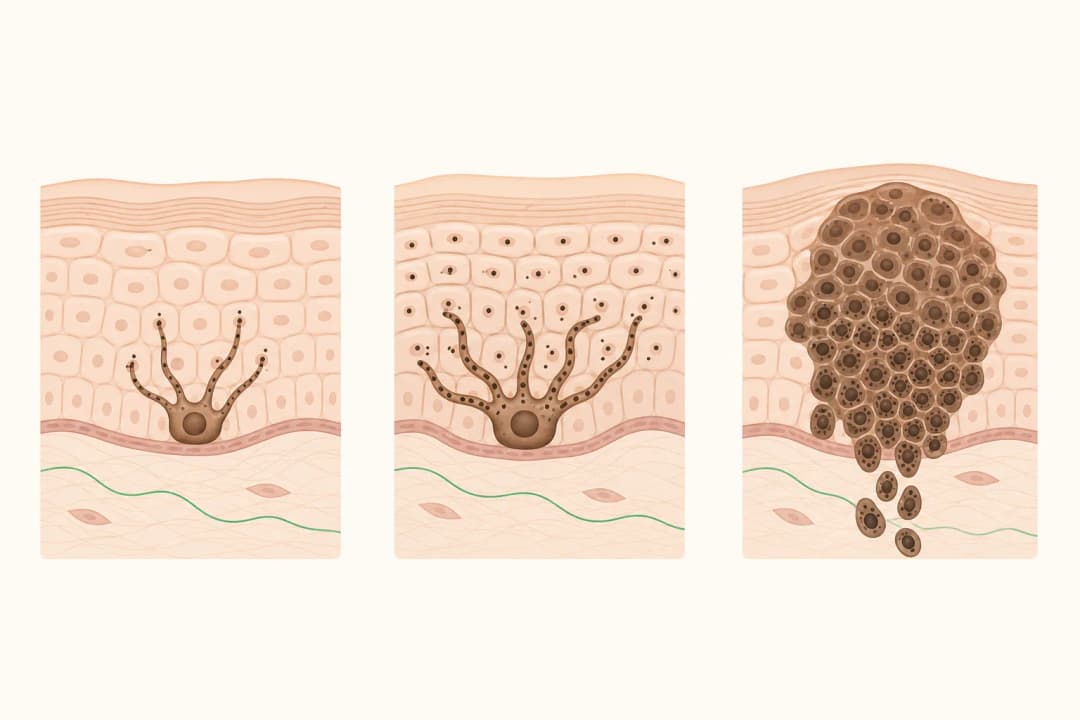
Melanomas arise from melanocytes, the cells associated with pigment. An amelanotic tumour can appear pink, red, pale or flesh-coloured because it contains little obvious melanin. Colour alone therefore cannot identify or exclude melanoma. In dogs, these tumours can occur in the mouth, around a nail or on haired skin, and their behaviour varies with their site and microscopic features.
A veterinarian may take cells with a needle or collect a biopsy. A pathologist examines the sample and may use special stains to establish melanocytic origin when routine microscopy is inconclusive. The report can also describe cell division, invasion and whether an excised mass reaches a cut edge.
What to do if your dog has a suspicious mass
Arrange a veterinary appointment for a new or changing lump, an oral growth, persistent mouth bleeding, difficulty eating, a damaged-looking nail or unexplained lameness. Photograph an external lesion beside a familiar object and record when you first noticed it, but do not squeeze, cut or treat it with a human skin product.
If testing confirms melanoma, the veterinarian may assess nearby lymph nodes and other body areas before recommending care. Surgery is often considered when a tumour can be removed, while additional treatment depends on location, spread, pathology findings and your dog's general health. A veterinary oncologist can explain whether specialist imaging or systemic treatment is appropriate.
When your dog needs urgent attention
Seek prompt veterinary care if a mass bleeds repeatedly, grows noticeably, becomes ulcerated or interferes with eating or walking. Contact an emergency veterinary service if your dog has trouble breathing, cannot control active bleeding, collapses or suddenly becomes very weak. These signs require assessment regardless of the suspected cause.
Questions for your veterinarian
Ask which test will confirm the mass, whether special pathology stains are needed, what the report says about surgical edges and aggressive features, and whether lymph-node sampling or imaging would change the treatment plan. Also ask how to protect the biopsy or surgery site and which changes should trigger an earlier recheck.
Find care
General Clinics & Polyclinics in Abu Dhabi
That answer is general. If you want it applied to your own case, these are licensed general clinics & polyclinics listed in Abu Dhabi.
27 Ar Ruwwad St - Shakhbout City - MSH4 - Abu Dhabi - United Arab Emirates
Accepts: Daman, Thiqa, Cigna, MetLife +20 more
Al Ruwais, Al Dhafrah
Accepts: Daman, Thiqa, AXA, Cigna +16 more
Al Bahyah - Al Bahyah Old - Abu Dhabi - United Arab Emirates
Accepts: Daman, Thiqa, Cigna, Allianz Care +18 more
Abu Dhabi
Accepts: Daman, Thiqa, AXA, Cigna +27 more
Ordered by verification status and how complete each clinic's public record is, then alphabetically. This is a directory listing, not a ranking — Zavis does not rate or recommend providers.
A factual listing drawn from the DHA, DOH and MOHAP licence registers. It is not a referral, an endorsement, or advice that any of these providers is right for you.
Questions people ask
Can a pale lump in a dog be identified as melanoma by sight?
No. Many conditions can produce a pale or pink lump, and amelanotic melanoma lacks the dark colour people may expect. A veterinary examination and laboratory assessment of cells or tissue are needed for a diagnosis.
Does amelanotic mean the tumour is harmless?
No. Amelanotic describes the lack of visible pigment, not the tumour's behaviour. Site, extent and microscopic findings help the veterinary team judge the concern and plan care.
Why might lymph nodes be checked?
Nearby lymph nodes can be assessed to look for tumour spread. The result may help the veterinarian clarify the extent of disease and discuss suitable treatment options.
Related
Related reading
Keep reading
Medical disclaimer. This page is general health information, not medical advice, and it cannot diagnose you. Always consult a licensed healthcare provider about your own symptoms and treatment. In an emergency in the UAE, call 998 for an ambulance.