
Amelanotic malignant melanoma explained
Short answer
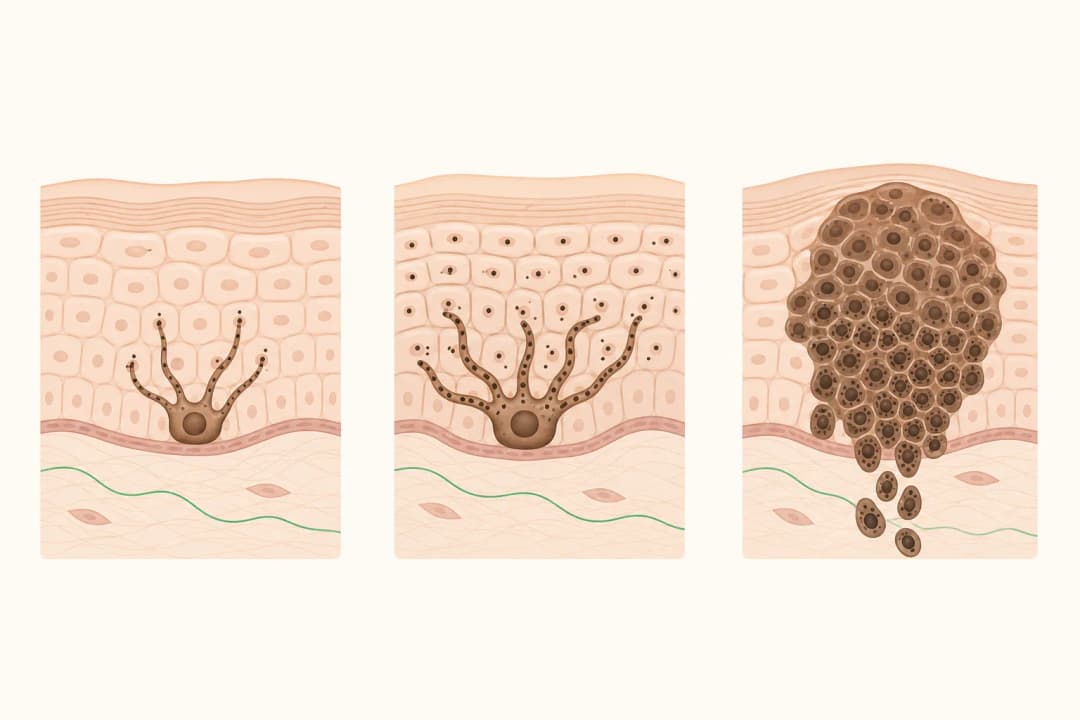
Amelanotic malignant melanoma is melanoma with little visible pigment, so it may resemble a pink, red or skin-coloured spot rather than a dark mole.
This answers one question. It is not a diagnosis and does not replace an assessment by a licensed doctor.
At a glance
- Typical colour
- Pink, red or close to skin tone
- Confirmation
- Biopsy and pathology examination
- Helpful clue
- Change over time, not colour alone
A clear answer
The word malignant is already part of what melanoma means: this is a cancer of melanocytes. Lack of brown or black colour can make visual recognition harder, and diagnosis depends on clinical assessment followed by examination of sampled tissue.
How it can appear
Amelanotic melanoma can present as an enlarging pink bump, a reddish patch, a changing skin-coloured lesion or a sore that bleeds or does not settle. Melanoma may present with these changes, but each can also occur in non-cancerous or other skin conditions.
A dermatologist considers change over time, shape, surface, firmness and subtle areas of pigment rather than relying on colour alone. A biopsy allows a pathologist to assess the cells and use additional laboratory stains when the appearance is unclear.
Practical next steps
Book a skin assessment for a new or changing lesion that persists, particularly one that grows, crusts or bleeds. Record its location and changes, and bring dated photographs if you have them. Avoid trying to burn, cut or treat the spot at home because this can delay diagnosis and alter its surface.
If biopsy confirms melanoma, the report helps guide further removal and whether staging is appropriate. Care may involve dermatology, surgery and oncology. The team will explain margins, wound care, examination of lymph nodes and a follow-up schedule based on the complete findings.
When assessment should not wait
Seek a prompt appointment if a lesion is changing quickly, repeatedly bleeding without clear injury, developing an open surface, or becoming a firm growing lump. Urgency follows the concerning change itself; appearance cannot confirm the cause.
After a melanoma diagnosis, report a new lump near the treated area or in the armpit, groin or neck. Emergency care is appropriate for sudden weakness, a seizure, confusion or a severe new breathing problem.
Useful questions at your visit
Ask whether the entire lesion was sampled, what the pathology report shows, whether another procedure is advised, and how your skin and lymph nodes should be checked. Clarify which wound changes require a call and who will organise ongoing reviews.
Find care
General Clinics & Polyclinics in Abu Dhabi
That answer is general. If you want it applied to your own case, these are licensed general clinics & polyclinics listed in Abu Dhabi.
27 Ar Ruwwad St - Shakhbout City - MSH4 - Abu Dhabi - United Arab Emirates
Accepts: Daman, Thiqa, Cigna, MetLife +20 more
Al Ruwais, Al Dhafrah
Accepts: Daman, Thiqa, AXA, Cigna +16 more
Al Bahyah - Al Bahyah Old - Abu Dhabi - United Arab Emirates
Accepts: Daman, Thiqa, Cigna, Allianz Care +18 more
Abu Dhabi
Accepts: Daman, Thiqa, AXA, Cigna +27 more
Ordered by verification status and how complete each clinic's public record is, then alphabetically. This is a directory listing, not a ranking — Zavis does not rate or recommend providers.
A factual listing drawn from the DHA, DOH and MOHAP licence registers. It is not a referral, an endorsement, or advice that any of these providers is right for you.
Questions people ask
Can amelanotic melanoma look like a harmless spot?
Yes. Its limited pigment can resemble several common skin problems, which is why a persistent changing lesion needs professional assessment.
Is every pink lesion melanoma?
No. Pink lesions have many possible causes. A clinician assesses the pattern and may recommend biopsy when the diagnosis remains uncertain.
What confirms amelanotic melanoma?
A pathologist examines biopsied tissue. Special laboratory stains may help establish that the abnormal cells are melanocytic.
Related
Related reading
Keep reading
Medical disclaimer. This page is general health information, not medical advice, and it cannot diagnose you. Always consult a licensed healthcare provider about your own symptoms and treatment. In an emergency in the UAE, call 998 for an ambulance.