
Alopecia areata in women
Short answer
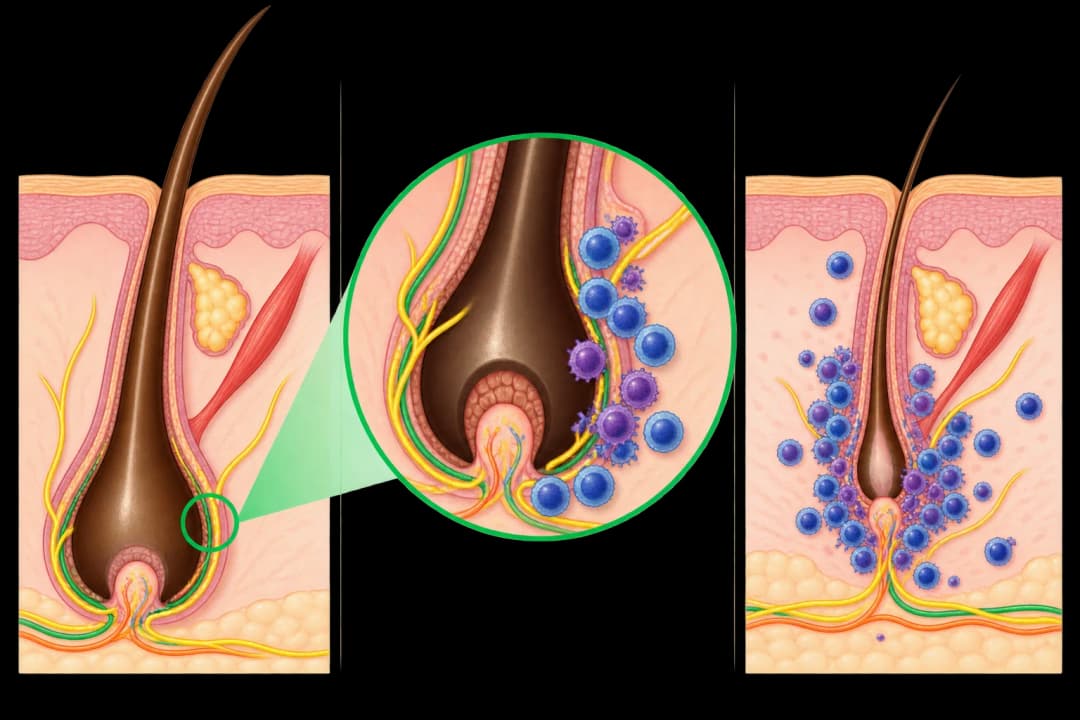
In women, alopecia areata causes immune-related patchy hair loss and can affect scalp or body hair.
This answers one question. It is not a diagnosis and does not replace an assessment by a licensed doctor.
At a glance
- Typical appearance
- Smooth patches are a common presentation of alopecia areata.
- Possible overlap
- Patterned thinning, shedding, and traction can coexist.
- Medication planning
- Pregnancy and breastfeeding status can affect treatment selection.
The short answer
The condition’s basic mechanism is not defined by sex, but a woman may also have hormonal, nutritional, styling-related, or hereditary hair loss. Identifying overlapping patterns matters because each may need a different approach.
Recognising the pattern
Alopecia areata often presents with smooth, round or oval bald patches where follicle openings remain visible. It can involve the eyebrows, eyelashes, or other body sites, and some women develop nail pitting or roughness. The skin usually lacks the dense scale or scarring seen in some other disorders.
Diffuse thinning over the part line, shedding after childbirth or illness, traction around the hairline, and broken chemically treated hairs can look different from a classic patch. More than one process can occur at once, so appearance and history are more informative than the label “hair loss” alone.
Assessment and everyday care
Record the location and pace of loss with photographs, and mention menstrual changes, pregnancy or breastfeeding, recent illness, diet restriction, medicines, and tight styling. These details help a dermatologist decide whether alopecia areata fully explains the pattern and whether any targeted evaluation is appropriate.
Choose loose hairstyles, reduce tension from extensions or braids, and avoid aggressive processing across fragile areas. Medical options depend on extent and activity and may include topical corticosteroids, injections into limited patches, or treatment that modifies immune signalling. Pregnancy plans and breastfeeding can change which medicines are suitable.
Reasons to seek care
Arrange an evaluation for any unexplained patch, a widening part, receding edges, marked shedding, or loss of eyebrows and eyelashes. Early examination is especially useful if the area looks shiny or scarred, because lasting follicle damage from another disorder may require prompt treatment.
Get quicker medical attention when hair loss comes with scalp pain, burning, swelling, pus, crusts, fever, or a severe medicine reaction. Emotional distress also deserves direct support; tell the clinician if the change is affecting sleep, social activity, or mood.
Planning your visit
Ask which features distinguish alopecia areata from patterned thinning, traction, or shedding, and whether multiple causes are present. Discuss how treatment fits with contraception, pregnancy plans, breastfeeding, other medicines, and routine cosmetic practices, plus which changes should prompt earlier follow-up.
Find care
General Clinics & Polyclinics in Abu Dhabi
That answer is general. If you want it applied to your own case, these are licensed general clinics & polyclinics listed in Abu Dhabi.
27 Ar Ruwwad St - Shakhbout City - MSH4 - Abu Dhabi - United Arab Emirates
Accepts: Daman, Thiqa, Cigna, MetLife +20 more
Al Ruwais, Al Dhafrah
Accepts: Daman, Thiqa, AXA, Cigna +16 more
Al Bahyah - Al Bahyah Old - Abu Dhabi - United Arab Emirates
Accepts: Daman, Thiqa, Cigna, Allianz Care +18 more
Abu Dhabi
Accepts: Daman, Thiqa, AXA, Cigna +27 more
Ordered by verification status and how complete each clinic's public record is, then alphabetically. This is a directory listing, not a ranking — Zavis does not rate or recommend providers.
A factual listing drawn from the DHA, DOH and MOHAP licence registers. It is not a referral, an endorsement, or advice that any of these providers is right for you.
Questions people ask
Is all patchy hair loss in women alopecia areata?
No. Traction, fungal infection, hair-shaft breakage, and inflammatory or scarring disorders can also produce localised loss. Examination distinguishes their different scalp and hair features.
Can alopecia areata affect eyebrows or eyelashes?
Yes. The condition can present with eyebrow or eyelash loss, either with scalp patches or separately. Eye irritation after eyelash loss should be discussed because lashes help protect the eye.
Can I continue colouring my hair?
Colour does not treat alopecia areata, and harsh processing can break fragile shafts. A dermatologist or experienced hair professional can help you choose gentler timing and methods.
Related
Related reading
Keep reading
Medical disclaimer. This page is general health information, not medical advice, and it cannot diagnose you. Always consult a licensed healthcare provider about your own symptoms and treatment. In an emergency in the UAE, call 998 for an ambulance.