
How is alopecia areata treated?
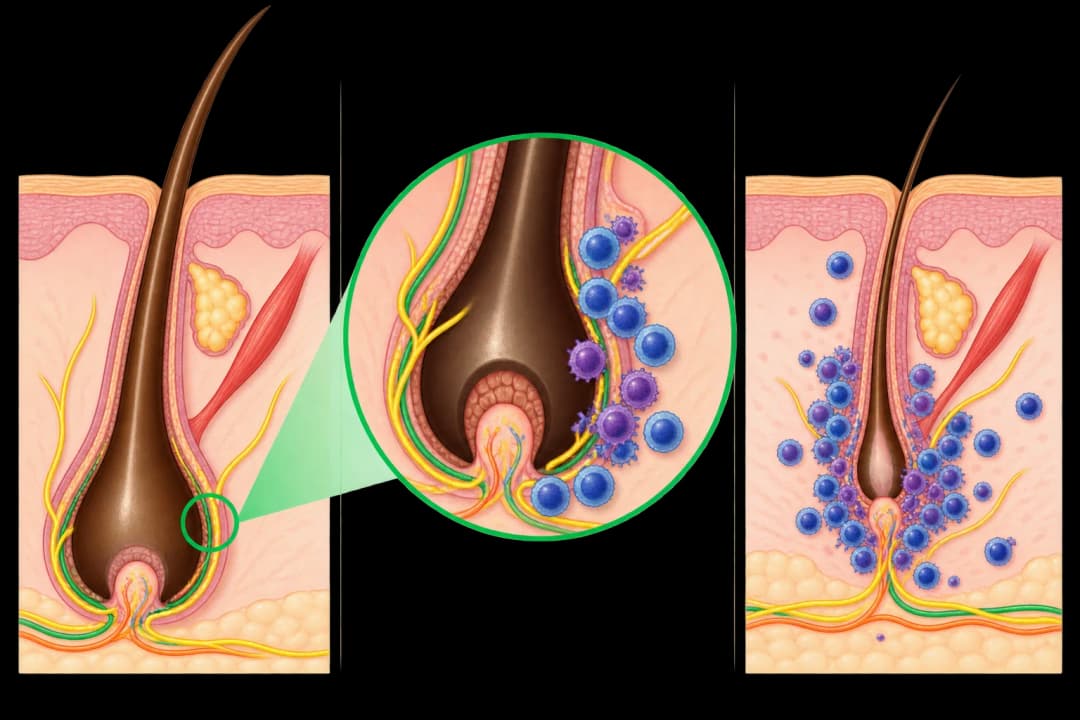
Short answer
Alopecia areata treatment is tailored to the extent, activity, location, and personal impact of hair loss.
This answers one question. It is not a diagnosis and does not replace an assessment by a licensed doctor.
At a glance
- Plan
- Matched to disease extent, activity, health needs, and preferences
- Monitoring
- Depends on the medicine and personal risk factors
- Support
- Scalp protection, camouflage, and emotional care can complement treatment
The short answer
Options can include watchful follow-up, corticosteroids applied to or injected into affected skin, medicines taken by mouth, or immune-targeting treatment. No single approach suits every person, and regrowth can occur without preventing a later episode.
How treatment options are chosen
A few accessible patches may be managed differently from rapid, widespread, eyebrow, or eyelash loss. Age, pregnancy plans, other medical conditions, current medicines, previous response, and willingness to attend monitoring all influence the plan.
Local corticosteroid treatment aims at affected areas and may be considered when involvement is limited. Systemic medicines affect immune activity more broadly and require a careful discussion of side effects, interactions, screening, and follow-up. Cosmetic camouflage and psychological support can accompany any medical choice.
Making a treatment plan
Start with a confirmed diagnosis and define the goal: slowing active loss, encouraging regrowth, protecting exposed areas, or reducing day-to-day distress. Baseline photographs taken under consistent conditions can make subtle change easier to judge.
Use prescribed medicine exactly as directed and do not extend, combine, or stop systemic treatment without clinical advice. Keep monitoring appointments and report infections, new symptoms, pregnancy, or newly started medicines. Gentle styling and sun protection support the scalp but do not replace disease-directed care.
When to contact the clinic
Get in touch if loss expands rapidly, eyelashes are affected, or the scalp develops pain, marked inflammation, crusting, or discharge. During treatment, seek prompt advice for a severe rash, facial or throat swelling, breathing difficulty, signs of infection, or another reaction named in your medicine instructions.
Do not wait for the next routine visit if treatment is causing troublesome effects or the regimen is difficult to follow. Adjusting the method or goal is safer than improvising with the dose.
Treatment questions worth asking
Ask what outcome the proposed option is intended to achieve, how improvement and unwanted effects will be checked, and what would trigger a change. Discuss alternatives if you prefer not to use systemic medicine, as well as safe approaches for eyebrows, eyelashes, beard hair, or sensitive scalp areas.
Find care
General Clinics & Polyclinics in Abu Dhabi
That answer is general. If you want it applied to your own case, these are licensed general clinics & polyclinics listed in Abu Dhabi.
27 Ar Ruwwad St - Shakhbout City - MSH4 - Abu Dhabi - United Arab Emirates
Accepts: Daman, Thiqa, Cigna, MetLife +20 more
Al Ruwais, Al Dhafrah
Accepts: Daman, Thiqa, AXA, Cigna +16 more
Al Bahyah - Al Bahyah Old - Abu Dhabi - United Arab Emirates
Accepts: Daman, Thiqa, Cigna, Allianz Care +18 more
Abu Dhabi
Accepts: Daman, Thiqa, AXA, Cigna +27 more
Ordered by verification status and how complete each clinic's public record is, then alphabetically. This is a directory listing, not a ranking — Zavis does not rate or recommend providers.
A factual listing drawn from the DHA, DOH and MOHAP licence registers. It is not a referral, an endorsement, or advice that any of these providers is right for you.
Questions people ask
Is treatment always necessary for alopecia areata?
Not always. Observation may be discussed for limited stable loss, while active, extensive, or distressing loss may lead to treatment.
Can I use the same medicine on my scalp and eyebrows?
Do not assume so. Skin near the eyes needs particular caution, and a clinician should specify the suitable product and application method.
Related
Related reading
Keep reading
Medical disclaimer. This page is general health information, not medical advice, and it cannot diagnose you. Always consult a licensed healthcare provider about your own symptoms and treatment. In an emergency in the UAE, call 998 for an ambulance.