
Can alopecia areata progress to alopecia totalis?
Short answer
Alopecia areata can progress to alopecia totalis, meaning loss of all or nearly all scalp hair.
This answers one question. It is not a diagnosis and does not replace an assessment by a licensed doctor.
At a glance
- Meaning
- All or nearly all scalp hair is affected
- Body hair
- Its involvement is assessed separately
- Care focus
- Diagnosis, protection, treatment options, and emotional wellbeing
The short answer
Progression is possible but cannot be predicted precisely for an individual. Patchy loss may remain limited, regrow, recur, or expand, and a dermatologist should reassess a changing pattern rather than relying on its earlier appearance.
Understanding alopecia totalis
Alopecia totalis describes the extent of scalp hair loss within the alopecia areata spectrum. It is different from alopecia universalis, which involves extensive body hair loss as well. Eyebrows, eyelashes, nails, and body hair may still need separate assessment.
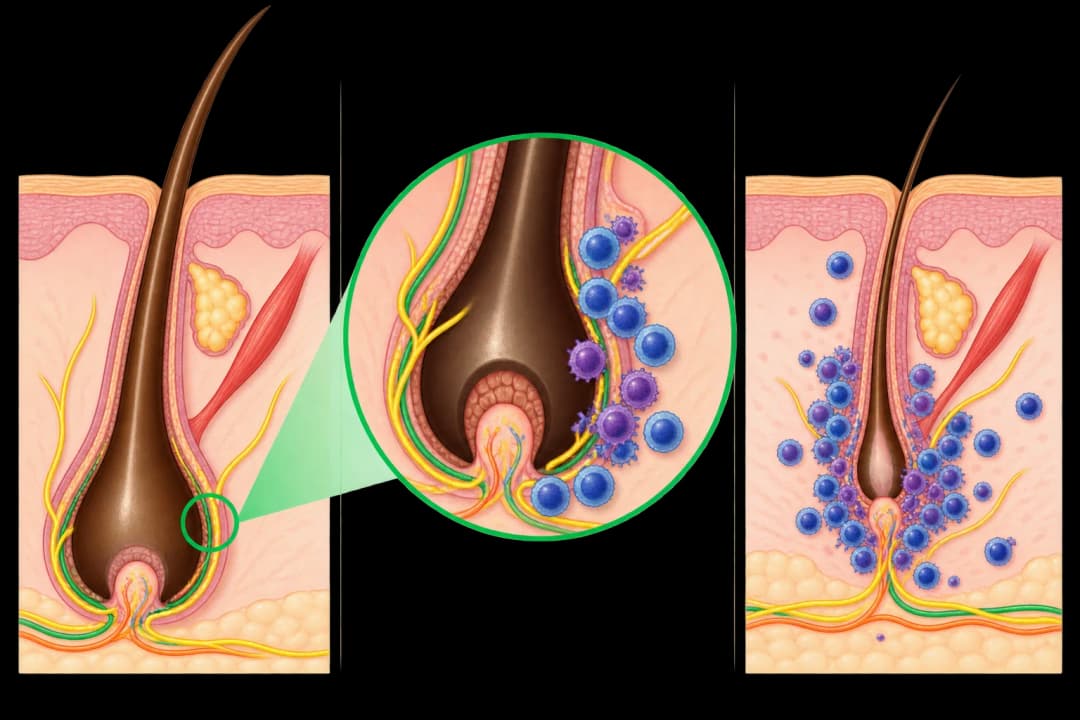
The follicles generally remain present even when scalp hair is absent, so regrowth can occur. The course varies, however, and broader involvement may require a different management discussion from one or a few small patches.
Responding to progression
Contact a dermatologist when patches are joining or scalp density is falling quickly. Document the sequence with photographs and report changes in eyebrows, eyelashes, nails, or body hair. The clinician can confirm that the expansion still fits alopecia areata and discuss treatments suited to wider involvement.
Protect exposed scalp with shade, suitable headwear, and sunscreen. Comfortable wigs, scarves, eyebrow products, or other camouflage are personal options and can be used whether or not medical treatment is underway. Emotional support may be as relevant as scalp care during a rapid visible change.
When faster care is appropriate
Request an earlier appointment for rapidly extending loss or new eyelash involvement, particularly if the eyes are becoming irritated. Scalp swelling, severe tenderness, spreading redness, drainage, or fever is not a typical simple presentation and needs prompt medical assessment.
Immediate mental health support is appropriate if distress becomes overwhelming or includes thoughts of self-harm. Hair loss can alter identity and social comfort, and that burden deserves direct care rather than being treated as cosmetic.
Points to clarify with your dermatologist
Ask how the current extent is being classified, whether signs suggest ongoing activity, and which options address widespread disease. Discuss medication monitoring, scalp and eye protection, realistic treatment goals, and the follow-up plan if loss continues or regrowth begins.
Find care
General Clinics & Polyclinics in Abu Dhabi
That answer is general. If you want it applied to your own case, these are licensed general clinics & polyclinics listed in Abu Dhabi.
27 Ar Ruwwad St - Shakhbout City - MSH4 - Abu Dhabi - United Arab Emirates
Accepts: Daman, Thiqa, Cigna, MetLife +20 more
Al Ruwais, Al Dhafrah
Accepts: Daman, Thiqa, AXA, Cigna +16 more
Al Bahyah - Al Bahyah Old - Abu Dhabi - United Arab Emirates
Accepts: Daman, Thiqa, Cigna, Allianz Care +18 more
Abu Dhabi
Accepts: Daman, Thiqa, AXA, Cigna +27 more
Ordered by verification status and how complete each clinic's public record is, then alphabetically. This is a directory listing, not a ranking — Zavis does not rate or recommend providers.
A factual listing drawn from the DHA, DOH and MOHAP licence registers. It is not a referral, an endorsement, or advice that any of these providers is right for you.
Questions people ask
Does one bald patch inevitably become alopecia totalis?
No. Patchy alopecia areata has a variable course, and an individual outcome cannot be forecast from one patch alone.
Can scalp hair regrow after alopecia totalis?
Regrowth is possible because follicles can remain capable of producing hair, but the timing and completeness vary.
Related
Related reading
Keep reading
Medical disclaimer. This page is general health information, not medical advice, and it cannot diagnose you. Always consult a licensed healthcare provider about your own symptoms and treatment. In an emergency in the UAE, call 998 for an ambulance.