
Why alopecia areata is called non-scarring hair loss
Short answer
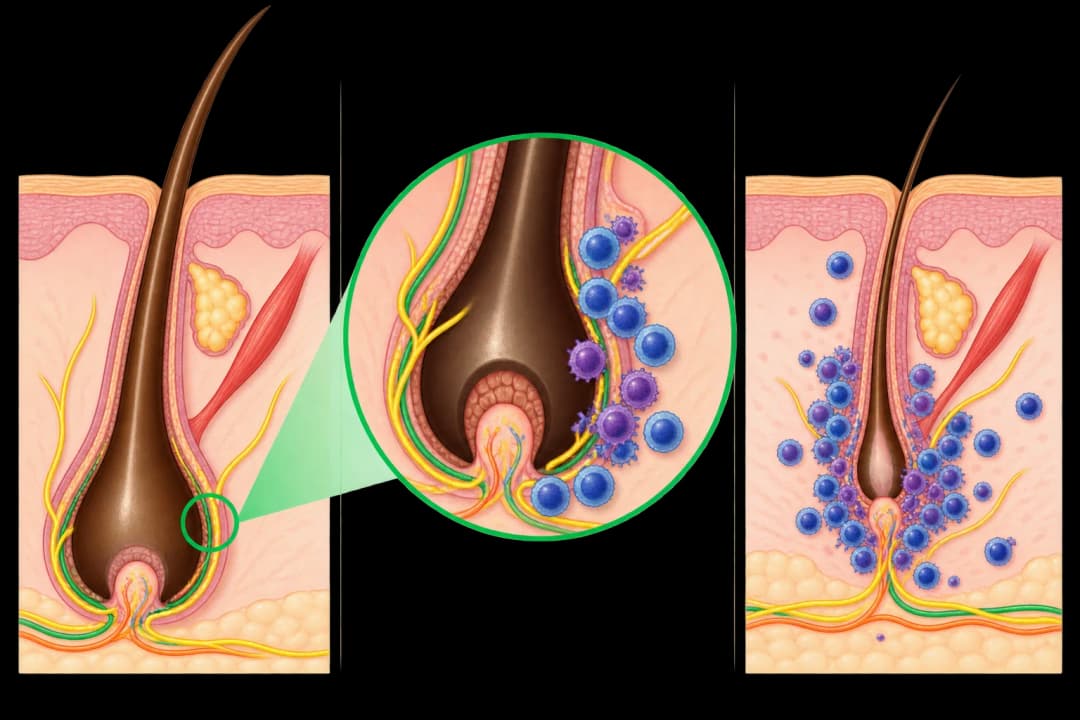
Alopecia areata is considered non-scarring because the follicle openings and underlying hair-producing structures are generally preserved, leaving the possibility of regrowth even after visible shedding.
This answers one question. It is not a diagnosis and does not replace an assessment by a licensed doctor.
At a glance
- Follicles
- Usually remain structurally present
- Patch surface
- Often smooth with visible follicle openings
- Regrowth
- Possible, but its timing and durability vary
What does non-scarring mean?
The term describes what happens to follicles; it does not mean the condition is emotionally minor, that regrowth follows a set schedule, or that another episode cannot occur.
Features clinicians look for
Typical patches are smooth and clearly defined, with skin that may look normal. Short tapered hairs, broken hairs, or early fine regrowth can appear near or within a patch. Nail pitting or roughness may accompany alopecia areata in some people.
Scarring alopecia has a different concern: inflammation can replace follicles with scar tissue. Loss of visible follicle openings, shiny skin, persistent scale around individual hairs, pustules, or pain deserves specialist assessment rather than an assumption that the patch is alopecia areata.
Caring for a non-scarring patch
Handle the area gently and avoid tight styling, repeated rubbing, or chemical treatments that irritate the skin. Protect bare scalp from sun exposure and take dated photographs to track the border and any fine regrowth.
A dermatologist can examine follicles with magnification and decide whether the pattern fits alopecia areata. When the appearance is unusual, fungal sampling or a small biopsy may be used to separate non-scarring loss from infection or an inflammatory scarring disorder.
Scalp changes that need review
Seek timely dermatology care if the skin becomes shiny, painful, crusted, persistently red, scaly, or develops pustules, or if follicle openings seem to disappear. Rapid spread, extensive shedding, or loss involving brows and lashes also warrants an appointment to confirm the pattern and discuss management.
What to ask during examination
Ask whether follicle openings remain visible, whether magnified examination shows active disease, and whether any feature suggests infection or scarring. It is also useful to clarify how treatment choice changes with patch size, location, and current activity.
Find care
General Clinics & Polyclinics in Abu Dhabi
That answer is general. If you want it applied to your own case, these are licensed general clinics & polyclinics listed in Abu Dhabi.
27 Ar Ruwwad St - Shakhbout City - MSH4 - Abu Dhabi - United Arab Emirates
Accepts: Daman, Thiqa, Cigna, MetLife +20 more
Al Ruwais, Al Dhafrah
Accepts: Daman, Thiqa, AXA, Cigna +16 more
Al Bahyah - Al Bahyah Old - Abu Dhabi - United Arab Emirates
Accepts: Daman, Thiqa, Cigna, Allianz Care +18 more
Abu Dhabi
Accepts: Daman, Thiqa, AXA, Cigna +27 more
Ordered by verification status and how complete each clinic's public record is, then alphabetically. This is a directory listing, not a ranking — Zavis does not rate or recommend providers.
A factual listing drawn from the DHA, DOH and MOHAP licence registers. It is not a referral, an endorsement, or advice that any of these providers is right for you.
Questions people ask
Does non-scarring mean hair will definitely grow back?
No. Preserved follicles allow regrowth, but the timing, amount, and persistence of regrowth differ between people and episodes.
Can alopecia areata become a scarring alopecia?
Alopecia areata itself is classified as non-scarring. New pain, pustules, shiny skin, or disappearing follicle openings can point to a different or additional scalp disorder that needs assessment.
Why might a biopsy be suggested?
A biopsy can clarify an atypical pattern when examination alone cannot confidently distinguish alopecia areata from another form of hair loss.
Related
Related reading
Keep reading
Medical disclaimer. This page is general health information, not medical advice, and it cannot diagnose you. Always consult a licensed healthcare provider about your own symptoms and treatment. In an emergency in the UAE, call 998 for an ambulance.