
Alopecia areata lab tests: what patients should know
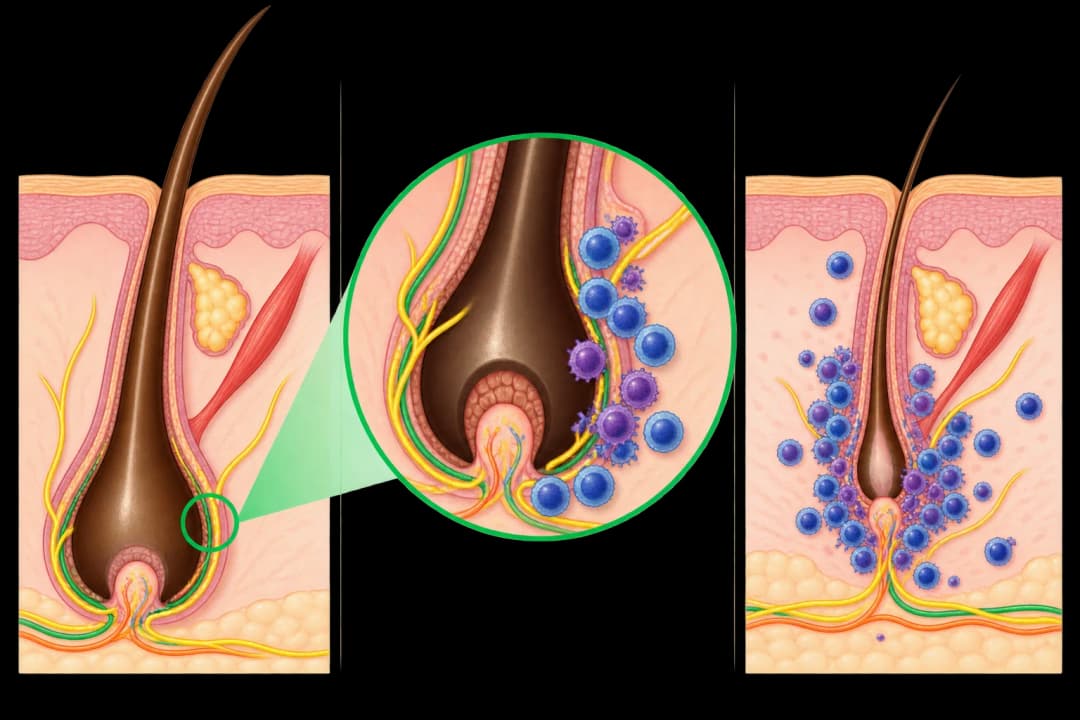
Short answer
Alopecia areata is usually diagnosed by examining the hair and scalp, so laboratory tests are selected only when the history or examination suggests another condition or an associated health issue.
This answers one question. It is not a diagnosis and does not replace an assessment by a licensed doctor.
At a glance
- Main assessment
- Hair and scalp examination
- Blood tests
- Chosen when symptoms or history give a specific reason
- Biopsy
- Reserved for an uncertain or atypical pattern
Are lab tests routinely needed?
A dermatologist may inspect the shape of the patches, hairs at their edges, nails, and other areas of body hair. A handheld magnifying device can help reveal characteristic hair changes without taking blood.
Why a clinician may order a test
Testing is guided by clues rather than ordered as one standard panel. Symptoms such as tiredness, feeling unusually cold, dietary restriction, heavy menstrual bleeding, or hair loss without clear patches may prompt checks for thyroid problems, iron deficiency, or another explanation.
A scalp fungal test may be considered when scaling, broken hairs, tenderness, or swollen lymph nodes raise concern for infection. A small scalp biopsy is uncommon but can help when the pattern remains uncertain or scarring hair loss must be excluded.
How to prepare for assessment
Record when shedding began, whether patches are changing, and any itching, scale, pain, illness, new medicine, or major dietary change. Bring previous test results and a list of medicines and supplements; this can prevent unnecessary repeat testing.
Do not start iron, thyroid medicine, or high-dose supplements solely because of hair loss. Treatment should match a confirmed deficiency or diagnosis, since unnecessary products can cause side effects and may complicate interpretation of later tests.
When to arrange medical care
Book a dermatology assessment if a new smooth bald patch appears, hair loss progresses, or the diagnosis is unclear. Seek prompt care for a painful, hot, swollen, crusted, or draining scalp, or for hair loss accompanied by marked weakness, fainting, or other significant illness.
Questions to ask about testing
Ask which finding led to each proposed test, what alternative diagnosis it evaluates, and how the result would change treatment. You can also ask whether the examination is typical of alopecia areata and when progress should be reviewed.
Find care
General Clinics & Polyclinics in Abu Dhabi
That answer is general. If you want it applied to your own case, these are licensed general clinics & polyclinics listed in Abu Dhabi.
27 Ar Ruwwad St - Shakhbout City - MSH4 - Abu Dhabi - United Arab Emirates
Accepts: Daman, Thiqa, Cigna, MetLife +20 more
Al Ruwais, Al Dhafrah
Accepts: Daman, Thiqa, AXA, Cigna +16 more
Al Bahyah - Al Bahyah Old - Abu Dhabi - United Arab Emirates
Accepts: Daman, Thiqa, Cigna, Allianz Care +18 more
Abu Dhabi
Accepts: Daman, Thiqa, AXA, Cigna +27 more
Ordered by verification status and how complete each clinic's public record is, then alphabetically. This is a directory listing, not a ranking — Zavis does not rate or recommend providers.
A factual listing drawn from the DHA, DOH and MOHAP licence registers. It is not a referral, an endorsement, or advice that any of these providers is right for you.
Questions people ask
Is there one blood test that confirms alopecia areata?
No single blood test confirms it. The diagnosis is generally based on the pattern and clinical examination.
Does everyone need thyroid testing?
Not necessarily. A clinician considers thyroid testing when symptoms, medical history, family history, or examination findings make it relevant.
Can a normal blood test rule out alopecia areata?
No. Routine blood results can be normal because alopecia areata is identified mainly from its clinical features.
Related
Related reading
Keep reading
Medical disclaimer. This page is general health information, not medical advice, and it cannot diagnose you. Always consult a licensed healthcare provider about your own symptoms and treatment. In an emergency in the UAE, call 998 for an ambulance.