
When alopecia areata is increasing
Short answer
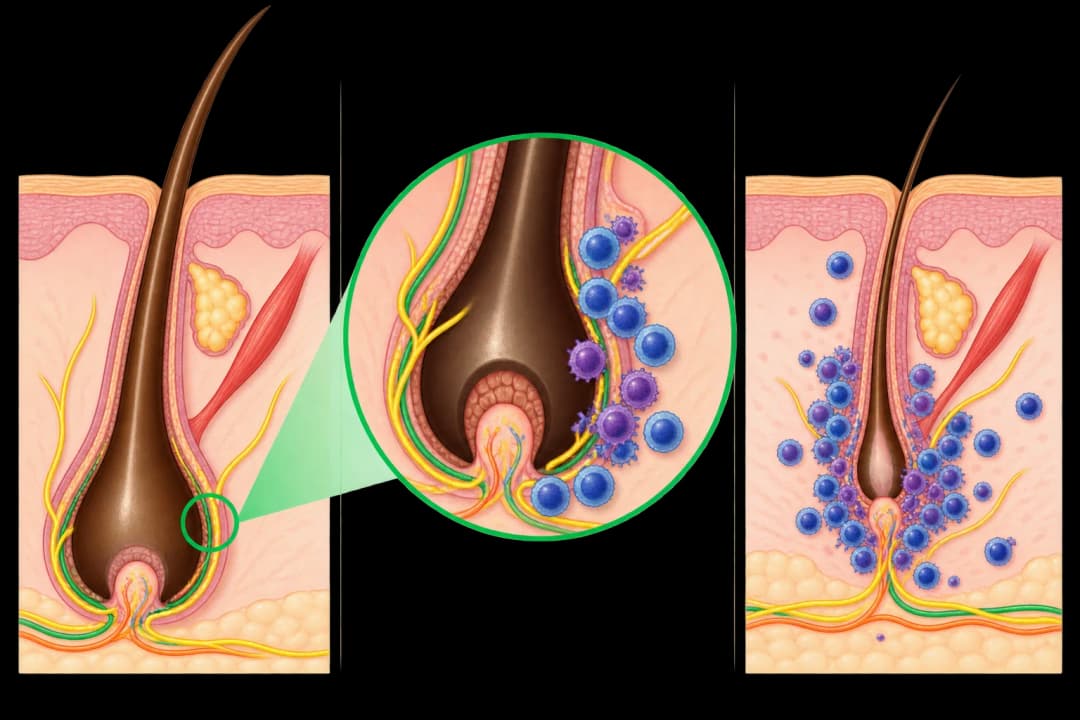
Increasing alopecia areata means patches are enlarging, multiplying or involving new areas, and the change deserves reassessment by a dermatologist.
This answers one question. It is not a diagnosis and does not replace an assessment by a licensed doctor.
At a glance
- Signs of increase
- Larger patches, additional patches or hair loss in new body areas
- Useful record
- Consistent photographs make gradual border changes easier to compare
- Treatment rule
- Do not change prescribed doses without speaking to the prescriber
What increasing hair loss means
Progression can occur even after a period of stability or while treatment is underway. It does not by itself predict the eventual amount of hair loss or whether regrowth will occur, but it may change the treatment discussion.
How clinicians judge activity
Useful clues include new patches, widening borders and short broken or tapered hairs near an edge. The dermatologist may compare photographs, inspect the scalp with magnification, and check eyebrows, eyelashes, facial or body hair, and nails.
Not every apparent increase is active alopecia areata. Hair breakage, traction, scalp infection and diffuse shedding can alter density in different ways. Redness, thick scale, tenderness or loss of follicle openings makes assessment for another or additional condition especially relevant.
Track change and review treatment
Take photographs under similar lighting, from the same angle, with the hair parted consistently. Record new sites and symptoms rather than checking the mirror repeatedly. Continue prescribed treatment as directed and contact the prescriber before increasing, stopping or combining medicines.
At review, discuss how much scalp or other hair is involved, whether the diagnosis remains clear, and whether the current option has had enough time to assess. Local corticosteroid treatment may suit limited disease; wider or rapidly changing loss may prompt discussion of systemic choices and their monitoring needs.
When an earlier review is warranted
Contact a dermatologist sooner if loss is changing quickly, separate patches are joining, or eyebrows and eyelashes begin to thin. Arrange timely care for scalp pain, swelling, pus, crusts, pronounced scaling or a smooth shiny area, since these findings are not typical features to simply monitor at home.
Report treatment reactions such as marked irritation, skin thinning, signs of infection or new symptoms elsewhere in the body. Seek emotional support as well if the visible change is leading to withdrawal, persistent low mood or difficulty coping.
Focus the follow-up conversation
Ask which findings show active disease, how progress will be documented, when the plan should be reconsidered, and what adverse effects require contact. Confirm whether other causes of shedding or breakage need evaluation rather than assuming every change comes from alopecia areata.
Find care
General Clinics & Polyclinics in Abu Dhabi
That answer is general. If you want it applied to your own case, these are licensed general clinics & polyclinics listed in Abu Dhabi.
27 Ar Ruwwad St - Shakhbout City - MSH4 - Abu Dhabi - United Arab Emirates
Accepts: Daman, Thiqa, Cigna, MetLife +20 more
Al Ruwais, Al Dhafrah
Accepts: Daman, Thiqa, AXA, Cigna +16 more
Al Bahyah - Al Bahyah Old - Abu Dhabi - United Arab Emirates
Accepts: Daman, Thiqa, Cigna, Allianz Care +18 more
Abu Dhabi
Accepts: Daman, Thiqa, AXA, Cigna +27 more
Ordered by verification status and how complete each clinic's public record is, then alphabetically. This is a directory listing, not a ranking — Zavis does not rate or recommend providers.
A factual listing drawn from the DHA, DOH and MOHAP licence registers. It is not a referral, an endorsement, or advice that any of these providers is right for you.
Questions people ask
Does an enlarging patch mean all scalp hair will be lost?
No. An expanding patch shows current change but cannot determine the final extent. Patterns and regrowth vary between individuals.
Should I stop treatment if new patches appear?
Do not stop solely because a new patch appears. Tell the prescriber, who can check adherence, timing, diagnosis and whether the plan needs adjustment.
Can stress explain the increase?
Stress may be discussed as one possible influence, but it should not be assumed to be the sole cause. Increasing loss still merits a clinical review.
Related
Related reading
Keep reading
Medical disclaimer. This page is general health information, not medical advice, and it cannot diagnose you. Always consult a licensed healthcare provider about your own symptoms and treatment. In an emergency in the UAE, call 998 for an ambulance.