
How common is alopecia areata?
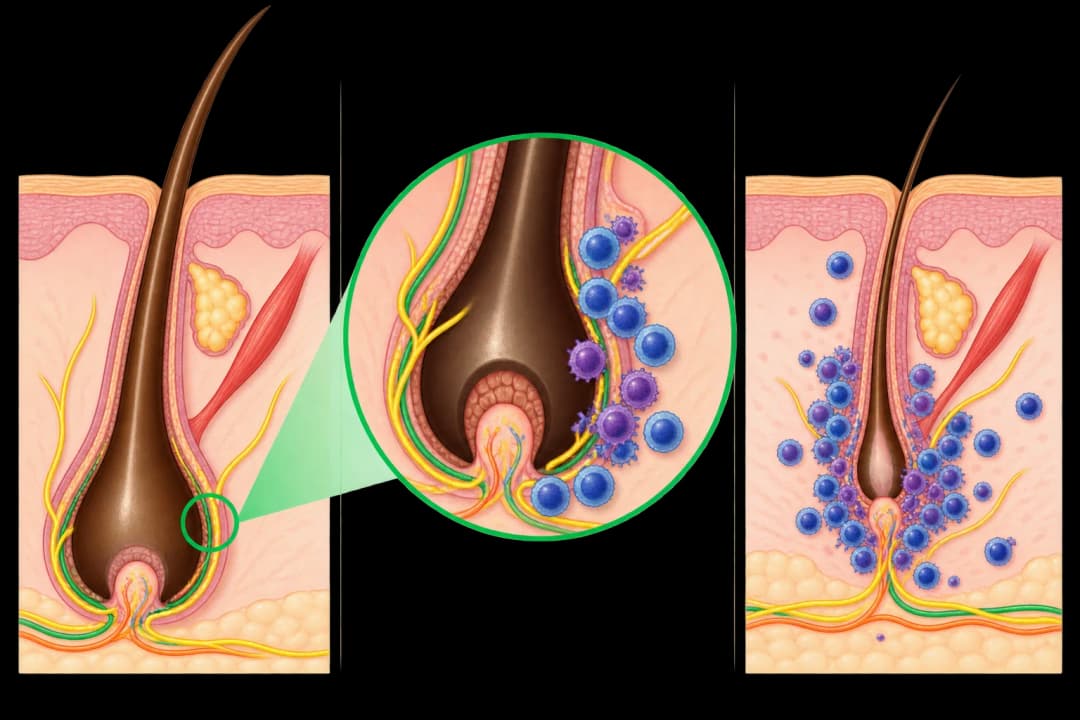
Short answer
Alopecia areata is a recognised cause of patchy hair loss that can affect people of any age, sex, or hair type.
This answers one question. It is not a diagnosis and does not replace an assessment by a licensed doctor.
At a glance
- Who it affects
- It can begin in children or adults and affect any hair type.
- Typical presentation
- Smooth, clearly defined bald patches are a characteristic pattern.
- Diagnosis
- An examination matters more than population frequency for an individual patch.
How often it occurs
Some people first develop it in childhood, while others notice their first patch as adults. It occurs across populations and is familiar to dermatologists, but frequency cannot tell you what caused one person's hair loss.
Why the condition looks different between people
Alopecia areata often presents with one or more smooth, clearly defined bald patches. It can also involve the beard, eyebrows, eyelashes, or broader areas of the scalp and body. Nail pitting or roughness may accompany the hair changes. The skin in a typical patch usually does not have thick scale or scarring.
The condition can occur in someone with no known family history. A personal or family tendency toward immune-related conditions may be relevant, but it does not make the course predictable. Patch size at the start also cannot show with certainty what will happen next.
What to do about a new patch
Photograph the area, avoid tight hairstyles, and arrange a clinical examination rather than judging it by how common alopecia areata is. Fungal infection, traction, inflammatory scalp disorders, and other forms of hair loss can create different patterns and need different care.
A dermatologist can inspect the scalp and hairs, ask about the speed and distribution of loss, and decide whether further testing is useful. If alopecia areata is diagnosed, management can range from observation and cosmetic support to medicines chosen for the extent and activity of disease.
When examination matters
Seek medical review when loss is sudden, patches are expanding, or hair is disappearing from brows or lashes. Pain, marked redness, scale, crusting, pus, or shiny scar-like skin warrants timely assessment because uncomplicated alopecia areata does not usually cause those surface changes.
Questions about your pattern
You might ask which features distinguish your patch from other hair-loss conditions, whether the hairs at its border suggest current activity, and whether nails or other body areas should be checked. Ask what changes to record and what would prompt a different management plan.
Find care
General Clinics & Polyclinics in Abu Dhabi
That answer is general. If you want it applied to your own case, these are licensed general clinics & polyclinics listed in Abu Dhabi.
27 Ar Ruwwad St - Shakhbout City - MSH4 - Abu Dhabi - United Arab Emirates
Accepts: Daman, Thiqa, Cigna, MetLife +20 more
Al Ruwais, Al Dhafrah
Accepts: Daman, Thiqa, AXA, Cigna +16 more
Al Bahyah - Al Bahyah Old - Abu Dhabi - United Arab Emirates
Accepts: Daman, Thiqa, Cigna, Allianz Care +18 more
Abu Dhabi
Accepts: Daman, Thiqa, AXA, Cigna +27 more
Ordered by verification status and how complete each clinic's public record is, then alphabetically. This is a directory listing, not a ranking — Zavis does not rate or recommend providers.
A factual listing drawn from the DHA, DOH and MOHAP licence registers. It is not a referral, an endorsement, or advice that any of these providers is right for you.
Questions people ask
Is alopecia areata limited to the scalp?
No. It may affect beard hair, eyebrows, eyelashes, or other hair-bearing areas.
Does a family history mean I will develop it?
No. Family history can be relevant, but it neither confirms that someone will develop alopecia areata nor predicts its course.
Is every round bald patch alopecia areata?
No. Several conditions can produce patchy loss, and scale, broken hairs, inflammation, or scarring may point toward another explanation.
Related
Related reading
Keep reading
Medical disclaimer. This page is general health information, not medical advice, and it cannot diagnose you. Always consult a licensed healthcare provider about your own symptoms and treatment. In an emergency in the UAE, call 998 for an ambulance.