
Can hair grow back after alopecia areata?
Short answer
Hair can grow back after alopecia areata, but the timing, amount, and durability of regrowth vary from person to person.
This answers one question. It is not a diagnosis and does not replace an assessment by a licensed doctor.
At a glance
- Follicles
- Hair follicles usually remain capable of producing hair.
- Early regrowth
- New hairs may initially look fine or pale.
- Course
- Regrowth and future patches are difficult to predict.
Can hair return?
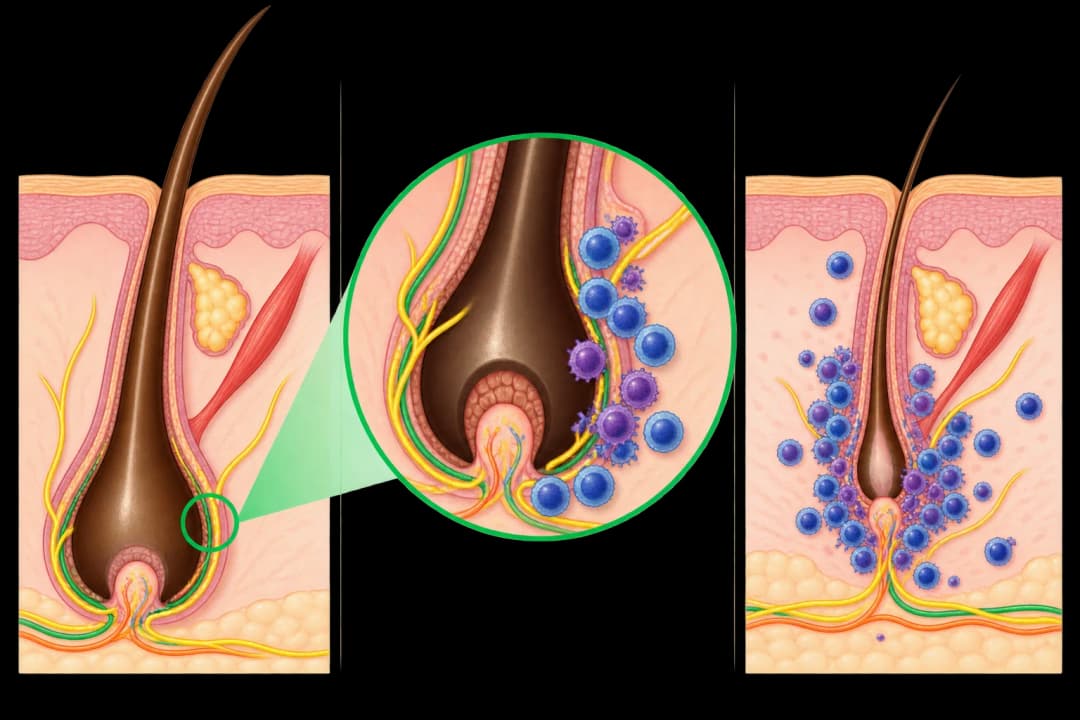
The follicles are usually still present, so they may resume producing hair when immune activity around them settles. Regrowth may occur without treatment or after treatment, yet another patch can appear later even when an earlier patch has filled in.
What regrowth can look like
Early hairs can be fine, pale, or softer than nearby hair. They may later become thicker and regain pigment. A patch does not always fill evenly, and visible change can be gradual. Short tapered hairs at a patch edge can instead suggest that shedding remains active, so appearance alone does not always show whether the condition is settling.
The course is hard to predict from one examination. The number and location of patches, changes in nails, and whether eyelashes or eyebrows are involved help a dermatologist judge the pattern and discuss reasonable expectations.
Support regrowth and protect exposed skin
Take clear photographs under similar lighting so you can compare the borders over time. Handle remaining hair gently, avoid tight styles and harsh chemical processing, and protect uncovered scalp from sun and cold. Camouflage fibres, scarves, wigs, or eyebrow products can help while regrowth develops.
A dermatologist may discuss corticosteroids applied to or injected into limited patches, or medicines that alter immune signalling when loss is more extensive. The choice depends on the areas involved, age, health history, and the balance of likely benefit, monitoring, and side effects.
When to arrange medical care
Book a dermatology assessment if a bald patch is new, enlarging, multiplying, or affecting brows, lashes, or nails. Seek prompt care for a painful, red, scaly, crusted, or draining scalp because those features are not typical of uncomplicated alopecia areata and may point to infection or another cause.
Questions for your dermatologist
Ask whether the examination fits alopecia areata, whether shedding appears active, and how progress should be documented. You can also ask which treatment suits the size and location of your patches, what side effects need watching, and when the plan should be reviewed if regrowth does not begin.
Find care
General Clinics & Polyclinics in Abu Dhabi
That answer is general. If you want it applied to your own case, these are licensed general clinics & polyclinics listed in Abu Dhabi.
27 Ar Ruwwad St - Shakhbout City - MSH4 - Abu Dhabi - United Arab Emirates
Accepts: Daman, Thiqa, Cigna, MetLife +20 more
Al Ruwais, Al Dhafrah
Accepts: Daman, Thiqa, AXA, Cigna +16 more
Al Bahyah - Al Bahyah Old - Abu Dhabi - United Arab Emirates
Accepts: Daman, Thiqa, Cigna, Allianz Care +18 more
Abu Dhabi
Accepts: Daman, Thiqa, AXA, Cigna +27 more
Ordered by verification status and how complete each clinic's public record is, then alphabetically. This is a directory listing, not a ranking — Zavis does not rate or recommend providers.
A factual listing drawn from the DHA, DOH and MOHAP licence registers. It is not a referral, an endorsement, or advice that any of these providers is right for you.
Questions people ask
Does white regrowth mean the hair will stay white?
Not necessarily. New hairs can lack pigment at first and may regain colour as they mature, although colour change varies.
Can hair fall out again after it grows back?
Yes. Alopecia areata can relapse, and a new episode may affect the same area or a different one.
Should I shave a patch to make it grow faster?
Shaving changes the visible hair shaft but does not restart the follicle or control the immune process around it.
Related
Related reading
Keep reading
Medical disclaimer. This page is general health information, not medical advice, and it cannot diagnose you. Always consult a licensed healthcare provider about your own symptoms and treatment. In an emergency in the UAE, call 998 for an ambulance.